

Maybe you’ve heard of it SRC-20 tokens (often called SRC 20 or SRC20 tokens), a new digital asset on the Bitcoin blockchain. Essentially, SRC-20 enables the direct embedding of data within Bitcoin transactions. This ensures immutability and durability.
But what exactly do SRC-20 tokens offer, and how do they fit into the broader Bitcoin ecosystem? They are relevant to support different image formats and contribute to the digital collectibles market. Let’s say SRC-20 tokens are gaining popularity, and this article will explore why.
Essentials:
- SRC-20 tokens are a new digital asset on the Bitcoin blockchain, allowing data to be embedded in transactions for immutability and durability.
- SRC-20 tokens use Bitcoin Stamps technology to store data in unused transaction output, limiting images to a size of 24×24 pixels.
- With over 260,000 minted tokens and a market cap of over $100 million, SRC-20 tokens are gaining significant popularity.
- The token standard expands the use of Bitcoin beyond financial transactions, enabling the secure creation and trading of digital collectibles and NFTs.
What are SRC-20 tokens
SRC-20 tokens represent a new breed of digital assets on the Bitcoin blockchain. They allow users embed data directly into transactions and leverage an advanced protocol for immutability and longevity. These tokens join Ethereum’s ERC-20 tokens in their use in decentralized applications, but with a twist specific to Bitcoin.
SRC-20 tokens use the Bitcoin stamps technology to store data in unused transaction outputs (UTXOs).
Essentially, SRC-20 tokens are fungible tokens that can save different types of images included JPG, SVG, GIF and PNGalthough they are limited to 24×24 pixels.
This token standard continues to gain traction, with more than 260,000 tokens minted to date. Furthermore, their market cap has exceeded $100 million, showing tremendous community involvement.
These developments hold great promise for the secure creation of digital assets within the Bitcoin ecosystem.
What are Bitcoin Stamps
Bitcoin Stamps embody a new method for embed images directly on the Bitcoin blockchain. The SRC20 stamping protocol is the underlying technology that SRC-20 tokens use. This technology allows users to create non-fungible tokens (NFTs) and expands Bitcoin’s use cases in that it enables Bitcoin integration. unique digital images in the blockchain.
Each stamp is identified by a unique transaction number and contains a valid image sequence base64 format, a component crucial to its legitimacy. This base64 encoding ensures that the stamp is securely encoded and can be easily recovered from the transaction data.
When you create a Bitcoin stamp, the metadata for the original image is securely stored in the UTXO, preventing data sanitization. This makes Stamps truly permanent digital artifacts.
Bitcoin Stamps mainly focus on artistic representation and collectibles, and are therefore distinguishable from other types of assets. The technology provides users with an engaging way to create, buy and trade unique digital art within the Bitcoin ecosystem.
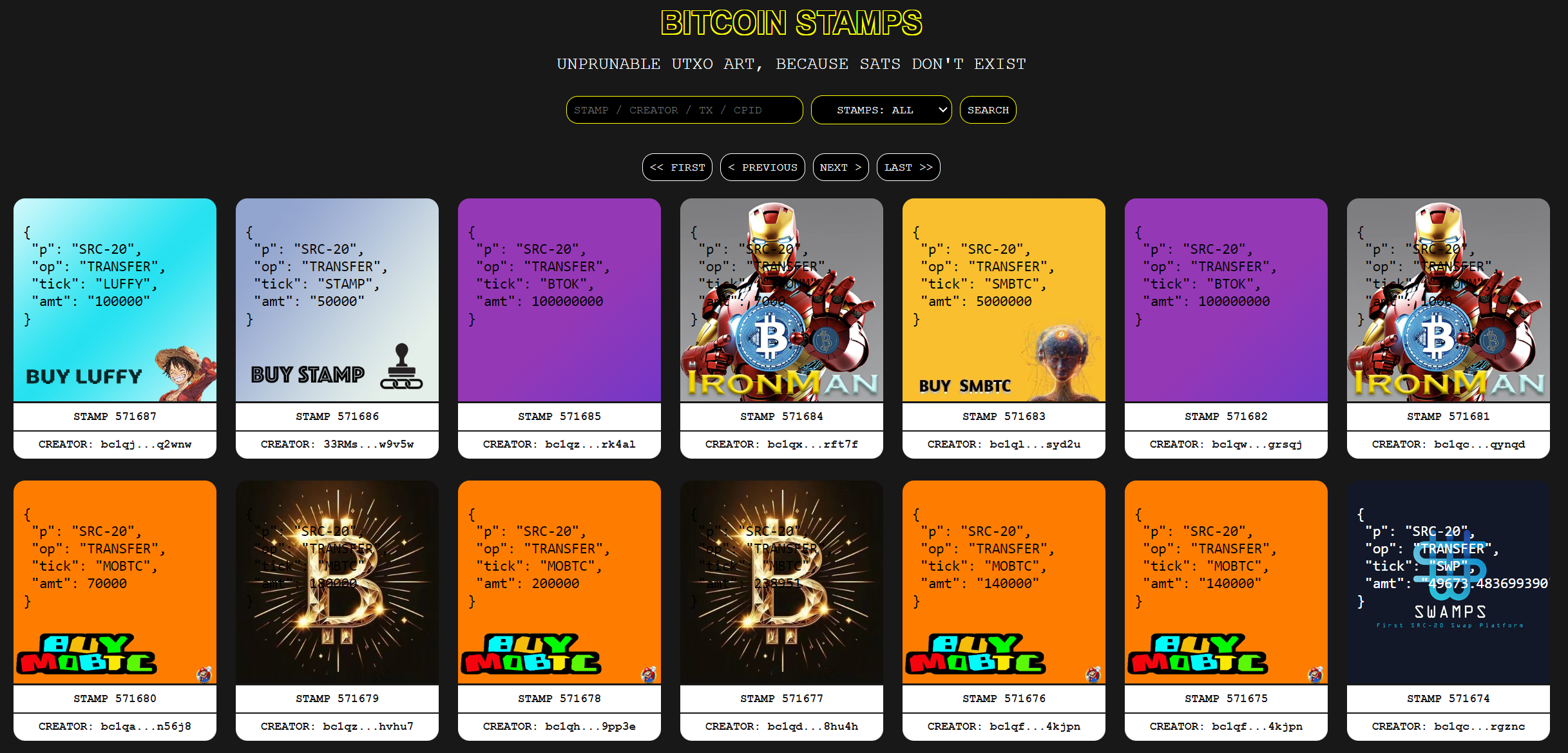
You can explore existing Bitcoin Stamps at stampchain.io.
Bitcoin Stamps vs. Bitcoin Ordinal Numbers
When looking at the differences between Bitcoin Stamps and Bitcoin Ordinals, one key distinction stands out: the permanent embedding of metadata in UTXOs for Stamps, as opposed to the potentially removable data inscriptions on satoshis for Ordinals.
These differences imply very different usage scenarios and levels of data storage reliability.
Here are some key differences to keep in mind:
- Data resilience: Bitcoin Stamps store data directly in UTXOs, meaning it remains immutable. Ordinals, on the other hand, may have their data pruned due to their dependence on witness data.
- Image size limitations: Stamps have a maximum size of 24×24 pixels for image files, while Ordinals can handle a maximum of 4 MB.
-
Usage scenarios: Bitcoin stamps are aimed at digital collectibles, art and memorabilia. Ordinals focuses on improving the granularity of transactions within the Bitcoin ecosystem.
Storage methods: Stamps use the Bitcoin Stamps protocol, which emphasizes direct embedding into UTXOs. Ordinal numbers, on the other hand, write data into the Witness Field of a block.
How do SRC-20 tokens work
You store the data for SRC-20 tokens by converting images to a Base64 format. Then you decrypt it within the description key of a Bitcoin transaction. In this way, the storage on the blockchain remains permanent and unchangeable.
The process creates a unique, numerical identifier for each token, making them indivisible.
Once encrypted, these tokens are sent to the Bitcoin network for validation. The use of UTXOs as a storage method sets SRC-20 tokens apart from other standards and ensures that the data cannot be pruned, meaning it remains on the blockchain.
Essentially, it ensures that each token is truly immutable and secure.
Once created, these tokens must meet specific criteria. Each stamp must be numeric and have a unique identification code.
How important is SRC-20 in the Bitcoin ecosystem?
Honestly, if you delve deeper into the Bitcoin ecosystem, it becomes clear that SRC-20 tokens have significantly broadened the use cases of this blockchain and made it more competitive with other decentralized platforms.
The SRC-20 token standard has expanded the capabilities of the Bitcoin blockchain. What used to be used purely for financial transactions has now acquired new use cases. Four major consequences include:
- Better security: By storing data in UTXOs, SRC-20 tokens are secure, immutable, and unprunable. This ensures the long-term preservation of data and asset information
- Increased usage scenarios: The SRC-20 standard allows the creation of fungible and non-fungible tokens directly on the blockchain. It has opened up new creative and trading opportunities for digital collectibles and NFTs on Bitcoin, similar to Ethereum’s ERC-20 tokens.
- Independence of currency functions: SRC-20 tokens operate independently of Bitcoin’s main currency function, demonstrating the blockchain’s potential for various decentralized applications.
How to use SRC-20 tokens
For the versatility of SRC-20 tokensstart by understanding the essential steps for creating and managing these innovative assets within the Bitcoin ecosystem.
- Because SRC-20 tokens are created using the Stamps protocolyou need to convert images to Base64 formatso that data is inscribed on the Bitcoin blockchain.
- You then need a compatible one Bitcoin wallet to facilitate peer-to-peer transactions and independent storage of the tokens.
- When you mint an SRC-20 token, you generate a Bitcoin receiving address and follow the instructions provided coin process. This process involves selecting ticker symbols and confirming payment for the desired token quantities.
Transaction fees for SRC-20 tokens are paid in Bitcoin, so integration within the ecosystem is seamless.
SRC-20 VS BRC-20: comparison
When you compare SRC-20 and BRC-20, you will notice that each has its own unique characteristics that impact the way data is embedded and managed within the Bitcoin ecosystem.
SRC-20 tokens use the Bitcoin Stamps protocol for immutable data storage on UTXOs. It is worth noting that the Stamp protocol has its own token, STAMP, which is used for trading, peer-to-peer (P2P) transactions and commemorative inscriptions on the Bitcoin blockchain.
BRC-20 tokens, on the other hand, use Bitcoin Ordinals for data that can be changed and potentially pruned. The native token of the Ordinal protocol is ORDI and it performs a similar function to STAMP.
These are the main differences between SRC-20 and BRC-20:
-
Immutability: SRC-20 tokens cannot be changed after creation, while BRC-20 tokens’ data can be changed if necessary.
Data size: SRC-20 tokens allow for larger data sizes, which impacts transaction fees, while BRC-20 tokens benefit from reduced size limits that provide more predictable fees.
Integration: SRC-20 works independently of Bitcoin coin transactions, but facilitates parallel functionality. BRC-20 can change underlying data and influence the way token interactions are performed.
Adoption: BRC-20 tokens currently have an edge in adoption and market presence simply due to their well-established integration between exchanges. SRC-20 tokens are in the early stages of development and are gaining interest.
it comes down to
SRC-20 tokens are embedded directly into Bitcoin transactions, ensuring immutability and facilitating the creation of fungible and non-fungible tokens. They use the Bitcoin Stamps protocol and store image data securely in UTXOs, which support formats such as JPG, GIF, PNG and SVG.
Their dependence on UTXOs for storage makes them safe and irreversible. This innovation fundamentally expands the use of Bitcoin beyond simple transactions. It enables the creation and trading of unique digital assets and collectibles, similar to Ethereum’s ERC-20 tokens. As SRC-20 tokens gain popularity, they significantly expand the potential of the Bitcoin ecosystem.
Who knows, protocols like SRC-20 and BRC-20 and projects like Stacks will play an important role in building a thriving DeFi ecosystem on Bitcoin that can rival Ethereum and other Proof-of-Stake (PoS) chains. If that happens, Bitcoin’s price could even reach the seven-figure mark in the distant future.