
- Ethereum maintained its position as the largest smart-contract network, with TVL consistently ranking above it $42 billionwhile the liquidity of stablecoins remained above it $164 billion all week.
- Solana continued to dominate the activity in the chain, processing 74-80 million daily transactions and recording some of the highest perpetual futures volumes among the major blockchains.
- BSC chain (BSC) showed strong retail participation, with an average well above 2.6 million active addresses and achieve 18.1 million daily transactions during the week.
- TRON remained the undisputed leader in stablecoin settlements, with almost a majority $91 billion in stablecoin market cap and generating the highest protocol revenue among the major chains.
- Bitcoin showed resilience despite market volatility, with TVL bouncing back above that $5 billion and ecosystem activity remains stable throughout the week.
- Base continued to establish itself as a leading Ethereum Layer-2 network and consistently generates more than $1 billion in daily DEX volume while retaining almost $4.8 billion in stablecoin liquidity.
- Across the ecosystem, TVL has remained relatively stable despite fluctuations in token market capitalization, highlighting continued confidence in decentralized financial infrastructure.
Ethereum
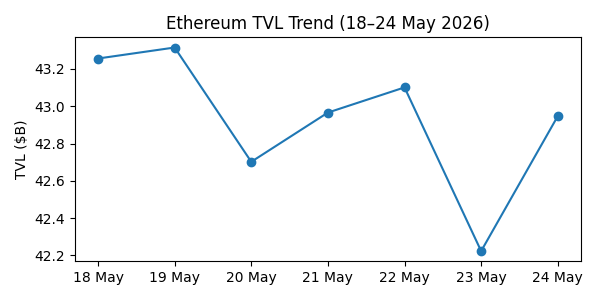
Ethereum continued to demonstrate why it remains the backbone of decentralized finance. During the week, the total locked value fluctuated between $42.2 billion and $43.3 billion, which is significantly higher than any other smart-contract blockchain. While TVL experienced minor declines during periods of broader market weakness, the network consistently attracted substantial capital and maintained high liquidity for its DeFi applications. Ethereum’s stablecoin market cap remained exceptionally strong, reaching over $164 billion during the week and nearly $166 billion on May 19.
This massive stablecoin base highlights Ethereum’s critical role as a settlement layer for digital dollar activity and institutional DeFi participation. Trading activity on Ethereum also remained robust, with daily decentralized exchange volume often exceeding $1 billion and peaking at $1.41 billion on May 18. Perpetual futures activity reached as high as $1.84 billion, demonstrating continued demand for leveraged trading and sophisticated financial products. Although active addresses gradually decreased throughout the week, the number of transactions increased from 1.85 million to more than 2.58 million daily transactions, indicating greater engagement among existing users and cementing Ethereum’s status as the premier hub for high-quality decentralized finance activity.
Solana
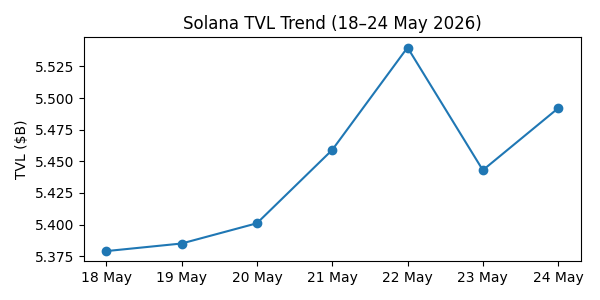
Solana once again showed its strength as one of the fastest growing blockchain ecosystems. The network’s TVL rose steadily from $5.38 billion to nearly $5.5 billion, reflecting continued capital inflows despite broader market fluctuations. Solana’s ecosystem continued to benefit from strong user participation, with active addresses consistently between 1.75 million and 2.04 million. More specifically, the network processed approximately 75-80 million transactions per day, far surpassing most competing Layer-1 blockchains.
Trading activity remained one of Solana’s strongest gains, with DEX volumes often exceeding $1 billion per day, reaching $1.37 billion on May 21. Trading volumes in perpetual futures were particularly impressive, surpassing $5.8 billion on several days, underscoring Solana’s growing influence in the derivatives markets. Stablecoin’s liquidity remained healthy above $15 billion, while daily fees consistently exceeded $400,000. These numbers demonstrate Solana’s ability to combine scalability, liquidity and user growth, strengthening Solana’s position as one of the most active blockchain ecosystems in the industry.
BSC chain
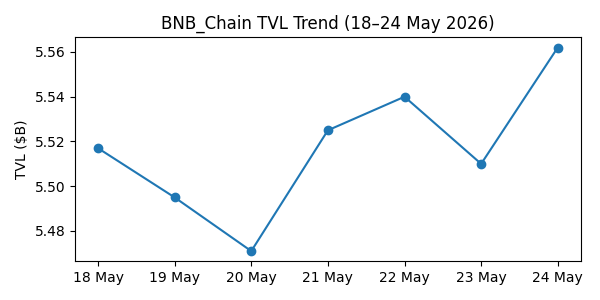
BSC Chain maintained its position as one of the most actively used blockchain networks during the week. TVL remained relatively stable around $5.5 billion, while stablecoin capitalization continually fluctuated around $17.4-17.8 billion, providing strong liquidity support for ecosystem participants. The network’s standout metric remained user activity, with active addresses ranging between 2.37 million and 2.79 million, making it one of the most used chains by private users. The number of daily transactions often exceeded 15 million, peaking at more than 18 million transactions on May 22.
Decentralized exchange activity remained healthy, with volumes generally above $500 million, reaching almost $674 million during the week. While perpetual futures trading remained modest compared to Ethereum and Solana, BSC Chain continued to benefit from low transaction fees, strong retail involvement, and a broad ecosystem of decentralized applications. These factors strengthen its position as one of the leading blockchains for everyday decentralized financial participation.
TRON
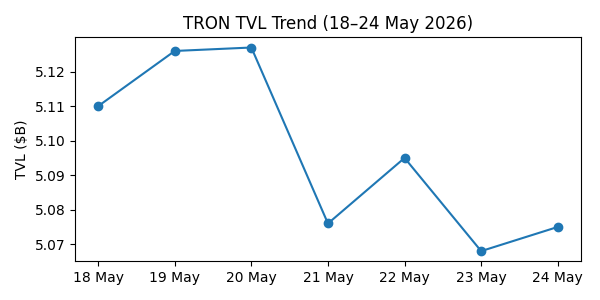
TRON remained one of the most economically productive blockchain networks this week. While the total locked value remained near $5.1 billion, the network’s true power was reflected in its massive stablecoin ecosystem, which consistently maintained approximately $91 billion in stablecoin market capitalization. This level of liquidity underlines TRON’s dominant role in global stablecoin transfers, cross-border payments and settlement activities. The network generated between $754,000 and $1.3 million in daily fees and revenue, outperforming most competing Layer-1 chains in terms of protocol revenue.
User engagement remained exceptionally high, with active addresses ranging between 3.7 million and 4.15 million and daily transactions remaining consistently above 11 million. While DEX and perpetual trading volumes remained lower than Ethereum and Solana, TRON’s focus on payments infrastructure and stablecoin utility continues to drive significant economic activity. The combination of strong revenue generation, large user base and dominant stablecoin presence reinforces its strategic importance within the blockchain ecosystem.
Bitcoin
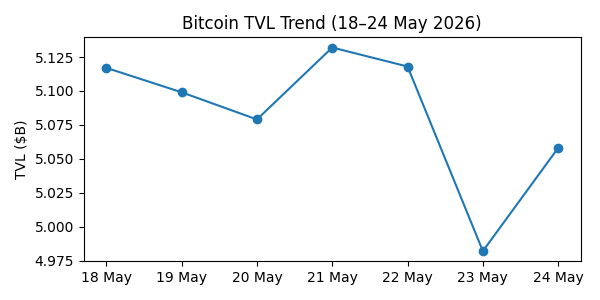
Bitcoin’s ecosystem remained resilient despite swings in market sentiment throughout the week. TVL hovered around the $5 billion mark and recovered to around $5.06 billion on May 24 after a temporary decline. While Bitcoin is primarily recognized as a store of value, growing activity in Bitcoin-native DeFi protocols and Layer-2 solutions continues to expand its usefulness beyond traditional payments. Active addresses remained healthy, ranging from about 564,000 to 671,000, while daily transactions often exceeded 600,000.
Decentralized exchange activity also improved significantly, with volume exceeding $1 million on May 24. While perpetual trading activity remained relatively muted compared to smart contract-focused chains, Bitcoin’s token market cap remained consistently around $1.5 trillion, underscoring its continued dominance within the broader digital asset market. The data suggests that Bitcoin’s ecosystem is gradually evolving into a more diversified financial platform, while maintaining its role as the industry’s main reserve.
Base
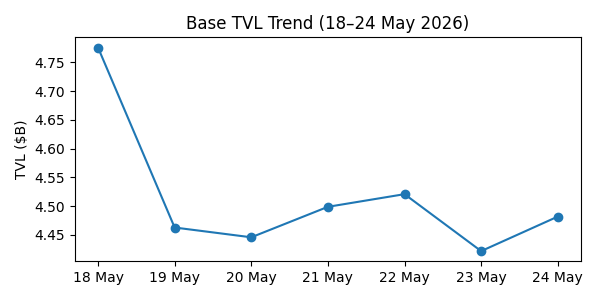
Base continued to strengthen its position as one of the most important Ethereum Layer-2 ecosystems. During the week, TVL remained between $4.4 billion and $4.8 billion, demonstrating consistent liquidity and user confidence despite broader market volatility. The stablecoin capitalization remained close to $4.7-4.8 billion, providing a solid foundation for decentralized trading and financial activities. DEX trading volumes remained extremely strong, consistently exceeding $1 billion per day and sometimes reaching as high as $1.2 billion.
Perpetual futures contracts also gained traction, reaching a weekly peak of about $345 million. User engagement remained stable, with active addresses generally between 430,000 and 475,000, while the number of transactions regularly exceeded 10 million daily transactions. These figures highlight Base’s growing importance as a scalable and cost-efficient extension of Ethereum, capable of supporting substantial economic activity while maintaining seamless interoperability with the broader Ethereum ecosystem.
The week of May 18-24, 2026 highlighted the increasingly specialized role of large blockchain networks. Ethereum remained the dominant destination for DeFi capital and stablecoin liquidity, Solana led in transaction throughput and derivatives trading, BSC Chain excelled in retail participation, TRON continued to dominate stablecoin settlements and protocol monetization, Bitcoin maintained its position as the largest digital asset ecosystem, and Base strengthened its position as the leading Layer-2 scaling solution. Together, these trends illustrate a maturing blockchain landscape in which networks are increasingly distinguished by unique strengths and use cases, rather than competing solely on transaction volume or market capitalization.
Weekly comparison: (May 11-17 vs. May 18-24, 2026)
- Ethereum remained the largest DeFi ecosystem, but TVL, fees and DEX trading activity weakened compared to the previous week, due to weaker market participation.
- Solana continued to lead blockchain activity with over 75 million daily transactions while maintaining the strongest perpetual futures trading volumes among the major networks.
- BSC chain delivered one of the most stable performances, with TVL remaining close $5.5 billionstablecoin liquidity above $17 billionand active addresses reaching weekly highs.
- TRON strengthened and almost maintained its dominance in stablecoin settlements $91 billion in stablecoin market cap while generating industry-leading on-chain fee revenue.
- Bitcoin stabilized after the previous week’s decline, with TVL remaining around $5 billion and decentralized trading activity improved noticeably towards the end of the week.
- Base continued to rank among the leading Ethereum Layer-2 ecosystems, with consistent withdrawals $1 billion in daily DEX volume despite a modest decline in TVL and stablecoin balances.