

Charles Hoskinson has announced that he is “taking a break” of the pressure around Cardano after an emotional plea to the community. However, his comments indicate frustration rather than abandonment.
It appears that Cardano’s founder is openly questioning his remaining power over the network at a time when ADA holders are blaming him for pricing weakness, governance disputes and a fragile application ecosystem.
In one video shared on XHoskinson said the second half of the year would be difficult for Cardano and warned that more dApps and DeFi projects could die as the ecosystem consolidates.
Asked what role he personally has in solving that problem, he said: “I have no special powers at Cardano.” In a separate update from him X accounthe said, “I’m taking a break. TTYL.”
That combination has raised the obvious question: has Hoskinson given up on Cardano? There is a public pause under pressure rather than resignation. He appears to be trying to separate his public responsibility for Cardano’s vote from the formal controls now taking place elsewhere.
A founder without the override
Hoskinson’s comments struck at the heart of the central tension in Cardano’s current era. He remains the person most associated with the chain on the public markets, but Cardano’s own governance structure was built to make the protocol and control over its finances more distributed.
That context is important because Hoskinson’s list of limits was specific. He said he has no governance keys, cannot initiate a hard fork or change of protocol parameters, has no access to the treasury and does not own the Cardano trademark.
The Cardano Constitution defines hard fork initiation, protocol parameter changes, and treasury withdrawals as governance actions.
The Cardano developer portal describes a governance model involving DReps, stakepool operators and the Constitutional Commission, rather than a founding father who can force a protocol change upon request.
Hoskinson still has influence. He leads Input Output Global, commands a large public audience and can shape the debate around financing, development priorities and ecosystem strategy.
But influence is different from control of governance keys, direct access to the treasury, or unilateral power to initiate a hard fork.
Hoskinson also pointed out that he doesn’t even own the Cardano trademark.
The Cardano The Foundation’s brand policy states that the Cardano brands are the property of the Foundation. That detail matters because his comments went beyond just blaming the price. They were about whether the levers that people assume he controls actually need to be pulled by him.
Cardanos Voltaire road map framed voting and treasury systems as the path to a network no longer under IOHK’s control.
CryptoSlate’s January 2025 Plomin hard fork coverage described that upgrade as a move that gave ADA holders direct voting power on key network decisions, including parameters, government bond withdrawals, and hard forks.
Hoskinson’s frustration is part of Cardano’s decentralization story. The same governance structure that allows the community to oppose founder-backed spending also leaves the founder without a clean hand when the market demands an immediate bailout.
That design creates sharp market tension. The Cardano markets still assign Hoskinson personal responsibility for being the network’s most recognizable advocate, while the board directs capital allocation and protocol changes through bodies that may disagree with him.
The more Cardano proves that it is decentralized, the less realistic it becomes for traders to expect a bailout from the founder on demand.
The budget fight behind the break
The timing here is interesting. Cardano is in the middle of a funding battle over how much control Input Output and other ecosystem institutions should have over treasury resources.
Cut the Budget process 2026 establishes a framework for coordinating treasury requests.
A stream CGOV proposal for Cardano Vision 2026 requests 32.92 million ADA for IO Research, with a vote scheduled for June 8, 2026.
CryptoSlate previously reported that Hoskinson had warned Cardano that he could lose scientists if Input Output’s research funding failed.
That May 22 report described the impasse as a test of decentralized governance, with DReps opposing parts of a funding package related to research, maintenance, scalability, developer tools and other technical priorities.
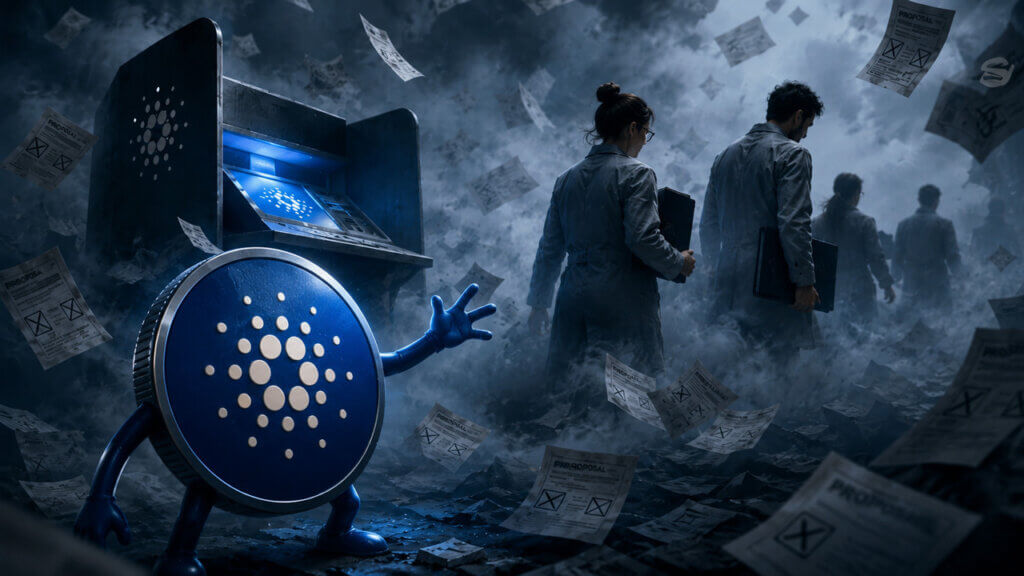
A later CryptoSlate article stated that Hoskinson refocused on Cardano and Midnight as resistance to the board increased.
That recent context runs counter to a simple abandonment narrative. Days before the breakpost, the public framing was a deeper return to Cardano’s political and technical struggles.
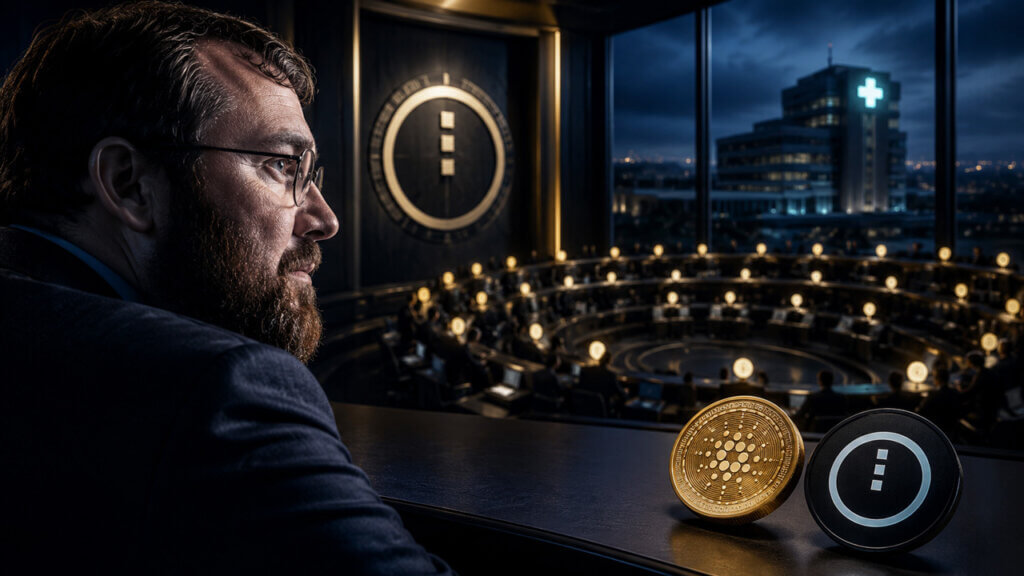
Yet the break occurs in a market that has little patience for administrative nuances. CryptoSlate’s June 4 market snapshot showed Cardano at number 13, with an ADA of almost $0.18, down 10% over 24 hours, down 25% over 30 days, and 93% below its all-time high at the time of pickup.
The direction of the pressure is clear enough. Cardano’s pricing page shows an asset that has lost momentum as rival ecosystems compete for developers, stablecoins and liquidity.
That’s where Hoskinson’s comments take on more significance. If Cardano’s DeFi foundation, dApp sector, and financing process are to be improved, the solution must go through board participants, builders, infrastructure teams, and ecosystem institutions.
A founder can argue, persuade, threaten to walk away from specific proposals, or take a break from public pressure. He cannot make a decentralized system of governance behave like a corporate board that reports to him.
The real test is the execution
Cardano’s near-term question revolves around whether the network can turn decentralized control into visible execution.
CryptoSlate’s May 21 analysis of Cardano’s hard fork and DeFi weakness framed the Van Rossem upgrade as a test of whether cheaper scripts, cryptographic upgrades and board coordination can translate into developer activity.

That remains the most sustainable benchmark.
The bearish view is that Hoskinson’s break will become a confidence shock if the community interprets it as a withdrawal, while funding disputes and usage weakness remain unresolved.
That scenario would leave Cardano with the downside of founder dependency and the friction of decentralized approval: traders still blame one person, while the system requires many parties to take action.
A constructive approach would be for the moment to force Cardano stakeholders to use the system they built.
DReps, SPOs, Intersect, the Cardano Foundation, EMURGO, Input Output and builders would have to make budget choices, defend priorities and deliver measurable results without relying on Hoskinson’s presence as the default coordination layer.
The next signal will be whether the active research proposal is approved or fails, whether Cardano institutions respond with a clearer execution plan, and whether usage metrics such as TVL, stablecoin liquidity, DEX volume, and active deployments start to change.
Hoskinson still appears committed to Cardano’s future, even as he steps back from immediate public pressure. His break has exposed a sharper question for the network: If the founder can’t pull the levers people want him to pull, can Cardano’s governance system pull them in time?