
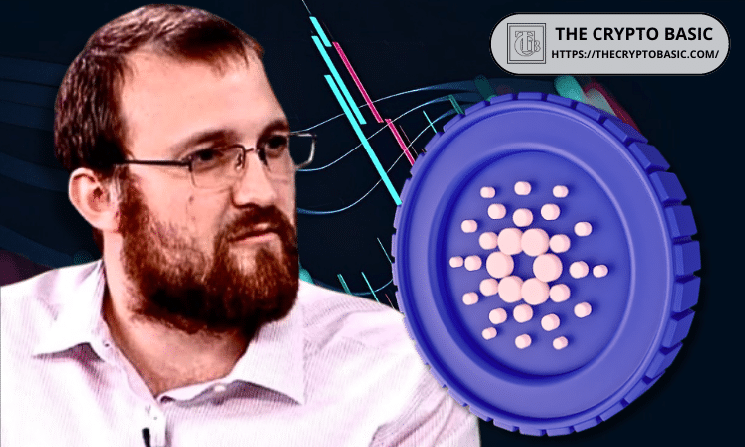
Cardano founder Charles Hoskinson has revealed that discussions are underway to bring major banks and insurance companies onto the Midnight blockchain to integrate tokenized real-world assets (RWAs).
The comments highlight Cardano’s growing ambition to position Midnight as a compliant infrastructure layer for institutional finance, particularly in the areas of tokenized deposits, yield generation and privacy-focused blockchain applications.
Key points
- Cardano founder Charles Hoskinson revealed that banks and insurance companies are exploring integrations with the Midnight blockchain.
- The initiative focuses on tokenizing real-world assets directly on Midnight.
- Monument Bank has already announced plans to tokenize £250 million ($335.97 million) of customer deposits on the network.
- Hoskinson stated that the first wave of Cardano-Midnight hybrid applications could start within six months.
Hoskinson wants to bring more financial institutions to midnight
During an interview with David Gokhshtein, host of the Breakdown podcast, Hoskinson highlighted the increasing institutional interest in Midnight, Cardano’s partner chain.
He specifically pointed to Monument Bank’s proposed £250 million ($335.97 million) tokenized deposit initiative as evidence of increasing institutional trust in the network. Furthermore, Hoskinson revealed that discussions are already underway with other banks interested in joining the initiative.
Many industry participants see tokenized deposits as the next major phase of blockchain adoption in traditional finance. Unlike stablecoins, tokenized bank deposits remain directly tied to regulated banking institutions.
As a result, they can potentially improve the efficiency, transparency and interoperability of financial systems. Hoskinson’s comments suggest that the Cardano ecosystem is positioning itself within this emerging sector.
Insurance companies are exploring the return potential of RWAs at midnight
In addition to banking institutions, Hoskinson also revealed that several insurance companies are exploring the possibility of placing risk-weighted assets on Midnight to generate returns. Consequently, this could significantly expand Midnight’s role within the traditional financial sector.
Members of the Cardano community believe that the potential involvement of insurance companies could be substantial. Insurers typically manage huge capital pools and often aim for relatively stable return-generating investments. Therefore, if these companies adopt Midnight as the blockchain infrastructure for tokenized RWAs, the network could ultimately host billions of dollars in tokenized assets.
Cardano-Midnight hybrid applications could be launched this year
Hoskinson further revealed that the first generation of hybrid Cardano-Midnight applications could launch within the next six months. According to him, these applications will first be deployed on Cardano and then move to Midnight.
The hybrid model suggests that developers will combine Cardano’s existing blockchain infrastructure with Midnight’s privacy-focused capabilities. This approach could in turn strengthen Cardano’s position within the institutional blockchain sector.
Since Midnight’s launch, the network has continued to attract institutional attention, including partnerships with Google and AlphaTON Capital. Now Hoskinson and the Midnight Foundation are exploring opportunities to get major financial institutions on board to tokenize real-world assets directly on the blockchain.