

The Bank of Japan’s expected rate hike brings global liquidity conditions for Bitcoin back into focus [BTC] investors.
According to XWIN Japan on CryptoQuant, markets increasingly expect yields to rise from 0.75% to 1.0%, while USD/JPY remains around 160 and Japanese 10-year bond yields hover around 2.64%.
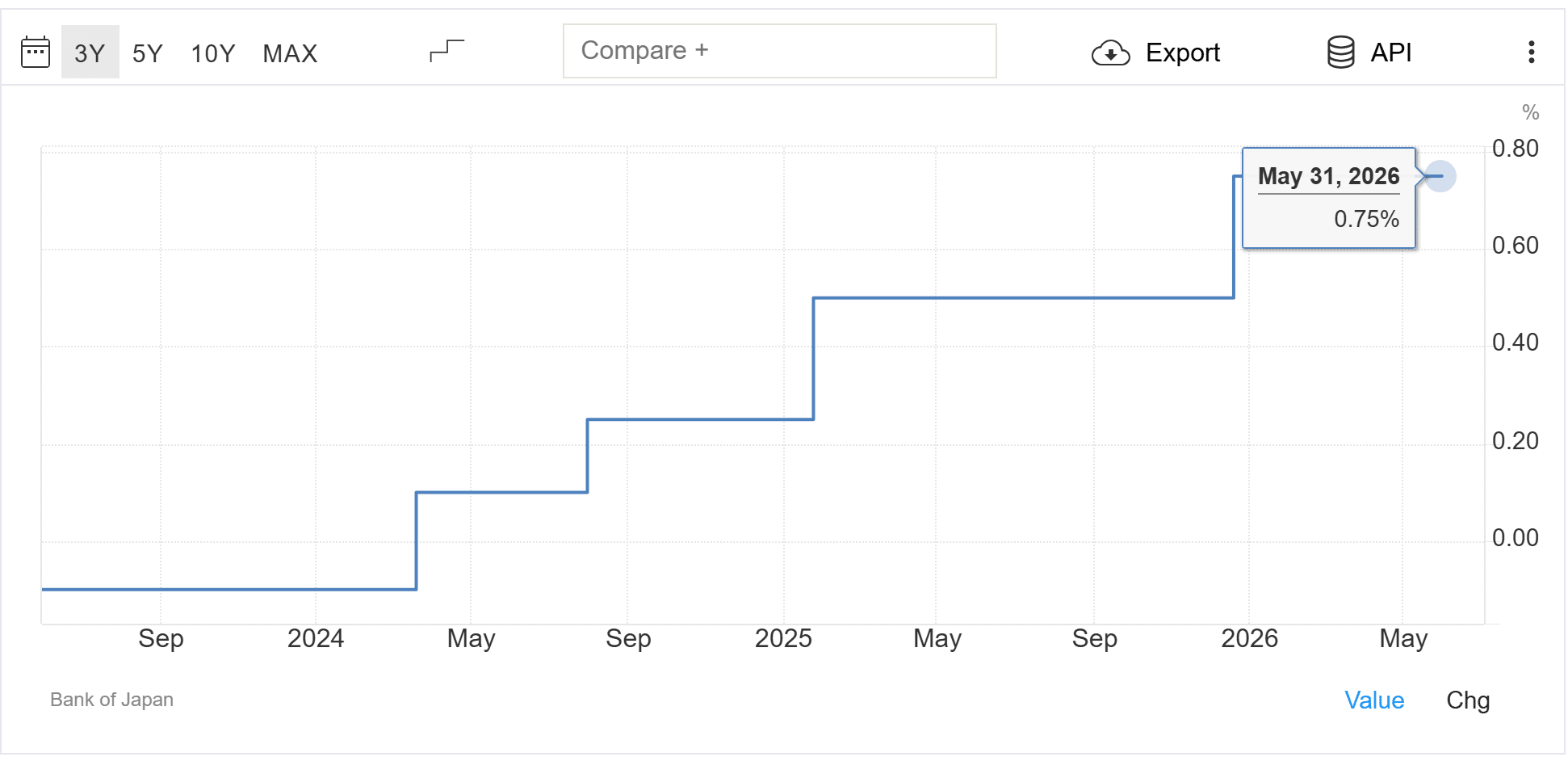
These conditions point to tighter financing markets after decades of near-zero interest rates. As financing costs rise, leveraged positions in global markets may face additional pressure.
Bitcoin remains particularly sensitive as its correlation with global liquidity remains high. If yen-funded carry trades start to decline, risk appetite could weaken further. That environment could test Bitcoin’s resilience as liquidity conditions tighten globally.
The credit markets indicate increasing caution
As attention continues to focus on the Bank of Japan’s expected rate hike, credit markets could also reinforce the same cautious message.
In fact, the annual change in the ICE BofA High Yield Option-Adjusted Spread has risen sharply from its lows and is approaching positive territory. This measure tracks the additional compensation that investors demand to hold riskier corporate bonds.
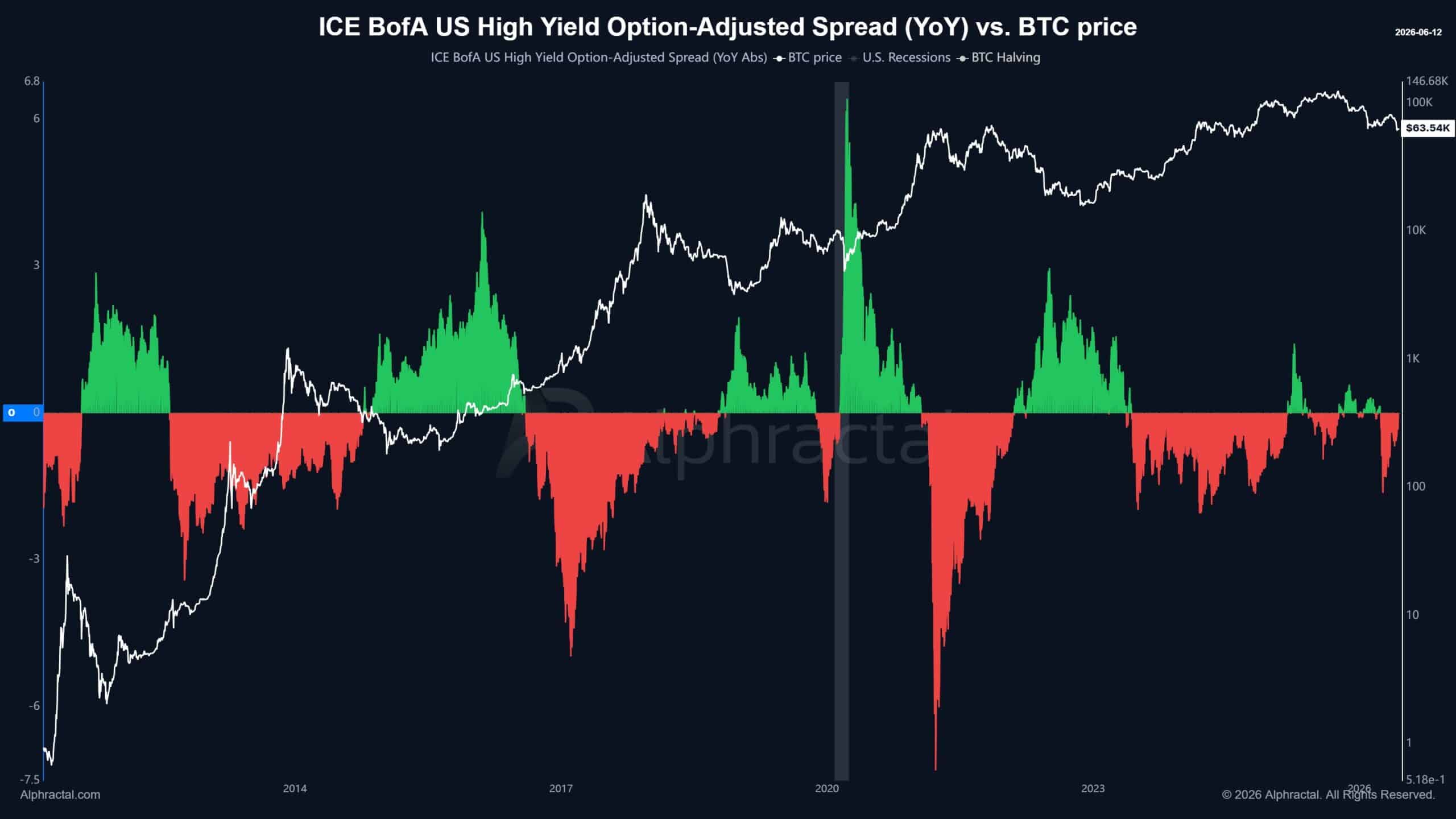
As that premium rises, it is often a sign of increasing caution about risks. Similar shifts have historically coincided with weaker demand for speculative assets.
Although Bitcoin was trading around $63,700 at the time of writing, the recent increase in credit spreads suggests that risk appetite could become more vulnerable, making markets increasingly vulnerable to further liquidity pressures.
Resetting the leverage reduces liquidation risk
As markets become more defensive, Bitcoin’s derivative structure could mean that traders have already started to adapt to the changing environment.
As macro pressures mount, Bitcoin enters this period with much less leverage than earlier in the cycle. For example, just a few months ago, Open Interest climbed above $40 billion as traders increased their directional exposure.
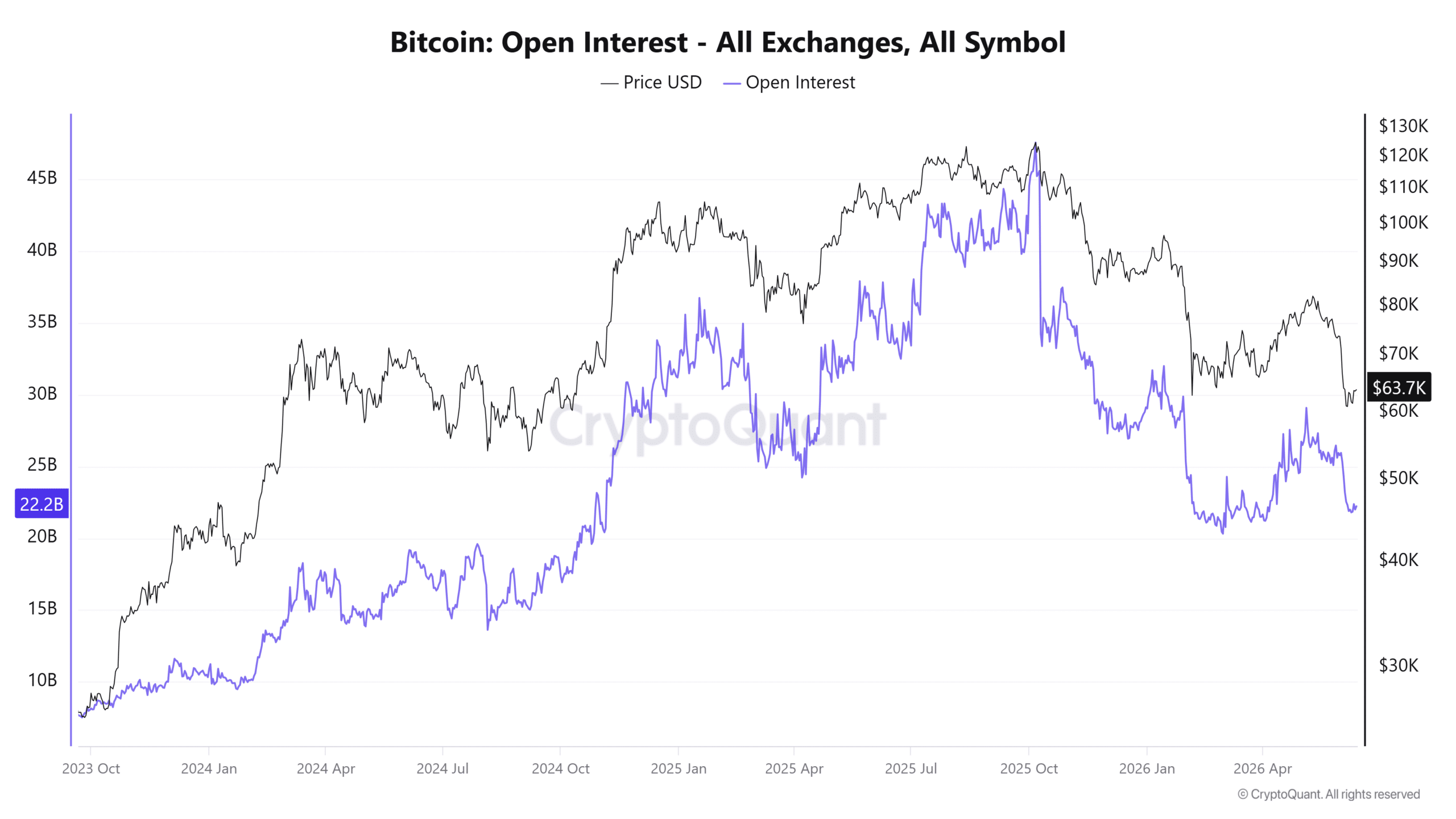
Since then, Open Interest has fallen towards $21-25 billion, showing that much of the speculative positioning has already been removed. Such a shift reduces the risk of liquidation-induced sell-offs, which have amplified previous declines.
As a result, macro conditions may impact Bitcoin more through institutional flows and liquidity than through debt servicing.
Final summary
- Bitcoin [BTC] enters a tighter liquidity environment with lower leverage, reducing the risk of major liquidation cascades.
- Bitcoin remains increasingly tied to credit and financing conditions as risk appetite weakens in global markets.