

XRP is gradually redefining how value is assessed in the crypto market as its utility-focused story expands beyond market cap comparisons. While some assets are valued primarily on speculative valuation, XRP’s role within the global payments infrastructure introduces a different framework that focuses on efficiency, liquidity and real-world usage.
How institutional payment flows can influence XRP demand
XRP should be viewed less as a traditional cryptocurrency and more as a digital commodity designed to facilitate liquidity in global financial networks. According to According to CharuSan, market capitalization is an equity metric that fails to capture XRP’s true role as an institutional bridge that drives the global value transfer and liquidity pool.
Related reading: XRP whales accused of manipulating liquidity in major market moves
As adoption expands among banks, the foreign exchange (FX) markets and clearing houses such as the Depository Trust and Clearing Corporation (DTCC), Nostro and Vostro accounts, and others are beginning to use XRP extensively. The price is therefore calculated based on the delivery within Ripple payments (ODL). Currently, it is calculated based on the available effective liquidity, and not just on the circulating supply.
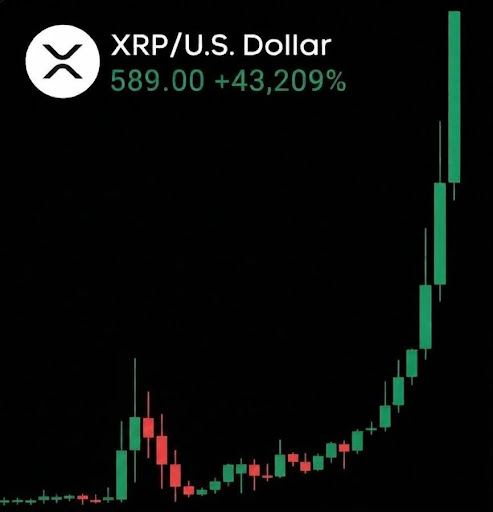
CharuSan explains that transaction speed alone cannot replace liquidity depth, especially when multiple institutions are processing larger concurrent volumes of global transactions. Moreover, speed has its limits.
Even in an optimized system, 1 XRP can realistically circulate a maximum of 10 times per day. Designed for deep liquidity pools, XRP enables high-quality unit capacity, which is necessary to eliminate slippage and neutralize volatility risk for banks during high-value transfers.
Trump’s Fintech Order Leads to New Optimism for XRP Adoption
A recent fintech-focused executive order from President Donald Trump could mark a major development for the broader digital asset industry and possibly XRP’s long-term usefulness. A crypto analyst known as BankXRP on X declared that by directing the Federal Reserve (Fed) to evaluate whether crypto companies can gain direct access to the US payments infrastructure, the policy introduces a path for blockchain companies like Ripple to integrate directly with the traditional financial system.
Related literature: XRP’s Recent Strategic Design Could Spell the End for the Bears, Says Crypto Analyst
So this administration could be transformational for Ripple, giving it access to the Fed payment rails to bypass the legacy banking intermediaries completely. For the XRP ecosystem, the result would likely be faster settlement speeds, lower institutional transaction fees, and direct access to Fed master accounts.
BankXRP states that if this assessment is successful, such a shift could elevate XRP’s role from a largely speculative asset to a regulated financial instrument embedded in global payment networks and a fundamental pillar of international trade.
Analyst Skipper did that updated that Ripple has reportedly reached a major milestone by obtaining a banking license. The report suggests that this move helped boost Ripple’s valuation above $120 billion, reaffirming Ripple’s position as a major financial infrastructure company connected to the XRP ecosystem.
Featured image from Adobe Stock, chart from Tradingview.com