
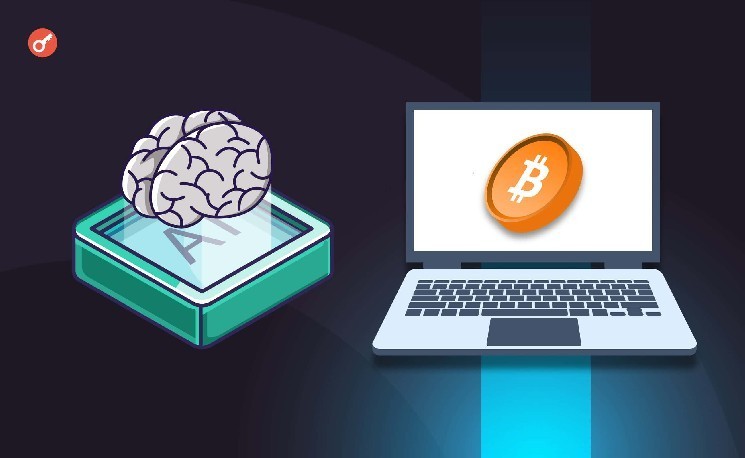
The conversation around AI has evolved from questioning its relevance to focusing on making it more reliable and efficient as its use becomes widespread. Michael Heinrich envisions a future where AI promotes a post-scarcity society, freeing individuals from mundane jobs and enabling more creative pursuits.
The data dilemma: quality, origin and trust
The discussion around artificial intelligence (AI) has fundamentally changed. The question is no longer about its relevance, but how it can be made more reliable, transparent and efficient as its use becomes commonplace in every sector.
The current AI paradigm, dominated by centralized ‘black box’ models and massive, proprietary data centers, is facing increasing pressure from concerns about bias and monopolistic control. For many in the Web3 space, the solution lies not in tighter regulation of the current system, but in complete decentralization of the underlying infrastructure.
For example, the effectiveness of these powerful AI models is primarily determined by the quality and integrity of the data on which they are trained – a factor that must be verifiable and traceable to avoid systemic errors and AI hallucinations. As commitment to industries such as finance and healthcare increases, the need for a trustworthy and transparent foundation for AI becomes critical.
Michael Heinrich, a serial entrepreneur and Stanford graduate, is among those leading the effort to build that foundation. As CEO of 0G Labs, he is currently developing what he describes as the first and largest AI chain, with the mission to ensure that AI becomes a secure and verifiable public good. Having previously founded Garten, a leading YCombinator-backed company, and worked at Microsoft, Bain and Bridgewater Associates, Heinrich is now applying his expertise to the architectural challenges of decentralized AI (DeAI).
Heinrich emphasizes that the core of AI performance rests on the knowledge base: the data. “The effectiveness of AI models is primarily determined by the underlying data on which they are trained,” he explains. High-quality, balanced data sets lead to accurate answers, but poor or underrepresented data results in poor quality output and increased susceptibility to hallucinations.
For Heinrich, maintaining the integrity of these constantly updated and diverse data sets requires a radical departure from the status quo. He argues that the main culprit behind AI hallucinations is the lack of transparent provenance. His remedy is cryptographic:
I believe that all data in the chain should be anchored with cryptographic proofs and verifiable evidence trails to maintain data integrity.
This decentralized, transparent foundation, combined with economic incentives and continuous coordination, is seen as the necessary mechanism to systematically eliminate errors and algorithmic bias.
In addition to tech solutions, Heinrich, a Forbes 40 Under 40 honoree, has a macro vision for AI, believing it should usher in an era of abundance.
“In an ideal world, it will hopefully create the conditions for a post-scarcity society, where resources become abundant and no one has to worry about doing everyday jobs,” he says. This shift would allow individuals to “focus on more creative and relaxing work,” essentially allowing everyone to enjoy more leisure time and economic security.
Crucially, he argues that the decentralized world is ideally suited to bring about this future. The beauty of these systems is that they are aligned with incentives, creating a self-balancing economy for computing power. As demand for resources increases, the incentives to supply them naturally increase until that demand is met, satisfying the need for computing resources in a balanced, permissionless manner.
Protecting AI: Open Source and Incentive Design
To protect AI from deliberate misuse, such as voice cloning scams and deepfakes, Heinrich proposes a combination of human-centric and architectural solutions. First and foremost, the focus should be on educating people on how to identify AI scams and counterfeits used for impersonation and disinformation. Heinrich states: We need to teach people to identify or fingerprint AI-generated content so they can protect themselves.
Lawmakers can also play a role by setting global standards for AI safety and ethics. While this is unlikely to eliminate AI abuse, the presence of such standards may “go some way to discouraging its use.” The most powerful countermeasure, however, is woven into the decentralized design: “Designing incentive-aligned systems could dramatically reduce intentional AI abuse.” Deploying and managing AI models in the chain rewards honest participation, while malicious behavior has direct financial consequences through chain cutting mechanisms.
While some critics fear the risks of open algorithms, Heinrich tells Bitcoin.com News he enthusiastically supports it because it provides insight into how models work. “Things like verifiable training data and immutable data trails can be used to ensure transparency and enable community oversight,” which directly counters the risks associated with proprietary, closed-source ‘black-box’ models.
To realize this vision of a secure and low-cost AI future, 0G Labs is building the first “Decentralized AI Operating System (DeAIOS).”
This operating system is designed to provide verifiable AI provenance: a highly scalable data storage and availability layer that enables the storage of massive AI datasets on-chain, making all data verifiable and traceable. This level of security and traceability is essential for AI agents operating in regulated industries.
Additionally, the system features a permissionless computing marketplace that democratizes access to computing resources at competitive prices. This is a direct response to the high costs and vendor lock-in associated with centralized cloud infrastructure.
0G Labs has already demonstrated a technical breakthrough with Dilocox, a framework that enables the training of LLMs exceeding 100 billion parameters via 1 Gbps decentralized clusters. By dividing the models into smaller and independently trained chunks, Dilocox has demonstrated a 357x improvement in efficiency compared to traditional distributed training methods, making large-scale AI development economically viable outside the walls of centralized data centers.
A better, affordable future for AI
Ultimately, Heinrich sees a very bright future for decentralized AI, one defined by participation and the removal of barriers to adoption.
“It’s a place where people and communities co-create expert AI models so that the future of AI is shaped by the many rather than just a handful of centralized entities,” he concludes. With proprietary AI companies under pressure to raise prices, the economics and incentive structures of DeAI offer a compelling, much more affordable alternative where powerful AI models can be created at a lower cost, paving the way for a more open, more secure, and ultimately more beneficial technological future.
Frequently asked questions
- What is the core problem of today’s centralized AI? Current AI models suffer from transparency issues, data bias and monopolistic control due to their centralized ‘black box’ architecture.
- What solution is Michael Heinrich’s 0G Labs building? 0G Labs is developing the first ‘decentralized AI operating system (DeAIOS)’ to make AI a secure, verifiable and public good.
- How does decentralized AI ensure data integrity? Data integrity is maintained by anchoring all data in the chain with cryptographic proofs and a verifiable evidence trail to prevent errors and hallucinations.
- What is the main benefit of 0G Labs’ Dilocox technology? Dilocox is a framework that makes large-scale AI development significantly more efficient, demonstrating a 357x improvement over traditional distributed training.