
TL; DR
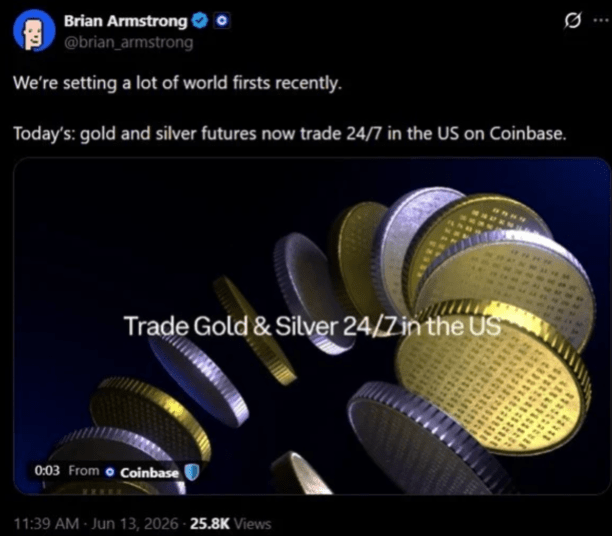
- Coinbase Derivatives has announced 24/7 gold and silver futures contracts for US traders.
- The products are positioned as regulated commodity exposure through Coinbase’s derivatives arm.
- Coinbase also indicated that oil futures are planned as a later extension.
Coinbase moves further into regulated futures
Coinbase Derivatives is expanding its regulated futures offering with 24/7 gold and silver contracts aimed at US retail and institutional traders. The announcement adds a new layer to Coinbase’s efforts to expand beyond spot cryptocurrency trading and into broader market structure products that operate 24 hours a day.
This move is notable because gold and silver are not crypto assets, but Coinbase presents the products through the same always-on trading logic that helped define digital asset markets. That could appeal to traders who are used to accessing cryptocurrencies but want exposure to traditional commodities through a regulated platform.
Coinbase Derivatives said the contracts are CFTC regulated. The company also pointed to oil futures as a planned next step, suggesting the platform is building a broader suite of 24-hour commodity products rather than treating gold and silver as a one-time launch.
Why 24/7 commodity futures are important
Traditional commodity futures trade over long sessions, but aren’t really available at the same always-on rhythm as crypto markets. By offering 24/7 access, Coinbase seeks to bring a crypto-native trading experience to assets that have historically sat within more conventional market hours and location structures.
This is important because the exchange is trying to position itself as more than a spot crypto marketplace. Futures, derivatives and regulated market infrastructure are now a key part of the company’s long-term strategy, especially as US institutions look for compliant ways to access digital and adjacent markets.
Why this matters
For crypto traders, the product expansion could also blur the lines between digital asset platforms and traditional brokerage platforms. Coinbase can use its existing brand and regulatory footprint to compete for traders who want commodities, cryptocurrencies and ultimately other products in the same ecosystem.
The story also reminds us that the next phase of crypto exchange competition may not just be about offering tokens. It could be about which platforms can build regulated multi-asset trading rails that will be familiar to institutions, while still maintaining the speed and accessibility of crypto markets.
What to watch next
The key details to keep an eye on are contract specifications, margin requirements, launch dates and whether the products attract meaningful volume after go-live.
Regulatory documents and official Coinbase Derivatives contract pages should be checked for precise margin and leverage data before publishing these figures.
Market context
The broader market context is important because traders are no longer just reacting to token-specific news. Institutional flows, deposits, regulated derivatives, custody conditions, and policy changes now directly impact the pricing of Bitcoin and large-cap crypto assets. That makes developments in primary sources useful, even if they do not immediately lead to a sharp price movement.
For NewsBTC, the practical question is whether the development changes liquidity, risk appetite, compliance processes or institutional confidence. These are the signals that can influence market structure over time, especially if they come from official documents, regulatory communications, stock market announcements, or commonly followed data sources.
This report is based on information from the Official Coinbase Blog And Brian Armstrong’s official X account