

Bitcoin Layer-2 project Botanix is closing its network after concluding that demand for Bitcoin-native decentralized finance may not be high enough to sustain independent blockchain ecosystems under current market conditions.
In a lengthy post published on Tuesday, the team behind Botanix said users previously had to withdraw all Bitcoin and other assets from the network July 9, 2026when the federation plans to mop up the remaining funds.
The closure comes after nearly four years of development and more than a year of live mainnet operations built around Botanix’s Spiderchain architecture.
But unlike many failed crypto projects, Botanix didn’t blame security flaws, technical limitations or regulatory burdens.
Instead, the team openly questioned whether the broader market for Bitcoin-native DeFi infrastructure actually exists at scale.
“The honest answer we came to… is that it didn’t work,” the company wrote.
Botanix says the technology worked
The post repeatedly emphasized that the project’s infrastructure performed as intended.
According to Botanix:
- maintain the network 100% uptime,
- had zero safety incidents,
- incorporated 25 million transactions,
- and roughly put on 200,000 wallets organically without token incentives or airdrops.
The project also secured integrations with companies such as Chainlink, GMX, Morpho, Alchemy, Fireblocks, Galaxy and OKX Wallet.
Botanix additionally launched BINK, a self-custodial Bitcoin neobank with email login, Bitcoin-backed lending, and Lightning integration on iOS and Android devices.
The team argued that the experiment failed economically rather than technically.
Users preferred convenience over Bitcoin-native infrastructure
One of the strongest conclusions in the shutdown notice focused on user behavior in the Bitcoin DeFi markets.
Botanix said most users seemed comfortable using packaged Bitcoin products like WBTC on Ethereum and mature general-purpose layer 2 ecosystems, rather than migrating to dedicated Bitcoin-native infrastructure.
“Users voted on their behavior,” the company writes.
The team argued that decentralization and Bitcoin-native trust assumptions became less important to users once cheaper and more convenient alternatives became widely available.
That argument is also consistent with broader market concentration trends in Bitcoin scalable ecosystems.
Data from DefiLlama shows that Bitcoin layer 2 activity remains heavily concentrated around a small number of established platforms.
Stacks account for approximately 41% of the sector, and Rootstock controls another 40%. Smaller ecosystems have only marginal market shares.
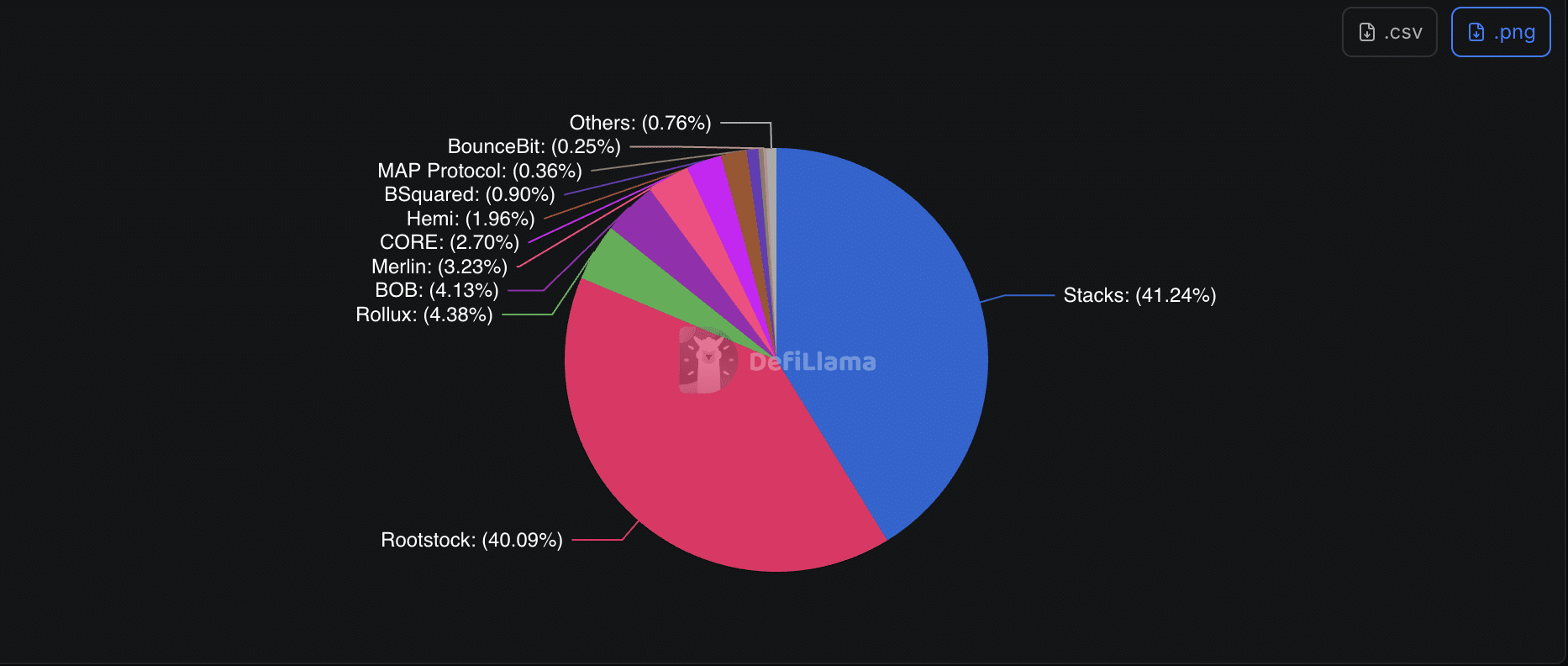
The concentration highlights the growing importance of distribution and user ownership in the crypto infrastructure markets.
Distribution is replacing infrastructure as the growth engine of crypto
The Botanix post also argued that crypto markets are increasingly consolidating around platforms that directly control user relationships and liquidity flows.
The company specifically pointed to Hyperliquid, Robinhood, centralized exchanges and major financial platforms as examples of distribution-driven growth models.
“We were and still are in favor of decentralization,” the team wrote, “but the current direction of growth in the chain is through distribution.”
The company also revealed that it had considered launching a token in the future. Yet it ultimately concluded that token incentives alone no longer ensured sustainable product-market fit across the sector.
Final summary
- Botanix is shutting down its Bitcoin Layer-2 network after concluding that demand for Bitcoin-native DeFi infrastructure may not yet exist at scale.
- The team said the technology technically worked, but users still preferred cheaper and more convenient alternatives.