

A Closer Look at Bitcoin’s Resilience Amidst Macro Uncertainty
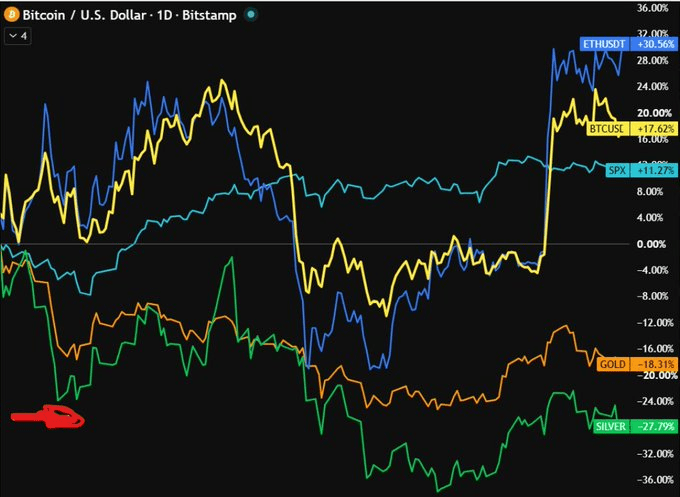
In a recent analysis, a hypothetical $10,000 investment highlighted a significant divergence in the performance of Bitcoin compared to precious metals during the US-Iran conflict.
While gold and silver typically serve as safe-haven assets during times of macro uncertainty, Bitcoin outperformed both metals in this scenario. A $10,000 investment in Bitcoin would have grown to $11,762, while the same investment in gold and silver would have reached $8,200 and $7,310, respectively.
This divergence is noteworthy as it suggests a different risk-reward profile for Bitcoin, which could become increasingly important as macro volatility escalates.
As the FUD (fear, uncertainty, doubt) in the market intensifies, Bitcoin’s resilience is being put to the test. The recent spike in the 10-year Treasury yield, approaching multi-year highs, indicates growing pressure in the bond market, which could lead to increased volatility for risk assets.
Interestingly, historical data suggests that every time the 10-year Treasury yield surged, Bitcoin responded with a parabolic movement. Despite the significant rise in yields, Bitcoin only experienced a modest 3% correction this week, demonstrating its ability to withstand macro pressures.
The crypto market’s resilience amidst macro FUD echoes its performance during the US-Iran conflict, raising the question of whether crypto’s relative strength could pave the way for another period of outperformance.
Tokenized Markets and Risk-Reward Divergence
The emergence of tokenized markets has played a key role in driving the divergence between Bitcoin and traditional safe-haven assets like gold. On-chain data from Token Terminal reveals that the RWA market has grown to $46.4 billion, with tokenized gold accounting for $5.1 billion, or 11% of the total.
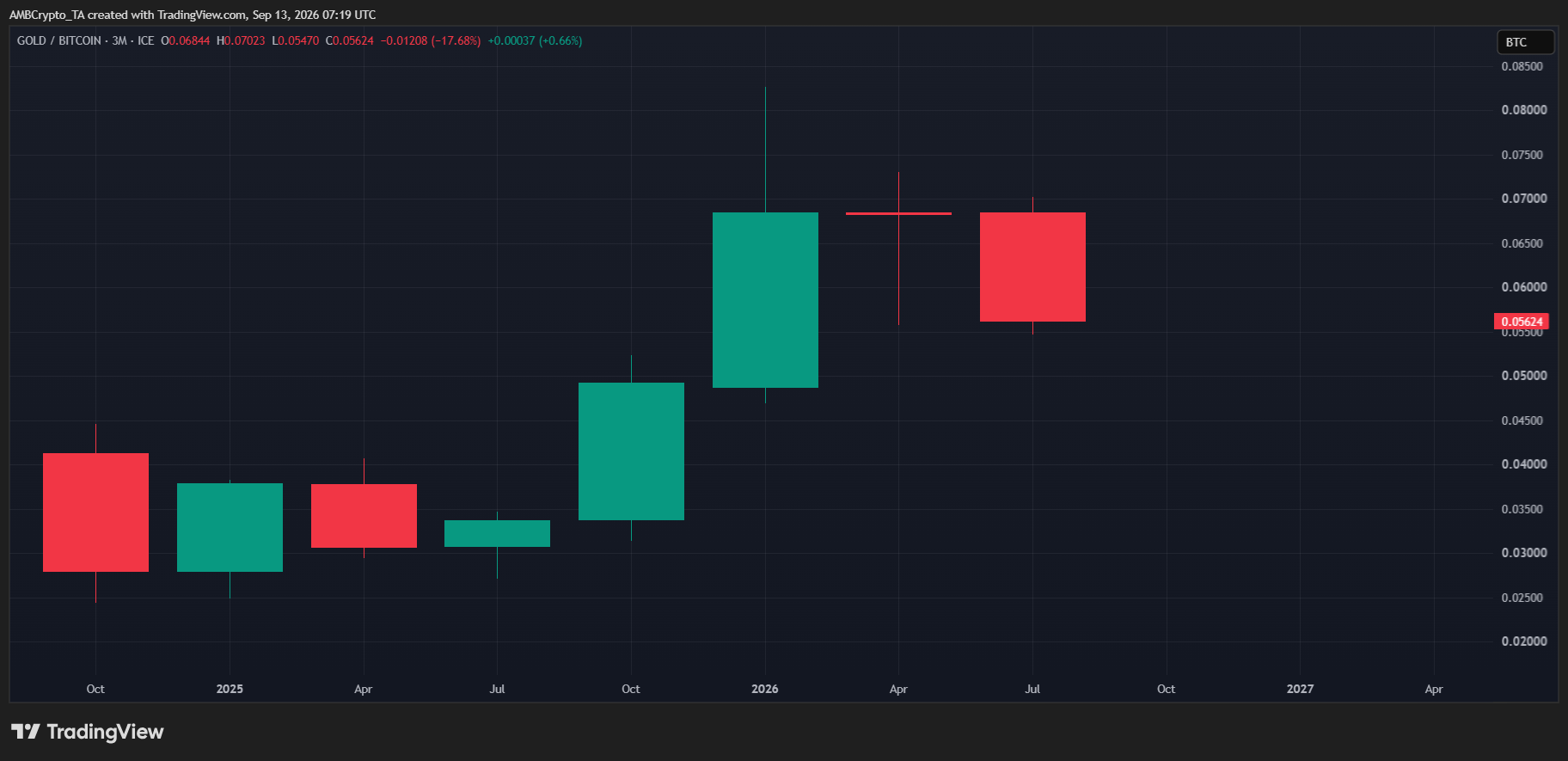
Despite the spike in macro FUD, the XAU/BTC ratio has declined by over 17% in the third quarter, marking the most significant downtrend since the Q2 2025 cycle. This divergence underscores the risk-reward disparity highlighted by the hypothetical $10,000 investment example.
In summary, Bitcoin’s outperformance is not merely speculative but is supported by robust technical performance, increased on-chain activity, and capital flows in tokenized markets. As Treasury yields rise and rate hike probabilities climb, Bitcoin’s ability to weather macro pressures while maintaining its strength could signal another cycle of crypto outperformance.
Key Takeaways
- Bitcoin demonstrates resilience in the face of macro uncertainty, outperforming traditional safe-haven assets.
- Strong technical indicators and on-chain activity suggest potential for further gains in the crypto market.
The world of technology is constantly evolving, with new innovations and advancements being made all the time. One area that has seen significant growth in recent years is artificial intelligence (AI). AI is a branch of computer science that focuses on creating machines that can perform tasks that typically require human intelligence, such as learning, problem-solving, and decision-making.
One of the key areas where AI is making a big impact is in the field of healthcare. Healthcare providers are increasingly using AI-powered tools and technologies to improve patient care, streamline processes, and reduce costs. From diagnosing diseases to personalizing treatment plans, AI is revolutionizing the way healthcare is delivered.
One of the most promising applications of AI in healthcare is in medical imaging. AI algorithms can analyze medical images, such as X-rays, MRIs, and CT scans, to detect and diagnose various conditions, including cancer, heart disease, and neurological disorders. These AI-powered imaging tools can help radiologists make more accurate and timely diagnoses, leading to better patient outcomes.
AI is also being used to personalize treatment plans for patients. By analyzing large amounts of patient data, including medical history, genetic information, and lifestyle factors, AI algorithms can help healthcare providers tailor treatment plans to individual patients. This personalized approach can lead to better outcomes and reduce the risk of adverse reactions to medication.
Another area where AI is making a big impact in healthcare is in predictive analytics. By analyzing historical data and identifying patterns, AI algorithms can predict which patients are at risk of developing certain conditions or complications. This allows healthcare providers to intervene early and prevent or mitigate potential health issues.
AI is also being used to improve the efficiency of healthcare operations. AI-powered tools can help healthcare providers automate routine tasks, such as scheduling appointments, processing insurance claims, and managing medical records. This can free up healthcare professionals to focus on more complex and critical tasks, ultimately improving patient care.
While the potential benefits of AI in healthcare are significant, there are also challenges that need to be addressed. One of the main concerns is the ethical implications of using AI in healthcare, such as patient privacy, data security, and algorithm bias. It is important for healthcare providers to implement robust safeguards and regulations to ensure that AI is used responsibly and ethically.
Overall, AI has the potential to revolutionize the healthcare industry and improve patient care in ways that were previously unimaginable. By harnessing the power of AI, healthcare providers can deliver more personalized, efficient, and effective care to patients around the world. As AI continues to advance, the future of healthcare looks brighter than ever.