

Bitcoins [BTC] The second quarter recovery was halted around $83,000. What followed was a 25% decline to less than $60,000, effectively wiping out the entire recovery gain for the quarter.
Short sellers made big profits thanks to Fed rate hike fears, Strategy overhang and geopolitical tensions. Now the crypto asset has retested the 200-week MA (Moving Average, white), a key level that marked previous bottoms of the market cycle.
While this could help spark the next Bitcoin bull market cycle, analysts expect another sharp decline.
Bottom of the Bitcoin market: close, but not there yet
Renowned analyst Benjamin Cowen recently warned that a terrifying dump below the 200WMA is likely to occur in late 2026.
A decisive move down later this year, while initially scary, would likely only cause the bottom of the market cycle for Bitcoin in the fourth quarter of 2026.
His projection was based on the 2022 Bitcoin market pattern broke below the bottom support of the 200WMA bull market cycle for the first time in 2022.
At the time of writing, Bitcoin’s price was trading just below $62,000. And this was the fourth week that BTC flirted with the 200WMA.
In 2022, it remained below levels for months before the bull market took off in September 2023. This happened after BTC decisively reclaimed the 200-day MA (200DMA, blue), a level that typically acts as support for the bull market cycle.
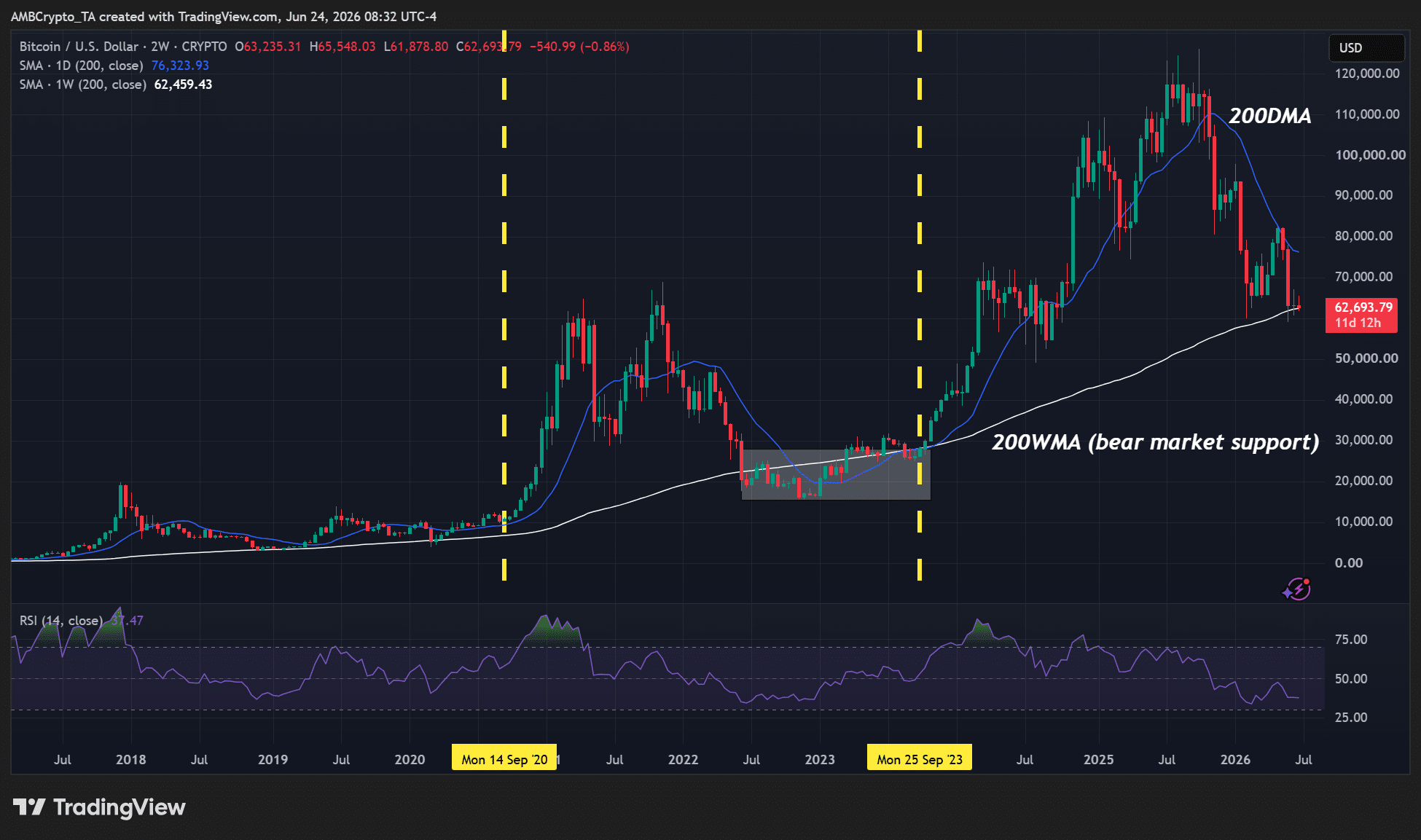
The 2020 rally also started in September and accelerated in the fourth quarter. So if the current trend reflects the past two cycle patterns, Cowen’s projection of a sharp decline below the 200WMA and a subsequent recovery in late 2026 could be validated.
In fact, outside of the price charts, there is one worryingly high leverage and weak demand. According to analysts at Binance Research, this was a perfect combination for a liquidation event that could push BTC lower.
All things considered, another decline below bear market support or an extended dip below $60,000 cannot be overruled as we enter the third quarter. In such a scenario, the next potential floor price would be around $53,000, the realized price for most BTC holders.
But it’s not all bleak for bulls who are tired of controlling the timing bottom of the market. From an on-chain perspective, BTC could be close to marking the market’s final bottom based on past patterns.
Currently, long-term holders (those who have held BTC for more than six months) control approximately 78% of BTC’s invested capital (realized cap). According to on-chain analyst James Check, these levels marked the bottom of the market in the past.
Historically, this measure peaks late in bear markets, as supply gradually migrates from weaker hands to investors with a longer time horizon.
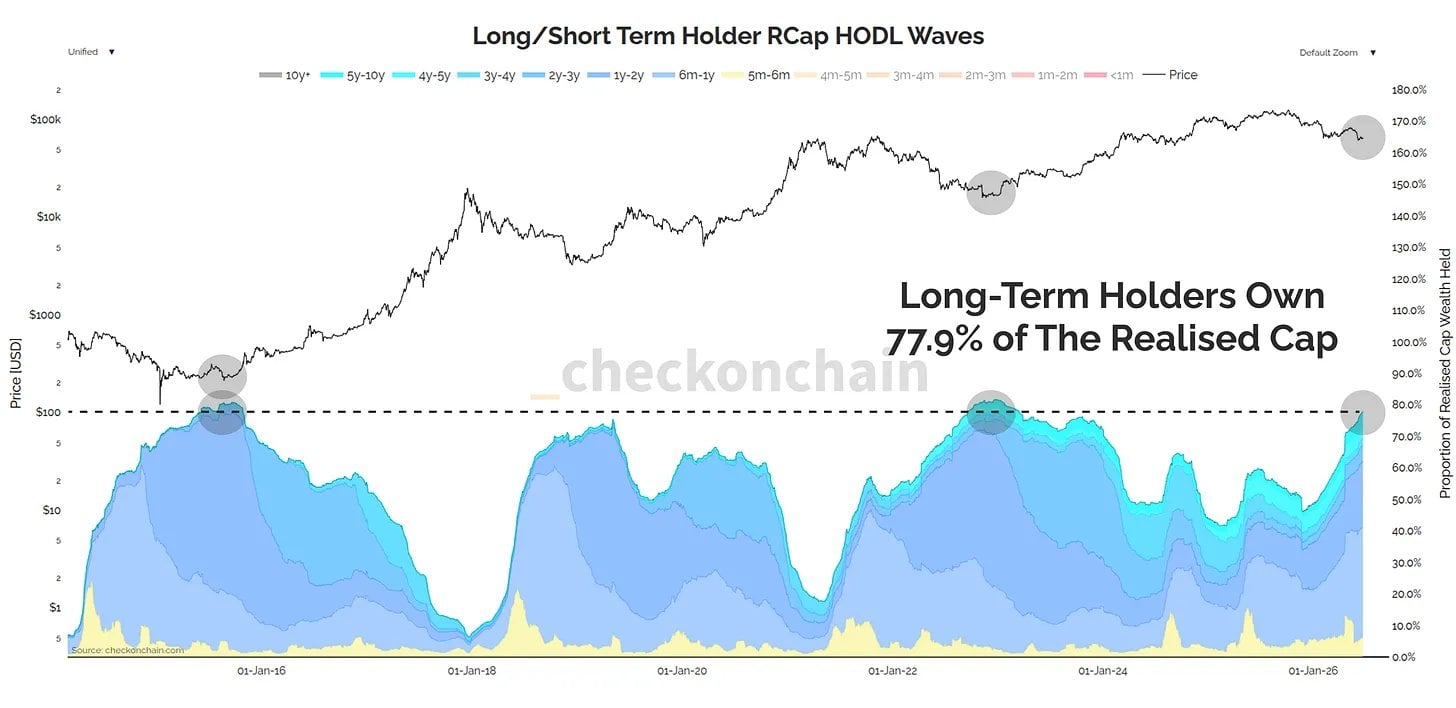
Check added that BTC may be nearing the “pointy end” of this bear market. In other words, judging by the behavior of long-term investors, the sub-$65,000 level could be a great buying opportunity.
Bitfinex analysts even boosted Check’s prospects, adding:
Long-term $BTC holders sold into the 2024 ETF rally. Now they’re doing the opposite. The cohort that made gains at the top accumulates the decline.
Is consolidation likely before the end of the second quarter?
The short-term headwinds for BTC bulls are OG whales (those who have held BTC for +5 years) and macro pressure.
According to Galaxy Research, selling pressure from this cohort (blue bar) has exceeded the absorption rate of US ETFs (purple) in recent weeks. On average, net BTC demand, taking into account ET, Strategy Bids and OG distribution, was negative at 120,000 BTC.
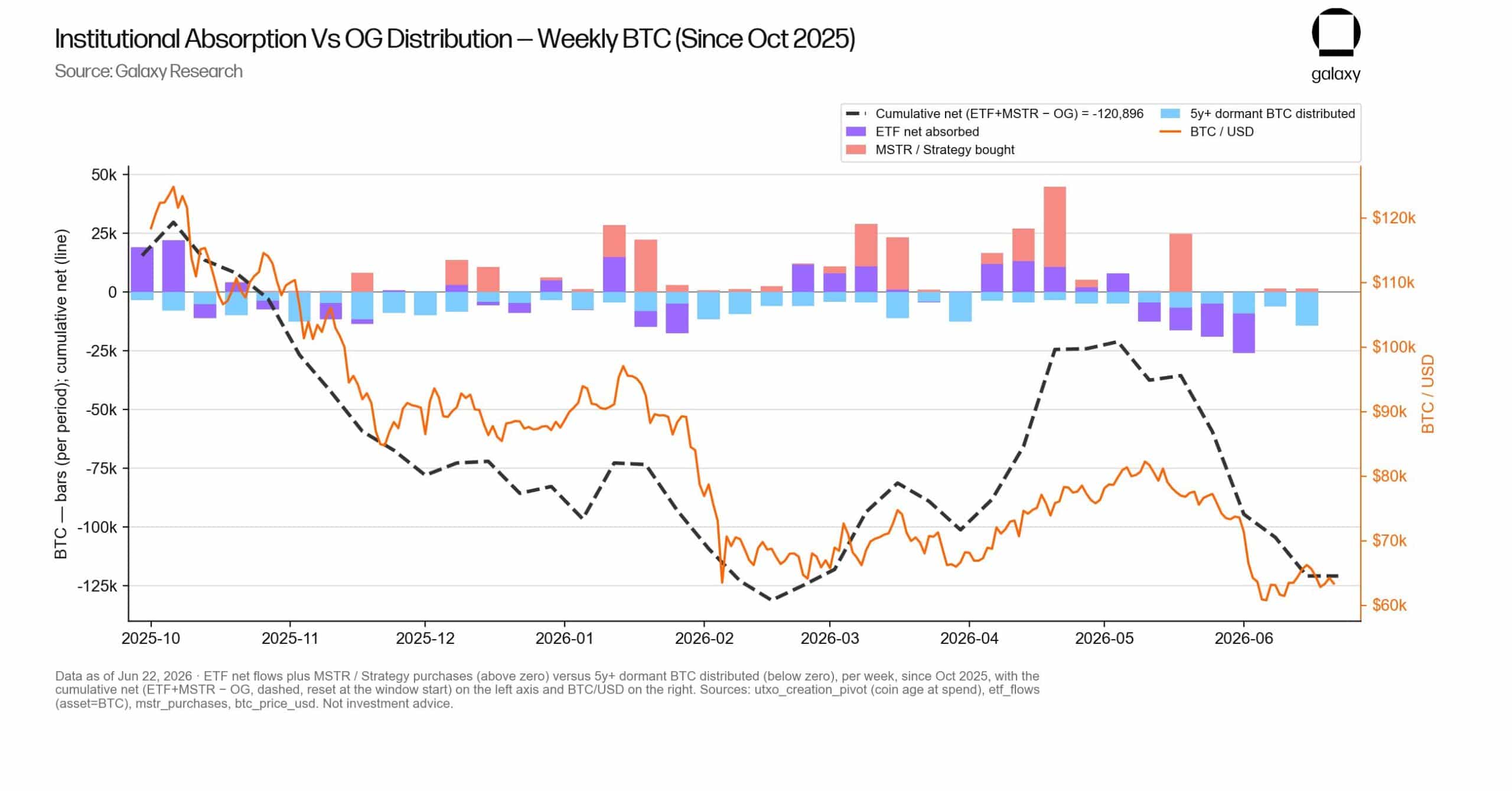
Simply put, low demand and the previously highlighted leverage risk could derail BTC in the short term.
Singapore-based QCP Capital, for its part, believes May PCE inflation data, scheduled for Thursday, June 25, could be the catalyst for the end of Q2 positioning. The company noted:
Following policy makers’ recent aggressive rhetoric, an upside surprise could reinforce expectations for further policy tightening, while a softer-than-expected outcome would likely support crypto and other risk assets.
At the time of writing, consensus forecasts suggest that headline PCE will rise 0.4% month-on-month (month-on-month), while core PCE is expected to rise 0.3-0.4%.
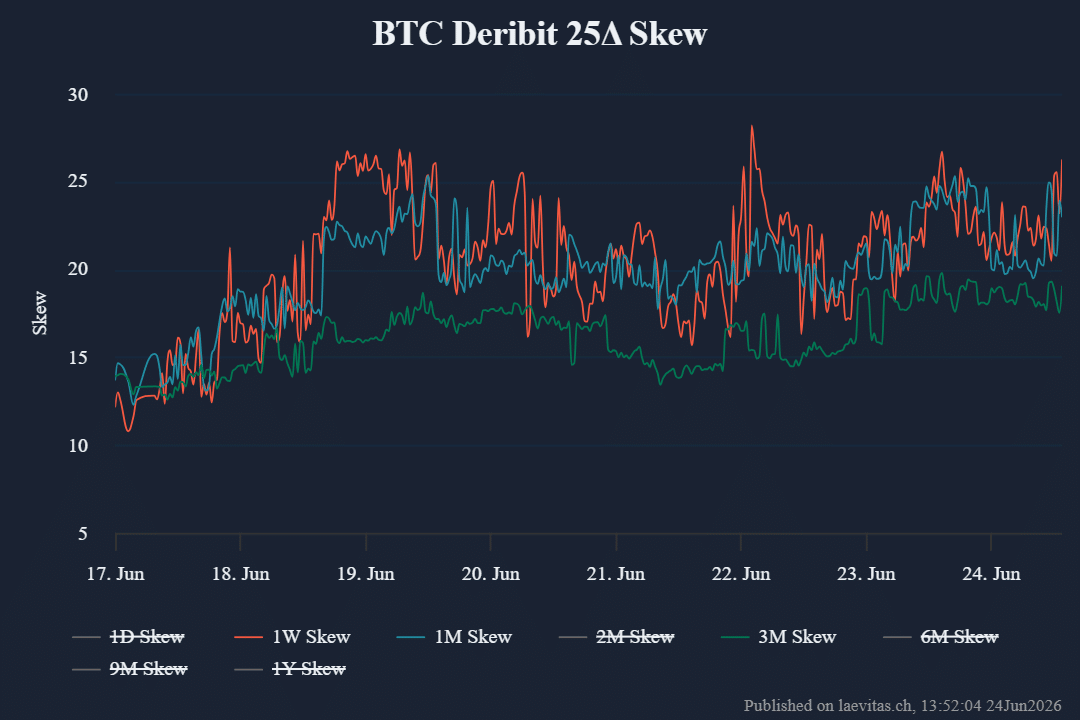
Still, institutional and professional traders had a bullish outlook for the assets in the short and medium term.
This was reinforced by a positive rising Skew over the 1 week, 1 month and 3 month maturities. It meant that there was more demand for calls (bullish bets) than puts (hedging, bearish bets) for the upcoming option expirations at the end of the second and third quarters.
Will Q3 Offer the Last BTC Buying Opportunity?
Overall, the bottoming phase of the market is a process and not a one-time event. As such, a dip towards $54K could still be on the cards.
Still, if the market patterns of 2022 and 2018 continue, the third quarter of 2026 could be the last discounted buying opportunity for long-term holders.
But for a confirmed start to the next bull market cycle, BTC would need to decisively reclaim the 200DMA, currently at $76K.
Final summary
- BTC could still fall below $60,000 again before reaching the final low of the market cycle.
- Still, the decline could be the best buying opportunity when the next bull market phase begins in the fourth quarter of 2026.