
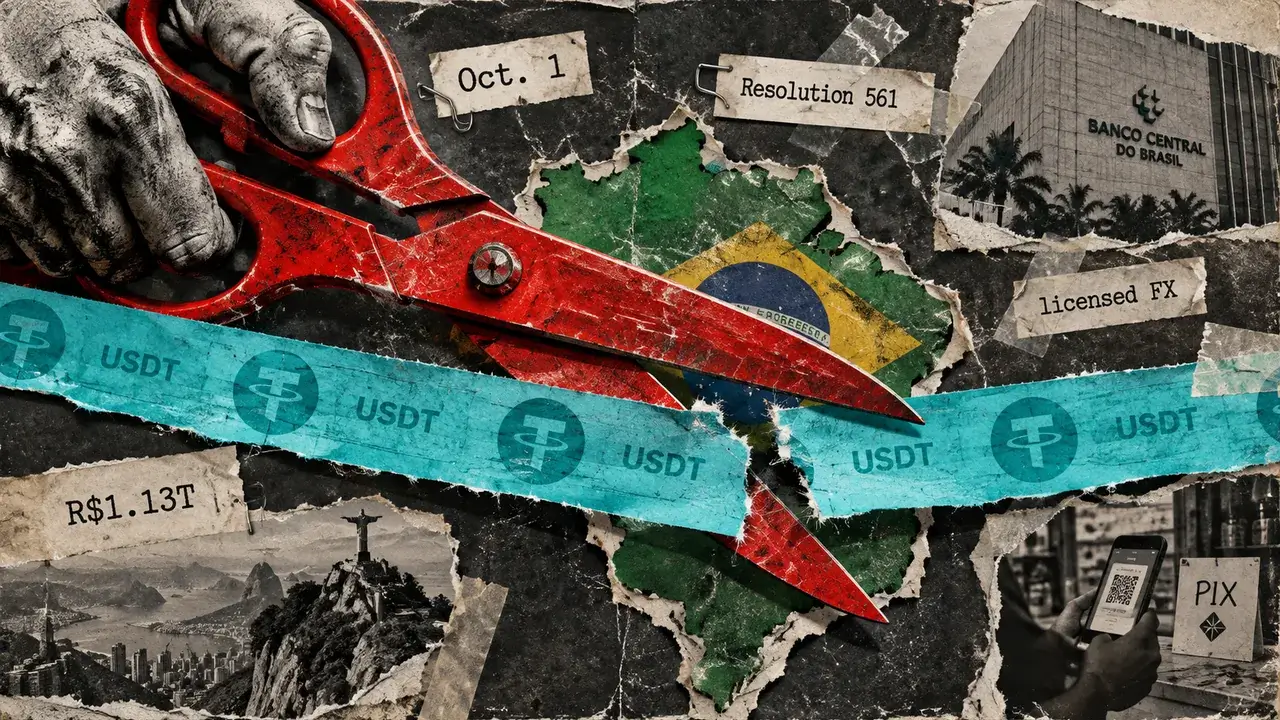
Brazil’s central bank has announced a new regulation that will impact the use of virtual assets, including stablecoins, for settling international payments. Starting on October 1, Resolution 561 will specifically target the settlement leg between regulated foreign-exchange providers and their overseas counterparties. This regulation will require that this leg runs through a licensed FX transaction or a qualifying non-resident real account.
While individual international transfers using virtual assets will still be permitted under Brazil’s existing framework, the settlement between eFX providers and foreign counterparties using stablecoins or other virtual assets will be barred. This change aims to close a gap that some market participants have been exploiting, providing the central bank with clearer visibility into flows that were previously not fully monitored within the formal exchange system.
The new resolution has been described by Oscar Guillermo Farah Osorio, a founding partner at Zanella & Farah, as resolving genuine ambiguity. Brazil’s 2022 virtual assets law had already granted the central bank the authority to determine which crypto operations count as foreign-exchange activity, but specific rules had not been established, leaving room for exploitation.
Providers will still be able to net and consolidate balances before settling with their foreign counterparties, but the specific combination of stablecoin settlement with bulk aggregation will no longer be allowed. This change could result in additional costs for Brazilian consumers and businesses, as they may now have to absorb financial transaction taxes and other fees that stablecoin settlement previously avoided.
Stablecoins have played a significant role in Brazil’s crypto market, with stablecoin transactions accounting for a large portion of reported activity. The dominance of stablecoins, particularly USDT, in the Brazilian market has been evident in recent years.
A study conducted by the Bank of Italy found that the total costs of transferring USDC across international corridors varied significantly, with no consistent advantage over conventional payment channels. The study highlighted that currency conversion and local payment infrastructure were the main drivers of costs, rather than the blockchain transfer itself.
As the regulatory landscape continues to evolve, brokers are adapting their infrastructure to comply with new rules. Stablecoins are being used for treasury management, liquidity movement between entities, and internal settlement, with brokers adjusting their processes to navigate the changing regulatory environment.
While the new regulation may impact the efficiency of using stablecoins for Brazil-linked flows, larger firms are expected to adapt by obtaining the necessary permissions, partnering with licensed institutions, and building compliance workflows around the restrictions. This shift may lead to stablecoins being marketed as operational infrastructure, offering faster reconciliation and programmable controls.
In conclusion, Brazil’s regulatory changes highlight the importance of compliance and adaptability in the evolving landscape of virtual asset transactions. The use of stablecoins for international payments will continue to be influenced by regulatory requirements, with firms needing to adjust their processes to ensure compliance and efficiency in cross-border transactions.