
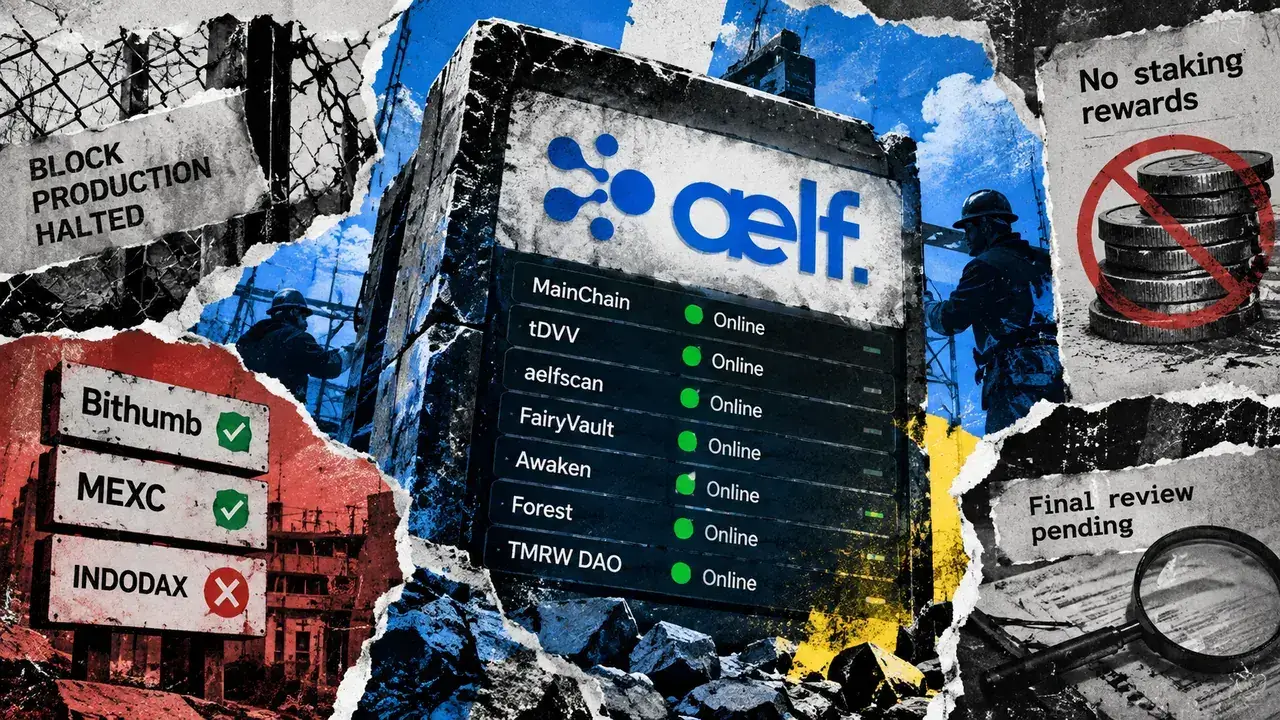
aelf, a blockchain network centered around its AELF MainChain and tDVV dAppChain, has successfully restored public node access and several core services following a recent incident of malicious smart-contract activity. The controlled recovery process resulted in a temporary halt in block production for approximately one week, and while progress has been made, the reopening process is still ongoing.
In a recent update on September 14, aelf announced that both public nodes were once again accessible, along with essential services such as the aelfscan explorer, FairyVault transfers, Awaken trading, Forest NFT browsing, and the TMRW DAO staking interface. Additionally, on September 15, the MainChain and tDVV status endpoints showed advancing block heights, indicating a positive development, although further testing is required to confirm full transaction submission capabilities.
Frontend platforms like aelfscan, FairyVault, Awaken, Forest, and TMRW DAO were also confirmed to be reachable, although no actual transfers, trades, or reward claims were processed during these checks.
Despite the progress made, there are still some aspects of the recovery process that remain incomplete. Exchange deposits and withdrawals are gradually resuming, with different venues implementing their resumption schedules. For example, Bithumb and MEXC have announced specific dates for restarting ELF deposits and withdrawals, while INDODAX’s latest update still mentions closed ELF wallet services. It is advisable for users to verify the status of each venue before attempting any fund transfers.
The temporary block-production pause also had an impact on network staking rewards, with aelf confirming that no rewards were generated during the downtime. Even with the restoration of the TMRW DAO interface, users will not be able to claim rewards for the halted period.
During the recovery process, aelf identified 155 transactions associated with the malicious activity, including 127 on AELF and 28 on tDVV. The investigation also revealed the existence of five unique .NET assemblies capable of interacting with host systems and node-related keys and configurations, highlighting potential risks beyond the smart contracts themselves.
While aelf has not observed any unauthorized transfers of users’ assets or exposure of wallet keys, the full post-incident review, technical appendix, and final root-cause assessment are still pending publication. The project emphasized that restored services signify operational progress but do not indicate a final resolution of security concerns.
As aelf continues to work towards completing the remaining tasks, including an independent review, users are advised to stay informed and remain cautious in their interactions with the platform.