
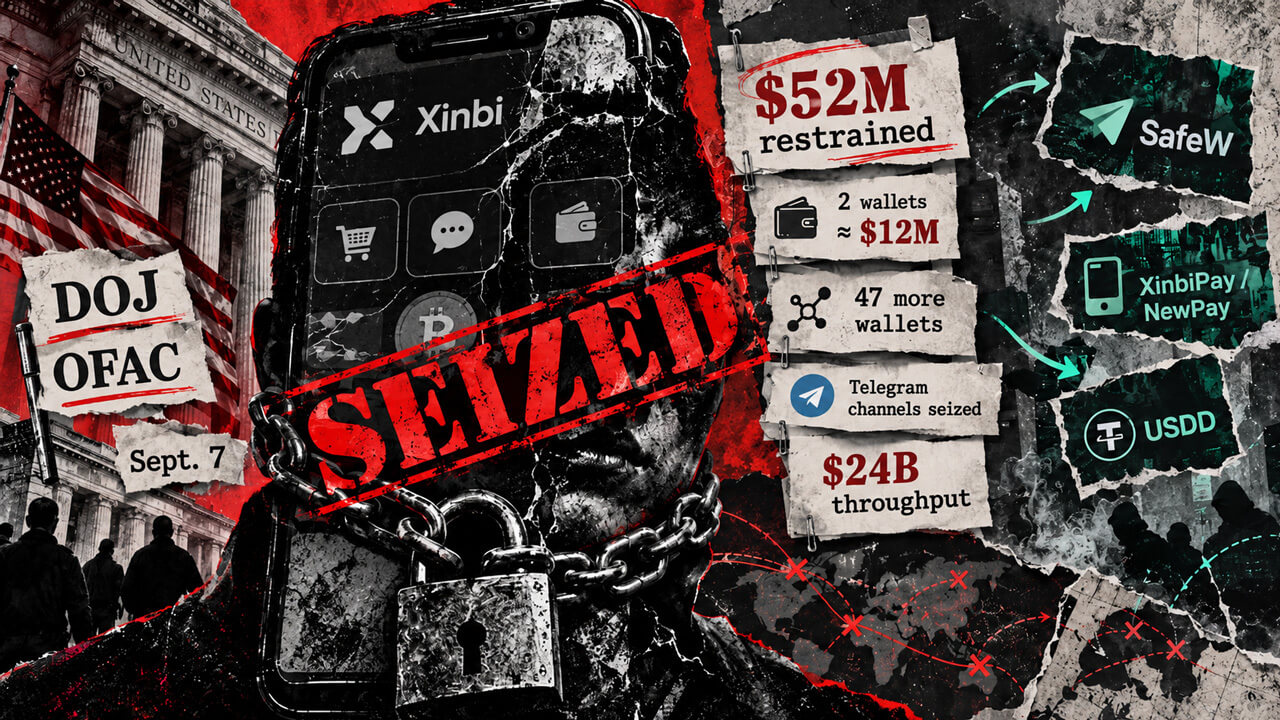
The crackdown on Xinbi Guarantee by US authorities has intensified, with over $52 million in crypto assets restrained and key infrastructure seized. This action comes as part of a larger effort to combat transnational criminal organizations and disrupt illicit financial activities in the crypto space.
A federal court authorized the seizure of Telegram channels associated with Xinbi Guarantee on September 7th. In addition, investigators seized two wallets containing approximately $12 million and sought to restrain 47 more addresses connected to vendors and suspected money laundering activities. The Treasury Department also designated Xinbi as a significant criminal organization and sanctioned companies like SafeW Technology and Anwen Technology, which provided messaging and payment services to the marketplace.
The crackdown extends beyond individual wallets, targeting the infrastructure used by Xinbi to facilitate transactions and coordinate merchant activities. The marketplace had started using encrypted applications like SafeW and introduced XinbiPay (NewPay) to evade scrutiny as law enforcement agencies ramped up their investigations.
This enforcement action follows previous pressure on Xinbi’s USDT network, which led the marketplace to explore alternatives like USDD. The UK has also imposed sanctions on Xinbi, highlighting a global crackdown on service providers enabling the movement of stolen crypto and scam proceeds.
Xinbi’s role in facilitating illicit financial activities, including cyber theft, fraud proceeds, and money laundering, has come under scrutiny. Chainalysis reported that North Korean hackers used Xinbi to move tens of millions of dollars in stolen cryptocurrency through vendors on the platform. The marketplace also hosted specialist operators known as “Black U” launderers, who helped criminals obfuscate the origin of stolen assets.
The US sanctions have triggered a response from Xinbi’s users, with abnormal outflows detected on the platform. Bitrace reported significant increases in daily USDT withdrawals as merchants moved funds rapidly to mitigate the risk of having their assets frozen or sanctioned. Competing platforms like Fulilai Guarantee have also started purging money-laundering merchants from their platforms in response to the crackdown on Xinbi.
The repercussions of the US sanctions are rippling through the crypto ecosystem, forcing platforms to reassess their risk exposure and compliance measures. As authorities target not just individual wallets but also the infrastructure supporting illicit activities, the landscape for transaction-guarantee markets is shifting. Rival platforms must weigh the benefits of hosting potentially lucrative merchants against the risks of becoming the next target of enforcement actions.