

As blockchain adoption grows, so do risks such as front-running attacks, token scams, and cross-chain vulnerabilities. Blockchain security protocols are crucial in this regard, ensuring that every step of a transaction – from initiation to confirmation – is protected. Understanding end-to-end transaction security is critical for users and developers to prevent losses and ensure secure, uninterrupted network interactions. This article examines the key protocols that will ensure secure blockchain transactions in 2024.
In this guide:
- Top 5 Blockchain Protocols
- What is end-to-end transaction security?
- Is it enough to secure transactions with blockchain security protocols?
- Frequently asked questions
Top 5 Blockchain Protocols
In short, some of the best blockchain security protocols in 2024 include:
- Omnia Protocol – Frontrunning protection with private mempools
- LayerZero – Private relays for secure inter-chain communications
- Chainlink CCIP – Multi-layer validation for token transfers
- Wormhole – Guardian nodes for cross-chain transaction security
- Cosmos Hub (IBC Protocol) – Secure asset transfers with Tendermint consensus
Let’s explore each blockchain security protocol in detail.
1. Omnia Protocol: Best for preventing exploits
Omnia Protocol ensures blockchain users and developers enjoy secure and private access to networks without fear of frontrunning, token scams, or malicious interactions.
By protecting transaction data from initiation to completion, Omnia delivers end-to-end security and keeps every blockchain operation confidential.
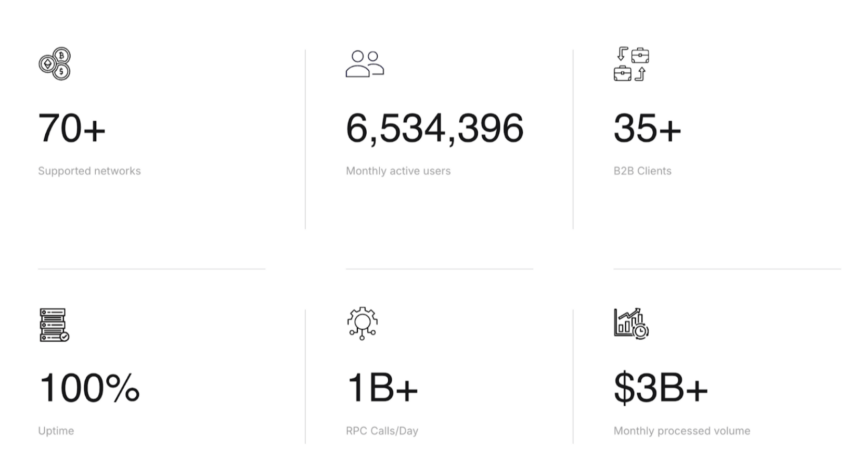
Users: Omnia Protocol
How it works?
Omnia acts as a monitored tunnel for blockchain transactions. When a user interacts with a blockchain through Omnia’s private RPC endpoints, the data is hidden from the public, protecting it from attackers. These private mempools prevent bots from conducting transactions or intercepting sensitive information.
Additionally, Omnia detects honeypots – scam tokens designed to trick users – by analyzing smart contracts and transaction data in real time.
Omnia is also blockchain agnostic and supports continuous transaction monitoring and multiple networks, ensuring the broadest possible security coverage.
Plus points
- Prevents front running attacks: Private RPCs keep transactions hidden from bots.
- Blocks scam tokens: Honeypot detection prevents users from interacting with fraudulent tokens.
- Multi-chain support: Works on different blockchains and provides flexibility.
Disadvantages
- Technical setup: Users may need time to understand private RPCs and honeypot protections.
- Node Dependency: Requires consistent participation of nodes for uninterrupted access
2. LayerZero: Best for secure cross-chain transactions
LayerZero ensures that transactions between different blockchains occur securely and without interruptions. Cross-chain transactions often introduce new risks, such as frontrunning and incomplete transfers, but LayerZero eliminates these vulnerabilities by securing every part of the transaction – from initiation on one blockchain to confirmation on another.

How it works?
LayerZero maintains speed and security by using a combination of ultra-light nodes (ULNs), oracles, and relayers. Think of it like sending a package through a trusted courier network, where the couriers (relayers) and validators (oracles) confirm that the package reaches its destination intact, without the intervention of outsiders.
Ultra-lightweight nodes (ULNs) validate transactions without requiring the data from the entire blockchain, keeping the network flexible and maintaining security.
Relayers transmit the transaction data between blockchains and keep it hidden from public knowledge so that no one can intercept the data or manipulate the transaction.
Oracles independently verify transactions on both the source and destination chains, maintaining data integrity even during cross-chain swaps.
In terms of end-to-end transaction security maintenance, the private relayers protect transaction data from tampering or interception, while the ULNs ensure secure validation.
Additionally, each network component functions independently, reducing the risk of system-wide vulnerabilities. This is all thanks to the resilient modular design.
Plus points
- Progressive mitigation: Private relayers keep transactions out of public mempools.
- Fast cross-chain execution: Ultra-lightweight nodes speed up transactions without compromising security.
- Reliable verification: Oracles ensures that every transaction is properly validated, protecting user assets.
Disadvantages
- Complex setup: Users may initially find the architecture with relays and oracles difficult to understand.
- Dependency on validators: Although decentralized, the operation of LayerZero relies on validators functioning properly.
3. Chainlink CCIP: Best for securing token transfers
Chainlink’s Cross-Chain Interoperability Protocol (CCIP) provides a reliable way to transfer tokens between blockchains while preventing transfer errors or tampering. By verifying transactions at various points, CCIP ensures that every transfer is secure from start to finish, making it an essential tool for secure cross-chain operations.
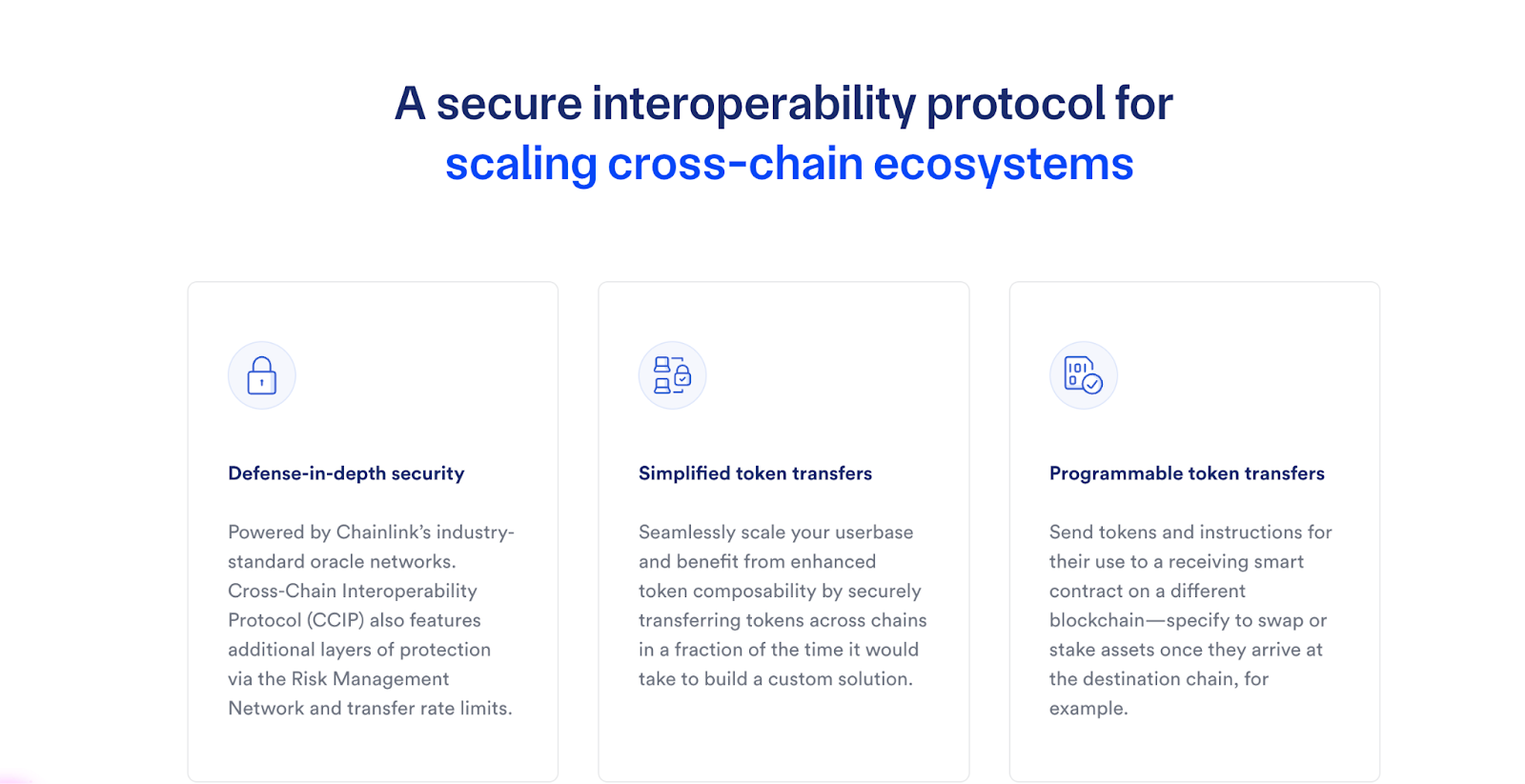
Chainlink Protocol: Chainlink
How it works?
CCIP acts as a checkpoint system for blockchain transactions. When sending tokens between networks, oracles and validators work together to confirm each step of the process.
Imagine sending a package where every post office stamps it along the route. This way you can be sure that the package has not been tampered with before it reaches its destination.
Chainlink CCIP uses multi-point validation, private communication channels, and flexible token processing for more secure transfers and error prevention.
Plus points
- Front run protection: Keeps transactions out of public view to avoid interference.
- Secure token transfers: Validates transactions at multiple points to prevent errors or loss.
- Flexibility across the chain: Supports many networks for seamless asset movement.
Disadvantages
- Learning curve: Users may need time to understand programmable transfers.
- Trusting oracles: The process depends on the proper functioning of validators and oracles.
4. Wormhole: Best with guardian verification
Wormhole allows assets and data to be moved securely between multiple blockchains, reducing the risks associated with cross-chain transactions.
With its Guardian Node system, Wormhole ensures that every transaction is independently verified, blocking unauthorized or tampered transfers and ensuring the transaction remains secure from start to finish.
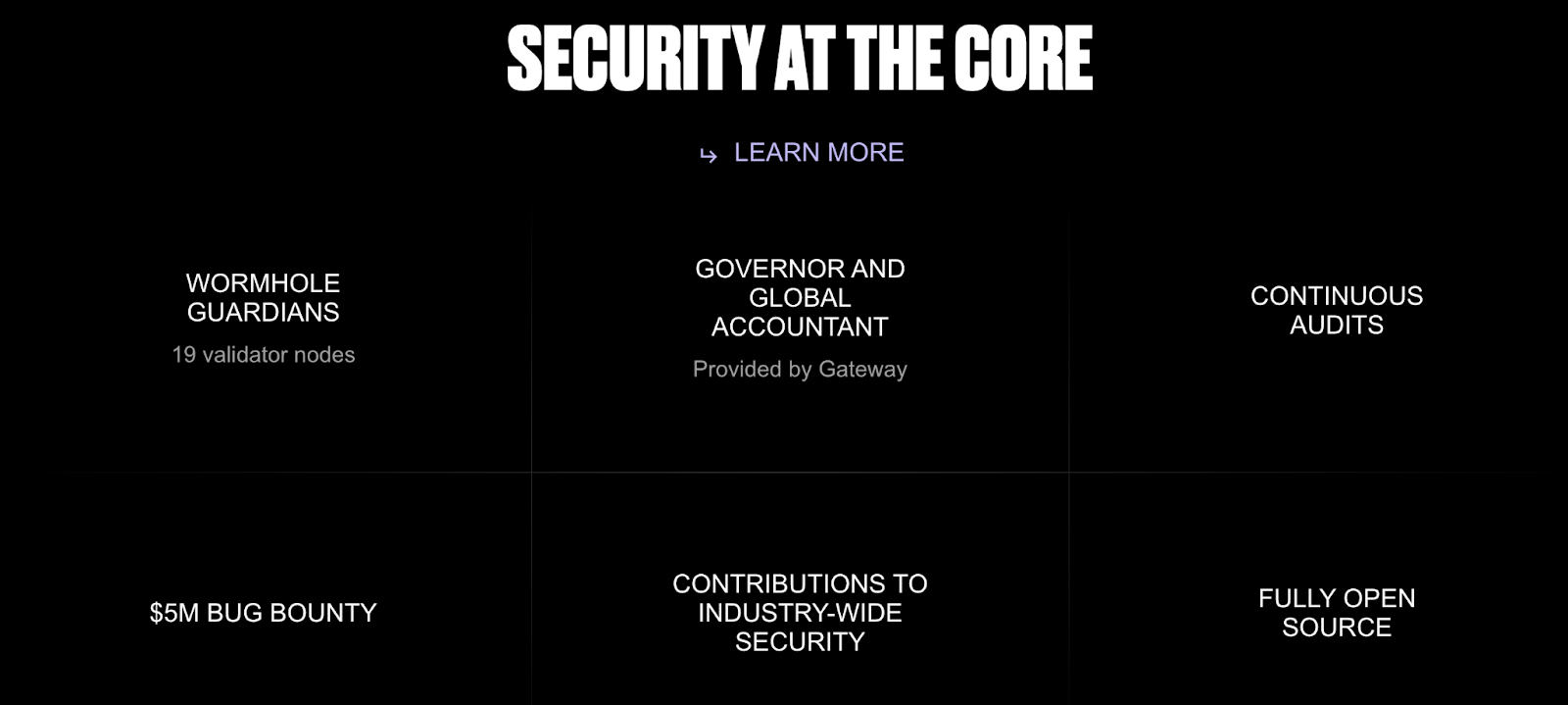
Wormhole interface: Wormhole
How it works?
Wormhole functions as a bridge between blockchains and facilitates the transfer of assets using surveillance nodes. Think of the surveillance junctions as checkpoints on a highway: every time a vehicle (transaction) passes, it is inspected to ensure it meets all safety standards.
When a transaction is initiated on one blockchain, the Guardian nodes validate it before it reaches the destination blockchain. If they discover discrepancies, the transaction is rejected so that only legitimate transfers are processed. This ensures that end-to-end transaction security is maintained even when assets or data are transferred across different networks.
Wormhole is one of the few blockchain security protocols that rely on a decentralized bridge design. Additionally, there is access to asset recovery tools.
Plus points
- Guardian verification: Protects transfers by controlling each step individually.
- Decentralized security: Reduces dependency on a single validator, preventing system-wide vulnerabilities.
- Recovery mechanisms: Provides tools for handling failed or stuck transactions.
Disadvantages
- Bridging vulnerability risks: Like other chain bridges, Wormhole is exposed to evolving attack methods.
- Complex setup: Users may need time to understand the Guardian Node system.
Cosmos Hub: Best for secure asset transfers using the IBC protocol
The Cosmos Hub enables secure cross-chain transactions using the Inter-Blockchain Communication (IBC) Protocol. It allows assets and data to move securely between connected networks, maintaining integrity throughout the transaction. Cosmos reduces the risk of incomplete or tampered transfers and ensures that every step – from sending to receiving – is handled securely.
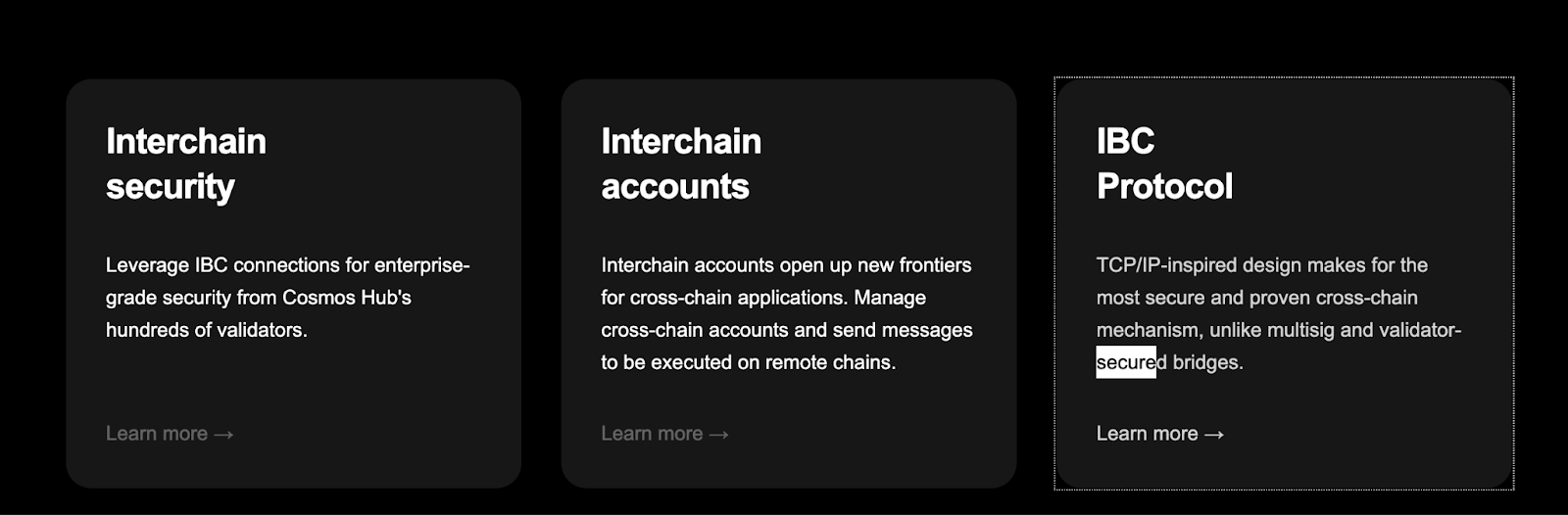
Cosmos Hub: Cosmos
How it works?
The IBC protocol functions as a secure delivery network. When a user sends tokens from one blockchain to another, IBC ensures that both chains validate the transfer before it is completed. Think of it as a two-way handshake: the sending chain locks the tokens, and the receiving chain only issues an equivalent amount once the first step is confirmed. If a problem arises during the process, the transaction is halted, protecting the assets from loss.
IBC also uses Tendermint consensus to maintain trust and consistency between blockchains, ensuring transactions are properly validated without delays or manipulation.
Plus points
- Prevents asset loss: Two-way validation ensures assets are never lost in transit.
- Fast and consistent: Tendermint consensus provides fast validation without compromising security.
- Resistant to downtime: IBC can handle network outages and secure assets until recovery.
Disadvantages
- Network coordination: Requires coordination between multiple blockchains, which can introduce complexity.
- Limited adoption: Some networks still integrate IBC, limiting current use cases.
What is end-to-end transaction security?
End-to-end transaction security ensures that every transaction, from initiation to completion, is protected against risks such as manipulation, front running or incomplete execution.
This concept ensures that no unauthorized entity can disrupt or alter a transaction, giving users complete confidence in their blockchain activities.
Without proper end-to-end security, blockchain transactions run the risk of being exposed to front running, phishing or incomplete transfers.
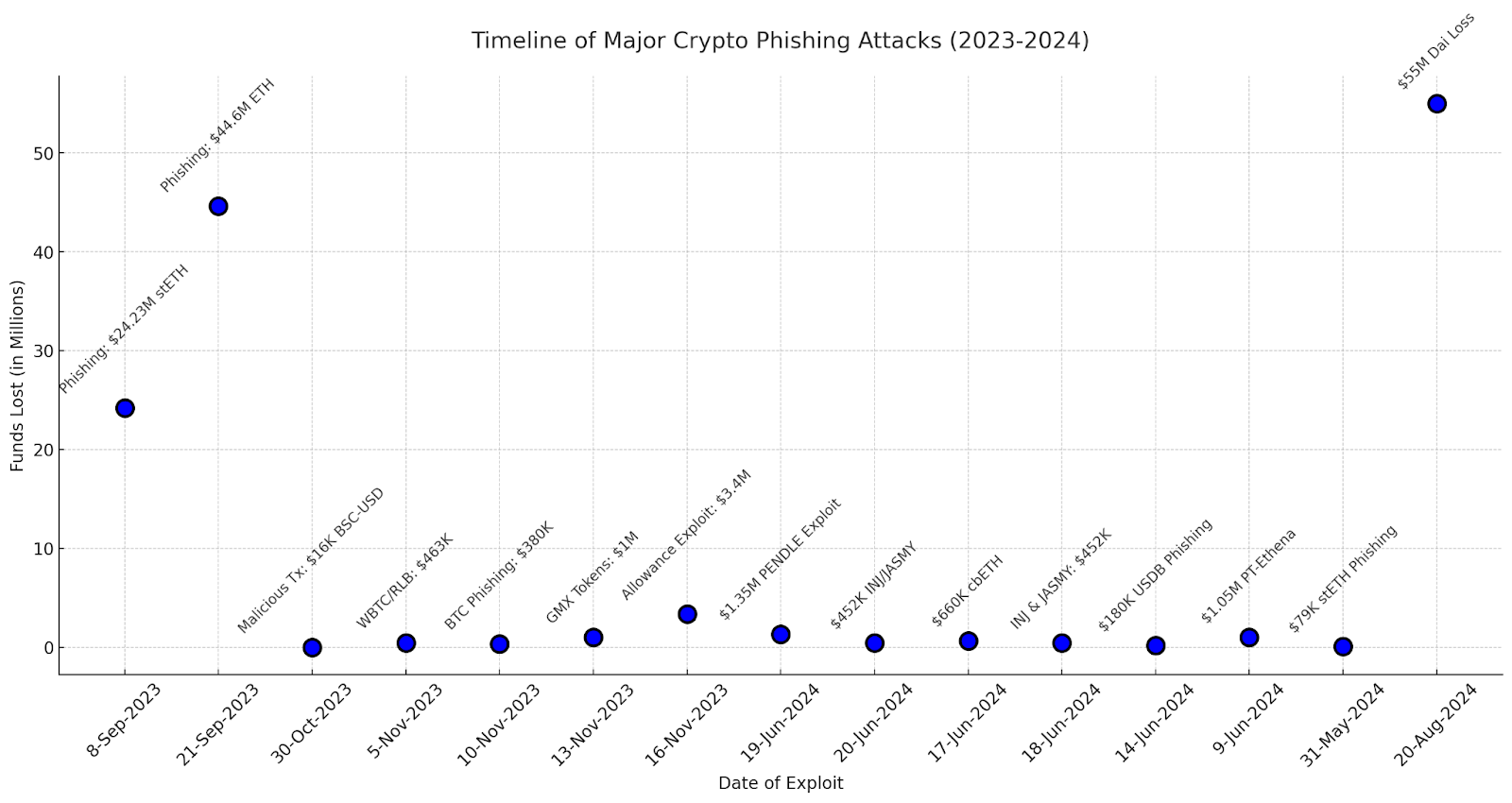
Timeline of major phishing events: BIC
Blockchain security protocols ensure that users’ funds remain safe, that interactions with smart contracts are reliable, and that no data is leaked or manipulated along the way.
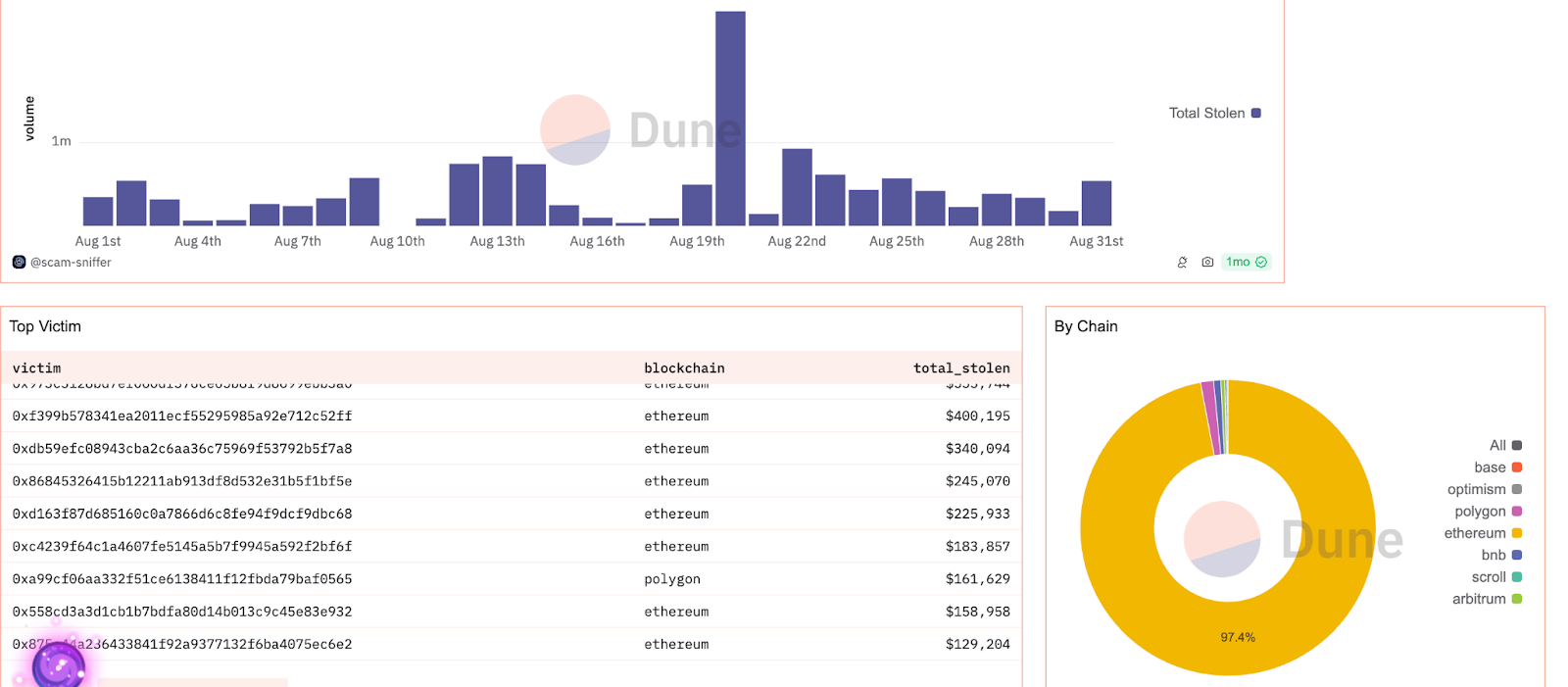
Recent phishing trends: Dune
Is it enough to secure transactions with blockchain security protocols?
Blockchain security protocols are a crucial step towards secure transactions. However, they may not be sufficient on their own. While these protocols provide end-to-end security by preventing tampering and authenticating data, evolving threats require constant upgrades.
A multi-layered approach – including user awareness, audits and additional safeguards – ensures stronger security and trust within decentralized networks.