
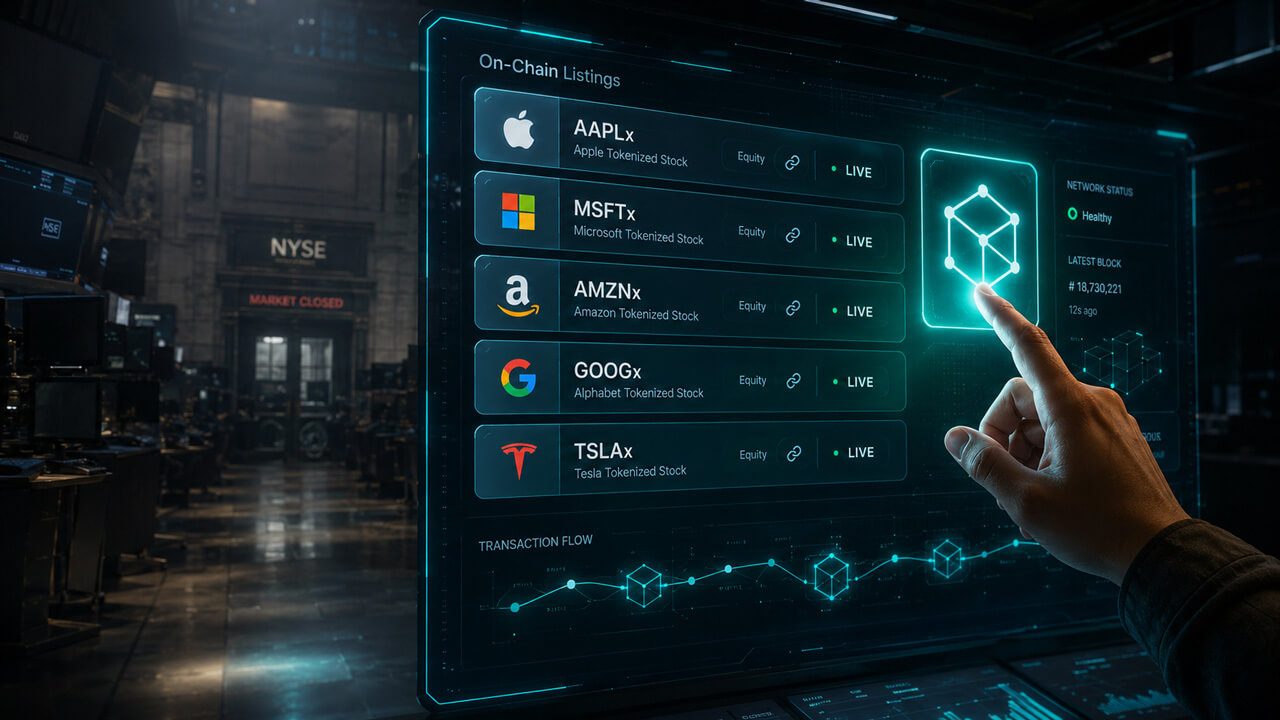
Given how far the crypto market has come in terms of regulation, the next big fight won’t be over Bitcoin, stablecoins, or even memecoins.
At issue is whether a crypto exchange can list tokenized stocks that track Tesla, Apple, or Nvidia without those companies ever agreeing to it, and whether the retail investors buying these tokens understand that they are not shareholders in any meaningful legal sense.
Bloomberg Law reported on May 18 that the SEC is preparing an “innovation exemption” for tokenized stocks that would allow crypto-native platforms to offer digital versions of publicly traded securities under lighter regulatory requirements.
The plan, expected next week, is part of a larger initiative the agency is calling Project Crypto. The SEC approved Nasdaq’s rules for tokenized stocks in March 2026, followed by a similar approval for the New York Stock Exchange in April, with both exchanges now allowing tokenized versions of select stocks and ETFs to trade alongside traditional stocks using the Depository Trust Company’s tokenization pilot.
The exemption then goes several steps further: where these approvals preserved tokenized trading within the existing market structure, the new exemption is intended to enable broader on-chain trading by crypto-native platforms and some decentralized financial protocols for a limited experimental period.
DefiLlama data shows that the on-chain RWA market is almost $30 billion, representing just 0.02% of global equity value, compared to SIFMA’s global stock market capitalization of $126.7 trillion in 2024. The tokenized equity segment is minuscule, and the exemption could determine whether it grows into a regulated extension of US equities or remains a crypto side market.
What are tokenized stocks and why are they so important now?
The concept of tokenized stocks sounds simple until you understand how these instruments are actually built.
A common stock is a legal claim of ownership in a company, recorded in a custodial system and subject to federal securities laws that have been in place for decades. A tokenized stock is a blockchain-based instrument that is connected to that underlying stock, although “connected” can mean very different things depending on who is doing the issuance.
Tokenized stocks fall into two structural categories: full security tokens, where the token represents a legal claim on the underlying security held by a regulated custodian, and synthetic or derivatives tokens, which track the price of a stock or ETF through derivatives but do not confer legal ownership or governance rights.
Kraken’s xStocks platform falls into the first category. xStocks now lists 100 fully supported, 1:1 tokenized US stocks and ETFs, and has surpassed $25 billion in total transaction volume since launching in June 2025, all of which is currently only available outside the United States. A synthetic tracker, on the other hand, gives the buyer exposure to the price without any equity claim behind it. The SEC’s January 2026 joint statement drew this line explicitly, separating issuer-sponsored tokenized securities, which contain real shares, from synthetic third-party products that provide price exposure to a stock without conferring any equity or voting rights.
What makes the SEC’s move so surprising is that it is now leaning toward allowing trading of tokens that do not have the backing or permission of the listed companies whose shares they track, and those tokens would be tradable on decentralized crypto platforms without offering the same benefits as conventional stocks, such as voting rights or dividends.
Under the proposal, platforms that do not offer these benefits would lose the right to list the tokens. But that condition still leaves room for a product that looks and acts like a stock, while offering a very different legal status to the person who owns it.
In 2025, Coinbase sought SEC approval to offer tokenized shares. If approved, it would put it in direct competition with retail brokers and push it to the forefront of the U.S. stock market.
Robinhood has already launched EU stock tokens and is building a layer-2 blockchain for RWA tokenization. Dinari received its broker-dealer license in June last year to offer blockchain-based stocks to US investors. All three companies have been waiting for the legal permission that an innovation exemption could finally provide.
At the same time, established institutions are working on their own versions of tokenization. The DTCC, which processes and protects most of the U.S. securities market, plans to begin limited production transactions of tokenized assets in July, ahead of a larger launch in October. The system allows for tokenized versions of stocks and ETFs, backed by assets the DTCC already owns.
If CryptoSlate As reported in April, tokenized stocks will certainly be better infrastructure, built around known gatekeepers, if the SEC adopts systems like those used by incumbents like Citadel Securities. If the exemption leans more toward open-chain distribution, much of that value will flow to crypto-native exchanges and DeFi protocols instead.
But not everyone is happy with these developments. We have heard many very concrete and specific complaints from regulators and private companies in the sector. In December, SIFMA warned that a lack of standard requirements such as interconnectivity and price transparency for tokenized assets could cause markets to “become fragmented and disorderly.”
Brett Redfearn, Securitize’s president and former director of the SEC’s own trading and markets division, saw this as a consent problem.
“If third parties can tokenize Apple or Amazon without the issuer having a seat at the table, there is no theoretical limit on the number of wrappers from the same company at any one time. This could create a whole new level of market fragmentation and leave investors less certain of what their shares are actually worth at any given time.”
Citadel Securities made similar arguments in its own December letter, calling for structured regulation instead of the broad exemptions it said could weaken KYC and AML protections.
What do you actually own?
Given all these setbacks, there is still a coherent policy rationale behind the SEC’s willingness to move forward.
SEC Chairman Paul Atkins, who launched Project Crypto after taking over the agency in April 2025, has consistently argued that the US risks pushing innovation abroad if domestic regulations for tokenized securities are not created. His stance at ETHDenver in February was that “market participants should be able to run decentralized applications on public, permissionless blockchains if they choose.” The exemption would not eliminate existing regulatory obligations under federal securities laws, but could relax certain registration requirements for participating platforms while the pilot is ongoing. The SEC also plans to include several guardrails, such as exposure limits, disclosure requirements, and other conditions related to the temporary nature of the program.
Commissioner Hester Peirce, who led the agency’s push for the waiver, was measured about its scope during his speech at ETHDenver in February.
“It would be an important step toward facilitating the integration of tokenized securities into our existing financial system, but it would not change the entire financial system overnight,” Peirce said.
Some SEC officials support the decision not to allow trading in third-party tokenized securities at all, according to people familiar with the agency.
There are real benefits to a well-designed framework. Tokenized stocks can be settled almost instantly, traded 24 hours a day, enable fractional access, and can be compounded with DeFi lending and collateral systems in ways that conventional stocks cannot.
As CryptoSlate covered this week, the RWA market is splitting into two lanes: one for proprietary, authorized rails, and another for compliance-first designs that combine compliant issuance with secondary market utility. These two paths lead to very different products for the person at the end of the chain.
The central question that the exemption is intended to answer, and that every retail investor should ask before making a purchase, is: what does owning this token actually get you?
When it comes to a real equity claim, tokenized shares are an infrastructure upgrade for the stock market. If it is a price tracking tool without shareholder rights, then the SEC may open the door to a parallel market where the label is known, but the legal protections behind it are different.
A token that tracks Nvidia’s stock price at 2 a.m. on a Saturday isn’t always the same as owning Nvidia, and how clearly that distinction is communicated (by the framework itself, by the platforms that build on it, and by the disclosures that investors actually read) will determine whether this experiment works or becomes the next financial product that people regret if they made the purchase without reading the fine print.