
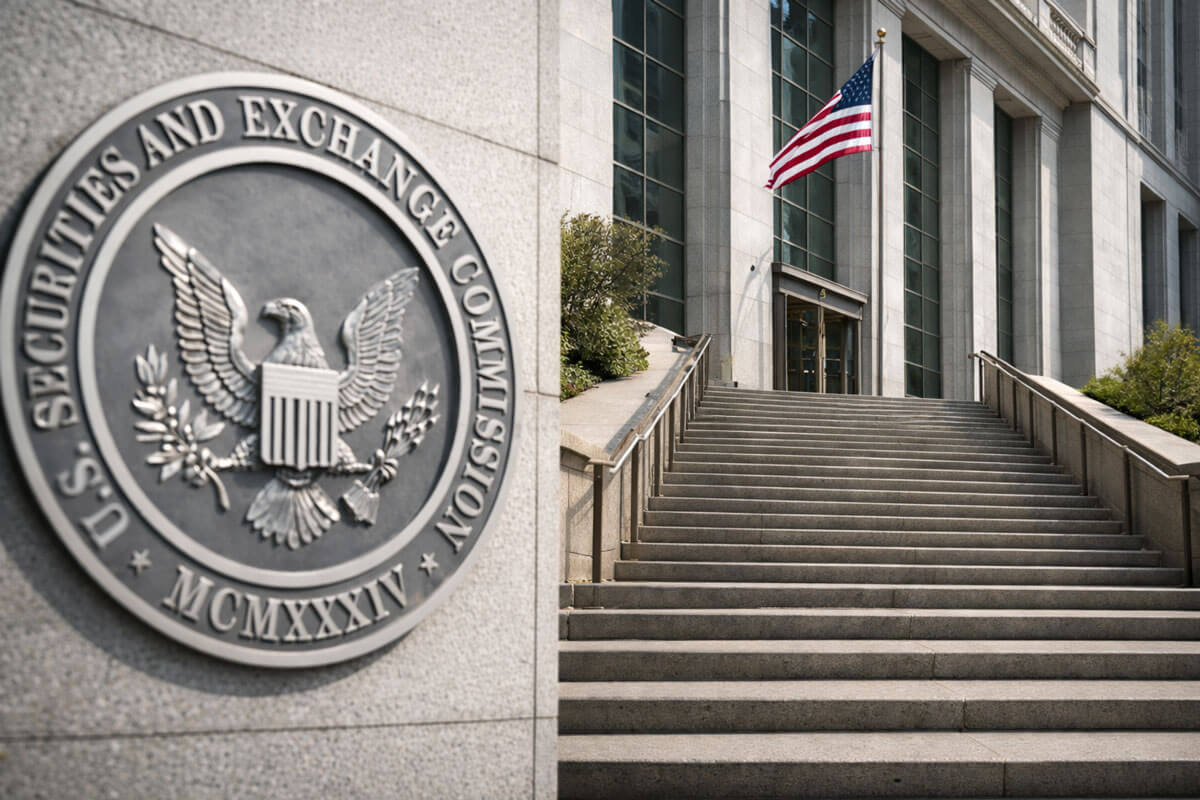
In November 2024, the SEC celebrated 583 enforcement actions and a record $8.2 billion in remedies, saying crypto was proof that it could keep pace with emerging threats. This week, the same agency published a 2025 review calling this approach a mistake.
The new report argues that previous sources have been misapplied, criticizes the pursuit of ‘media headlines’ and describes the past year as a ‘necessary course correction’, including the dismissal of seven crypto registration-related cases.
While this is a clear sign that the SEC is softening crypto, the report also contains a silent admission. We now see it publicly rejecting the enforcement strategy it boasted about just over a year ago.
What the SEC sold in 2024 and what changed in 2025
The 2024 fiscal overhaul was triumphant in design.
The SEC reported a total of 583 enforcement actions and said the $8.2 billion in monetary remedies it collected that year was the most in the agency’s history. It said the Enforcement Division was keeping pace with emerging threats and prominently listed cryptocurrencies among them. The Terraform Labs and Do Kwon case, which alone accounted for roughly 56% of the year’s total remedies, was treated as a signature achievement and as proof that the SEC could take on complex, high-profile defendants and win.
None of that language was even remotely subdued. The 2024 report presented volume and dollar totals as evidence of institutional strength, positioning large case volumes and huge dollar figures as the benchmarks that championed its relevance.
Cryptocurrency enforcement wasn’t a side project the SEC worked on alongside other industries; it was the flagship. That context is essential to understanding what happened next, because all these statistics are now being used against it.
The 2025 budget review looks like a document written by another agency.
The SEC reported 456 enforcement actions, a decrease of more than 20% from the previous year. The total amount of monetary assistance is $17.9 billion, but that figure is misleading in the sense that the agency itself acknowledges. It is inflated by long-running Stanford lawsuits and by money being credited toward other judgments instead of being newly collected. Take those items out, and the real budget total for 2025 comes to about $2.7 billion: $1.4 billion in disgorgement and prejudgment interest, plus $1.3 billion in civil penalties.
What makes the report bigger than a series of smaller numbers are the words that frame them.
The SEC presented the decline as a deliberate correction, arguing that previous enforcement leaders spent too much time on cases designed to generate volume and attract media attention rather than cases related to direct, measurable harm to investors.
That’s a fundamental criticism that sees the old approach as conceptually wrong, not just less productive. The current SEC is essentially claiming that its predecessor’s favored numbers overestimated the true enforcement value, making this one of the most important institutional claims we’ve seen in a while.
The crypto fragment is the clearest illustration of that shift, even if it is not the whole.
The 2025 fiscal report states that seven crypto registration-related cases were dismissed and grouped alongside off-channel communications cases and certain “dealer” enforcement actions as examples of a regime that prioritized case volume over direct investor protection. The language is sharp: these cases are described as part of a broader misallocation of resources, rather than as cases that were deprioritized and allowed to be resolved.
This framework is in line with a series of high-profile retreats over the past year.
The SEC dismissed its civil enforcement actions against Coinbase in early 2025, voluntarily dropped its lawsuit against Binance a few months later and closed its investigation into Robinhood’s crypto arm without any action. A new crypto task force was also created to shift the agency’s position from punishing companies for failing to register to clarifying what registration actually requires.
Taken individually, each of these developments can be read as a routine change in enforcement willingness. Taken together, and now endorsed in the agency’s own annual report, they represent something considerably more ambitious. The SEC, which once used crypto to signal toughness, is now using it to signal restraint.
A reset with consequences
The enforcement shift we are now seeing at the SEC is not happening in a vacuum.
The Enforcement Division is experiencing significant leadership turnover and personnel losses, including the resignation of the enforcement director and an 18% decline in the division’s workforce in fiscal year 2025. While some of that is normal friction in the transition year, enforcement experts cited by Reuters saw the decline as evidence of a deeper strategic reset, reflecting the current administration’s broader skepticism toward regulation through multi-agency enforcement.
The release of the report was followed by the appointment of David Woodcock, a Gibson Dunn partner and former director of the SEC regional office, as the new head of enforcement. Woodcock replaces Margaret Ryan, who spent just six months in the role, according to Reuters, before resigning after clashes with agency leadership over the program’s direction, showing that the course correction has not been without friction even within the SEC’s own ranks.
That context connects the SEC’s self-criticism to a broader argument playing out in Washington, an argument about whether the entire model of using enforcement actions as the first regulatory tool, filing cases to set a legal precedent rather than waiting for Congress or regulations to clarify the rules, was ever really appropriate. The current SEC is betting that this was not the case, and is prepared to say so in writing.
There is an irony worth sitting with. In November 2024, the high number of cases and the sheer number of remedies were the benchmarks the SEC chose to prove that it was doing its job well. By April 2026, lower case letters and smaller dollar figures will serve the same purpose.
The agency changed its definition of success and applied that new definition retroactively to discredit the work it touted less than two years ago.
Whether the reformulation is justified will become clear in the coming years as the effects of lighter enforcement become measurable. But the document itself is remarkable: a federal regulator using its own annual report to go against the logic of its own recent past.