

Bitcoin [BTC] The trend could be even lower as market dynamics keep the asset within a range between $59,000 and $63,000.
The momentum behind a recovery remains weak, and new data tied to global market liquidity warns that Bitcoin could sink even further before bottoming out and sparking a strong bullish recovery.
The ratio of Bitcoin to global M2 points to more downsides
Data from Alphractal shows that the global money supply (M2) can serve as a useful indicator for tracking the tops and bottoms of BTC via their ratio.
M2 tracks the money supply and near-cash assets that can be quickly converted into cash. The M2 ratio serves as a measure of whether Bitcoin is overvalued at the market tops or undervalued at the market bottoms, with color transitions on the charts highlighting these zones.
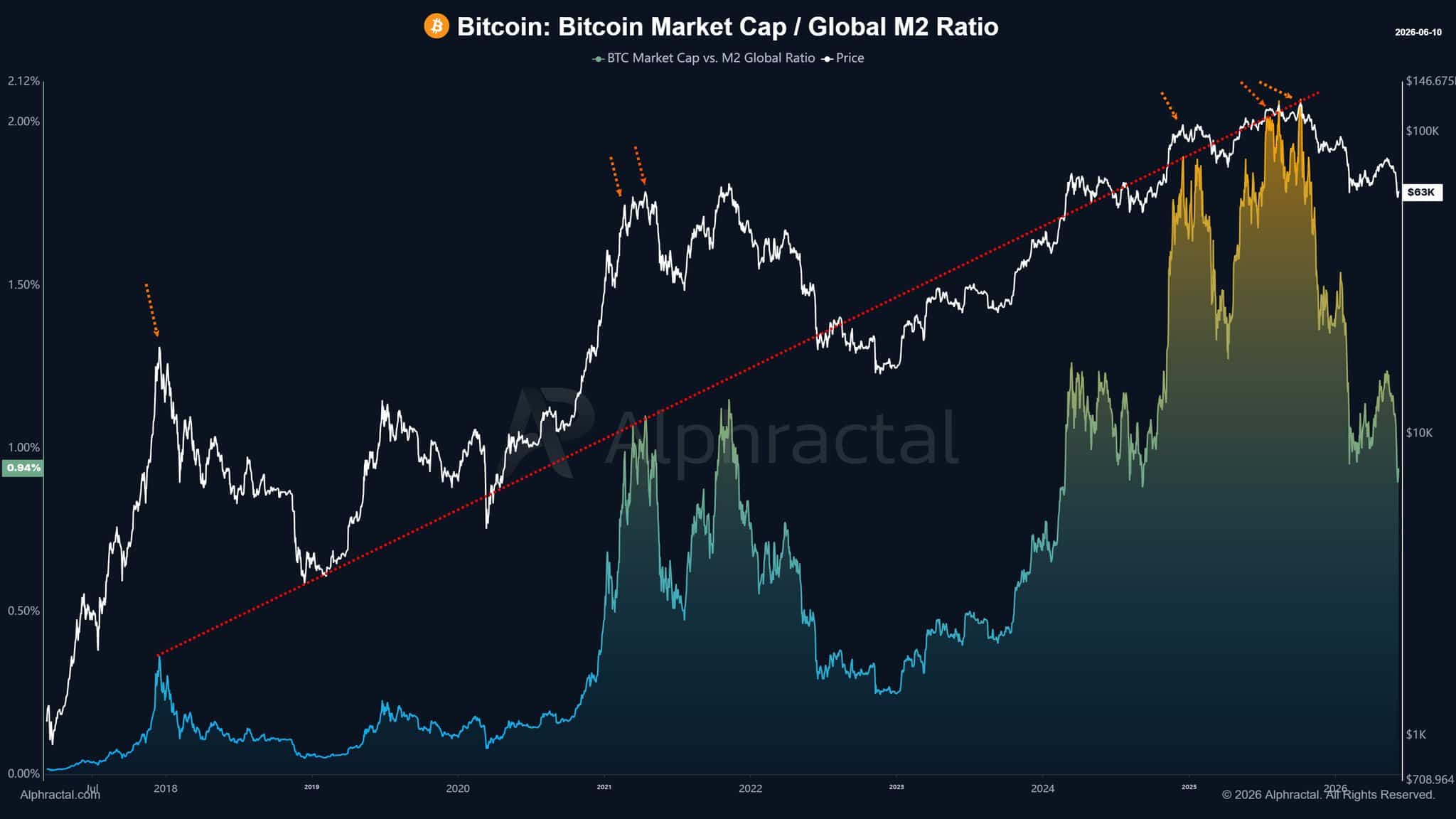
At the time of reporting, the ratio stood at 0.94%, which represents Bitcoin’s market capitalization as a share of global M2 supply. Although this value is relatively low, the analysis suggests that it may need to fall further into the blue region, the zone that has often marked the bottom, before global liquidity will eventually turn to risky assets.
For context, when Bitcoin’s market cap ratio to the global M2 ratio reached 2%, it marked the overheated zone on the chart, setting the stage for a broader decline.
Five Weeks of US Selling Pressure Weighing on Bitcoin
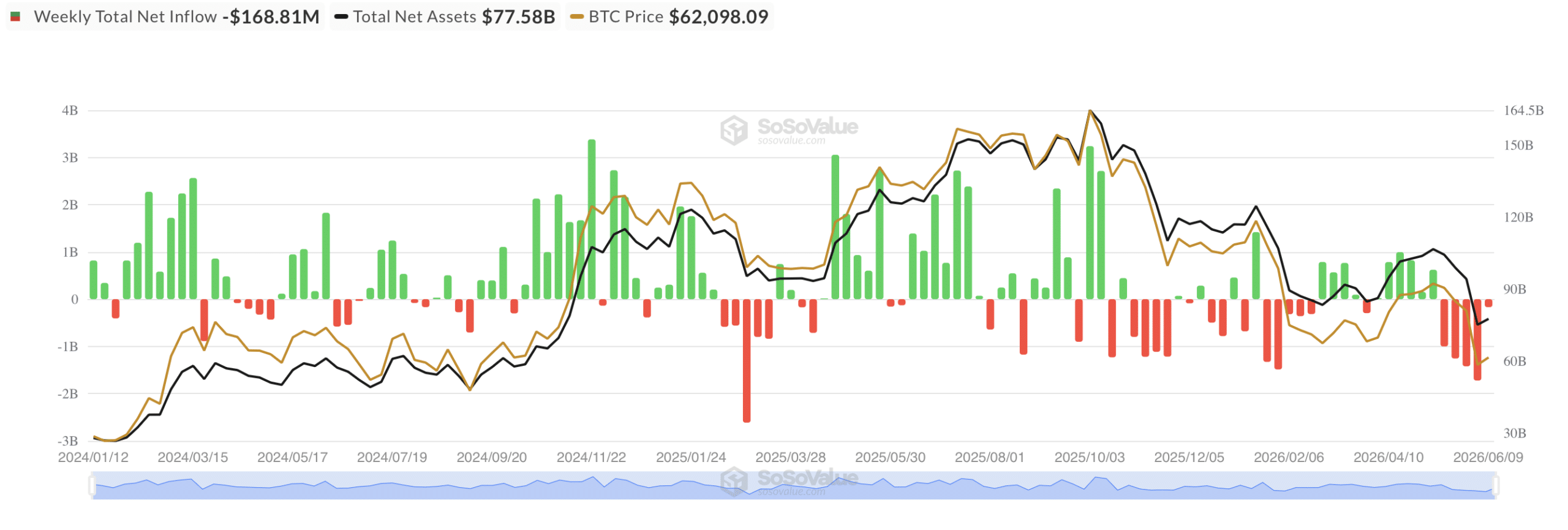
Selling pressure continues to mount, with US investors, key market participants, driving the ongoing sell-off.
This group has continued to sell Bitcoin through US exchange-traded Bitcoin funds, with outflows reaching $5.568 billion at the time of writing. When the sell-off began on May 15, Bitcoin was trading at $79,146, and has since fallen to $62,089.
The Coinbase Premium Index shows that US investors are actually paying less for the asset than buyers on global exchanges – a sign of weakening demand.
At the time of writing, the index was at -0.07, and a further decline could indicate more aggressive selling by this group, which would weigh on the asset’s overall performance.
Market-wide sell-off boosts foreign exchange reserves
The concern extends across the market, with the broader sell-off reflected in the amount of Bitcoin now sitting in foreign exchange reserves.
Bitcoin exchange reserves, which hold Bitcoin balances in centralized exchange wallets, have risen from $237.4 billion around May 15, the week U.S. investors started selling, to about $241.4 billion at the time of writing.
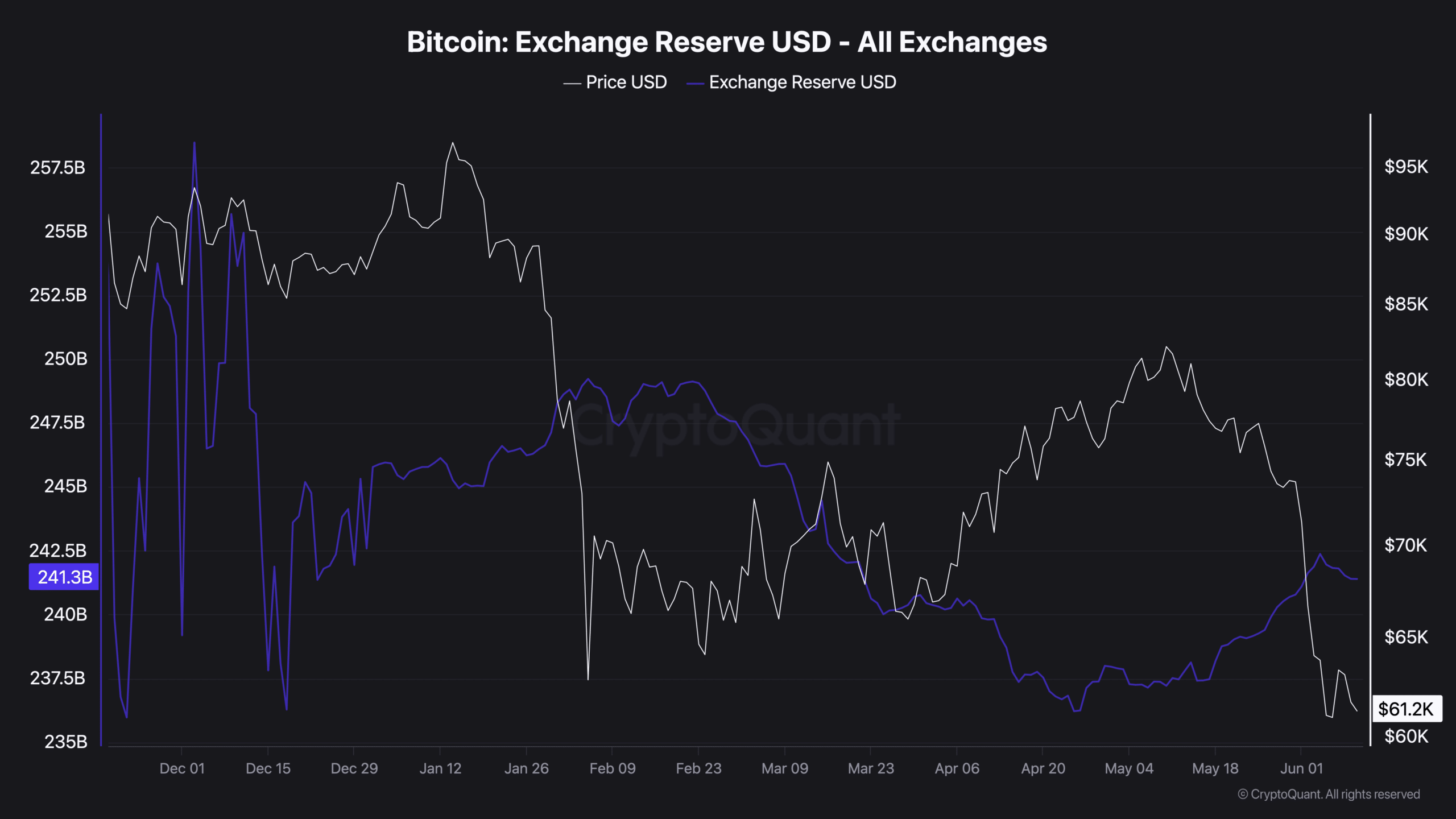
Rising currency balances tend to weigh on Bitcoin’s performance, as the extra $4 billion in BTC can easily be converted into other assets, putting pressure on the broader outlook.
Additionally, global economic conditions are weighing on risky assets like Bitcoin as escalating tensions between the US and Iran rise.
Final summary
- US investors have been selling Bitcoin heavily for five weeks in a row, raising more than $5.5 billion through US ETFs since mid-May.
- With selling pressure still mounting and global conditions shaky, Bitcoin may have to fall even further before hitting a bottom.