
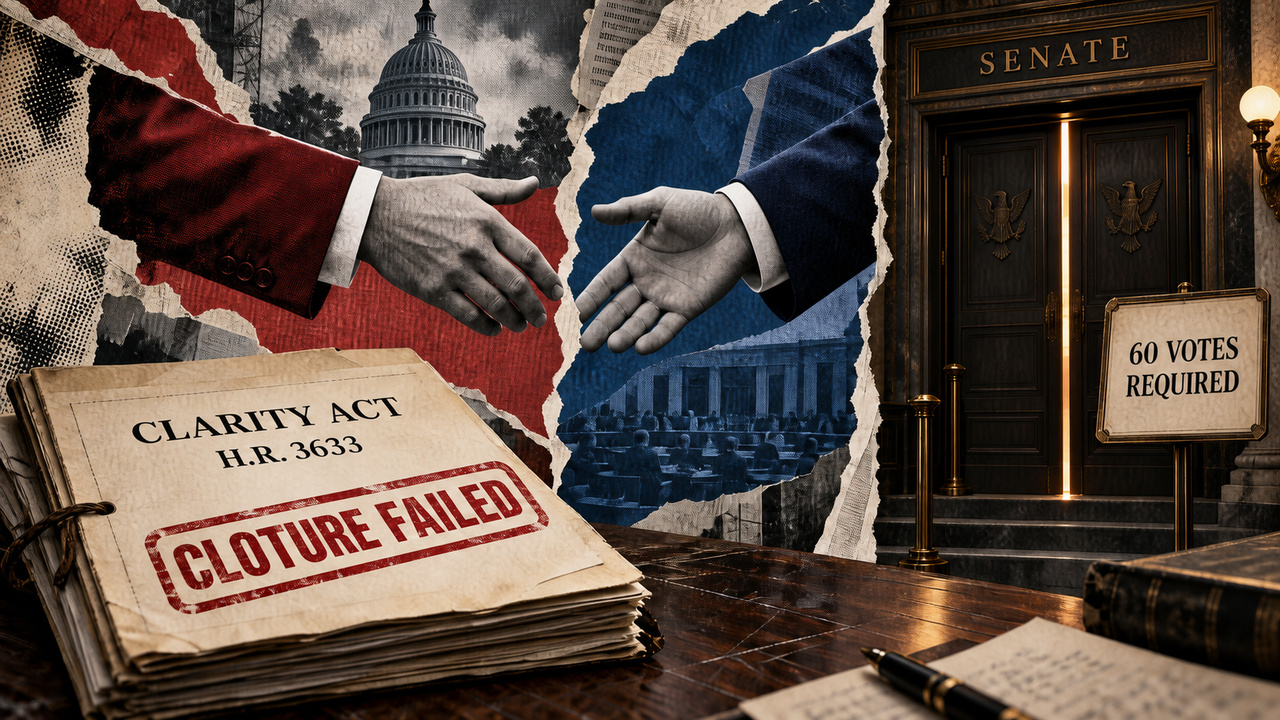
The CLARITY Act, a significant US crypto market-structure proposal, faced a major setback in the Senate recently. Despite months of bipartisan negotiations, the bill failed to secure the 60 votes needed to move forward, leading to its stalling in the legislative process.
One of the key reasons for the bill’s failure was the breakdown of final round negotiations, with several Democrats who had helped shape the legislation refusing to advance it. Senators Kirsten Gillibrand, Mark Warner, Cory Booker, Raphael Warnock, Ruben Gallego, Angela Alsobrooks, and Catherine Cortez Masto all voted against moving the bill forward, highlighting the internal divisions within the Democratic party.
The ethics package emerged as a crucial sticking point in the final hours before the vote. Senator Elissa Slotkin expressed concerns about the bill’s weak restrictions on crypto interests held by public officials, arguing that stronger rules were necessary to prevent any future administration from using their positions for personal gain through crypto ventures. She also raised national security concerns related to money laundering and financing channels linked to terrorist groups.
Senator Bernie Sanders took a broader approach, connecting the legislation to the crypto industry’s political spending and highlighting Trump’s financial interests in the sector. Sanders criticized the industry for seeking favorable treatment from Congress and urged his fellow senators to reject the bill.
The failed vote has left Republicans in a difficult position, as reviving the CLARITY Act would require reopening provisions that were presented as a final compromise. The setback underscores the challenges of passing comprehensive crypto regulation in the current political climate.
Moving forward, sponsors of the bill will need to reassess their strategy and possibly engage in further negotiations to address the concerns raised by key stakeholders. The fate of the CLARITY Act remains uncertain, but its failure in the Senate highlights the complexities of regulating the rapidly evolving crypto market in the United States.