

Bitcoin’s Holder Activity Indicates a Shift in Market Dynamics
Recent data on Bitcoin’s holders suggests that the market might be transitioning into a new phase. In the past three weeks, whale holdings have decreased by 0.20%, while retail wallets have seen an increase of 0.09%.
While the difference is currently minimal, it is evident that larger holders are scaling back their activity as smaller investors are stepping in to take on a larger portion of the available supply. Despite these changes, Bitcoin continues to trade within the range of $76,000 to $80,000.
This data implies that retail demand has not yet sparked significant FOMO (fear of missing out) in the market.
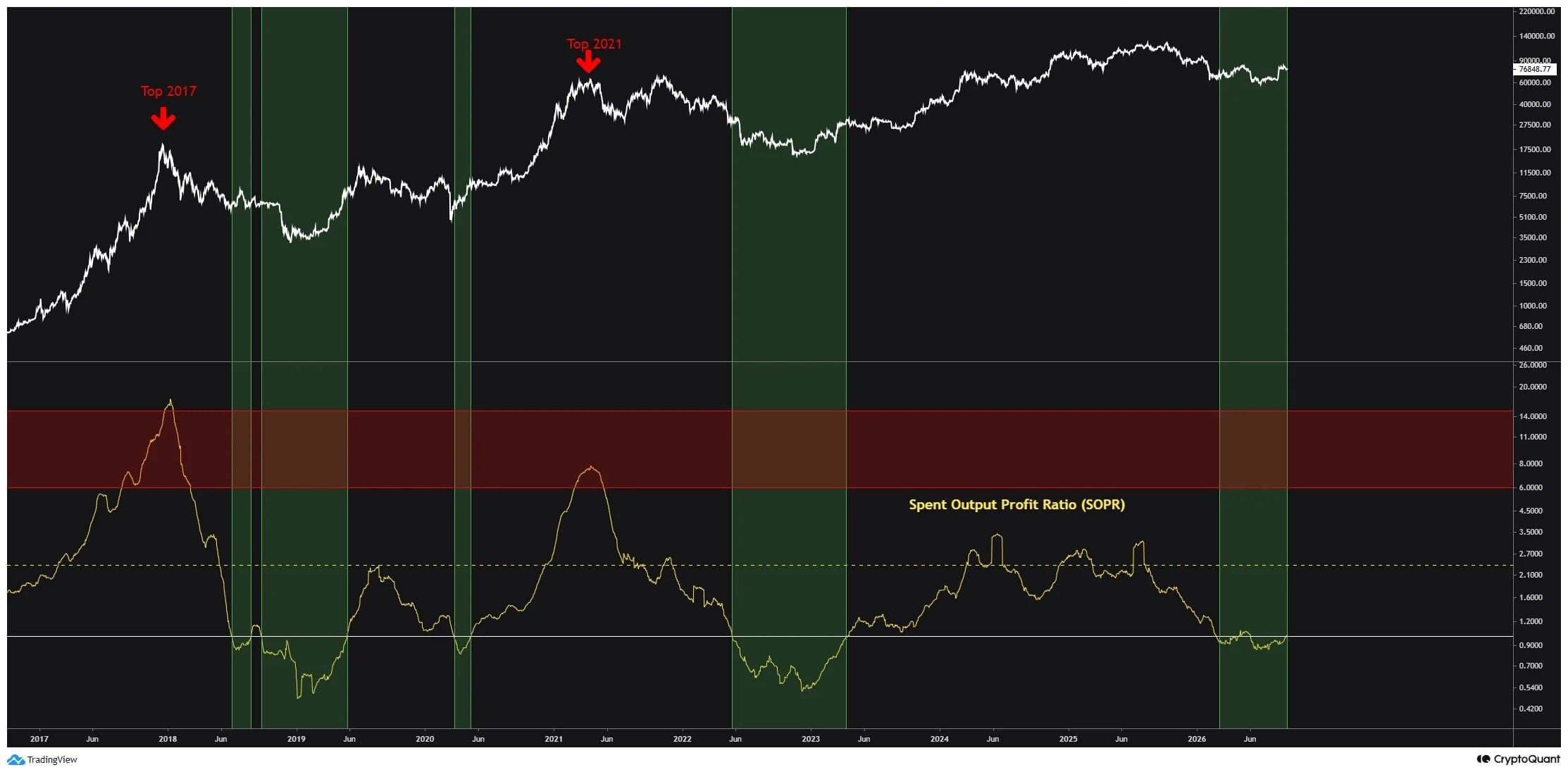
This shift in holder activity suggests that long-term holders are beginning to offload some of their coins, albeit not aggressively. If the Long-Term Holder Spent Output Profit Ratio (LTH SOPR) rises and BTC holdings remain high, there is a possibility that Bitcoin may not yet reach its peak price. Instead, it could be entering the initial stages of a more significant price increase.
Strengthening Foundation for Bitcoin’s Recovery
The behavior of short-term holders aligns with the general market sentiment. Over the past month, both short-term and long-term holders have been profitable, with the latter also engaging in profit-taking activities.
Currently, both groups hold profitable positions, reducing the risk of widespread selling at a loss. Short-term holders have generated around $168 billion in profits while incurring losses of slightly under $100 billion.
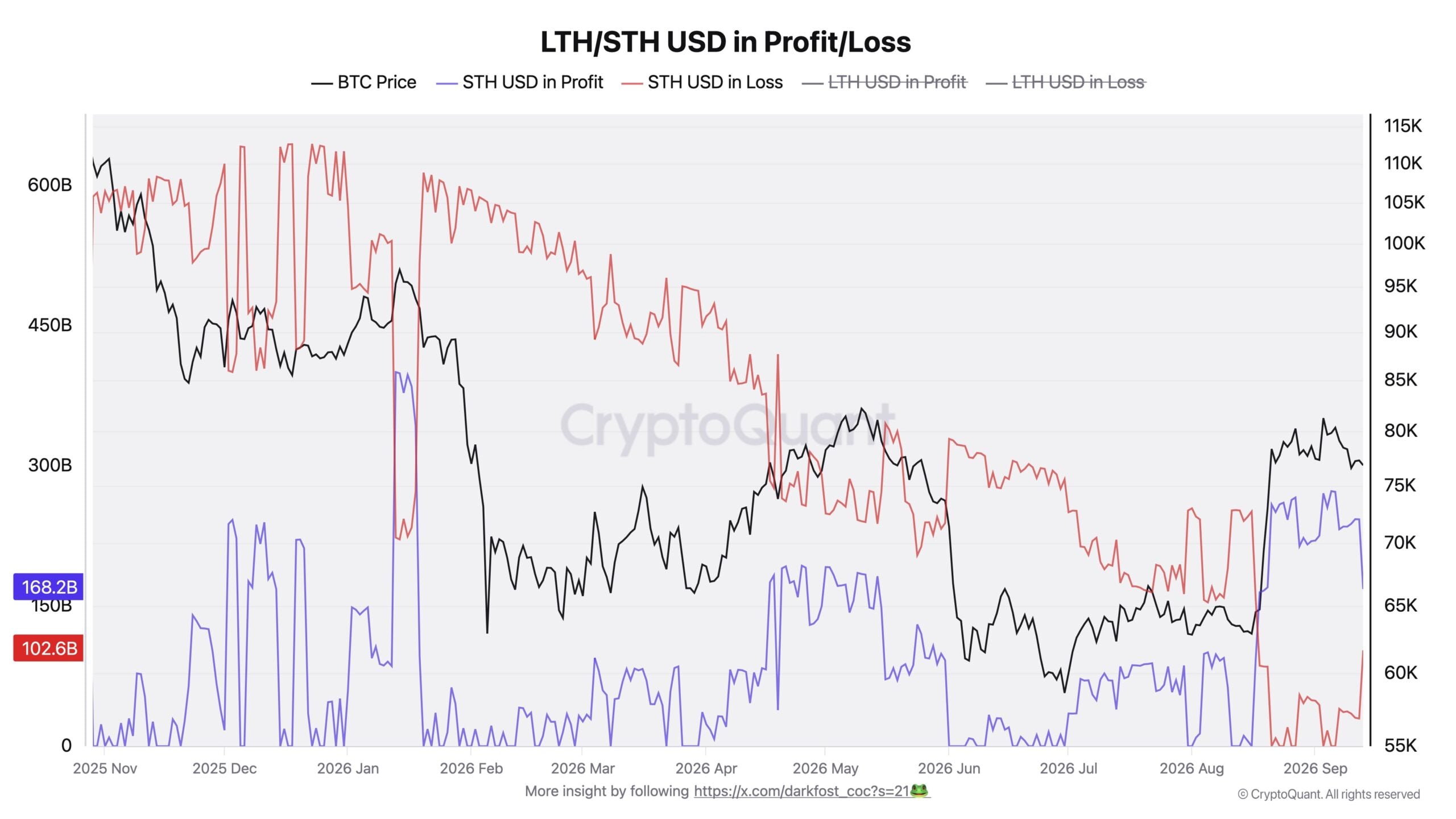
These positive signals indicate that the market can absorb profit-taking without experiencing significant losses. Therefore, if both short-term and long-term holders maintain their profitability and Bitcoin stays above $80,000, the current recovery could evolve into a sustained uptrend.
Challenges Ahead for Bitcoin’s Recovery
Despite the improving holder structure, Bitcoin’s recovery faces a critical test in the short-term price action. After surging from $63,000 to $78,000 in August, BTC has struggled to break past the $80,000 mark, experiencing several rejections.
Recent price movements have seen Bitcoin fall from nearly $79,500 back to $77,392, with the $75,500 level providing essential support. While the broader recovery remains intact, the Relative Strength Index (RSI) indicates a cooling momentum at 46.68.
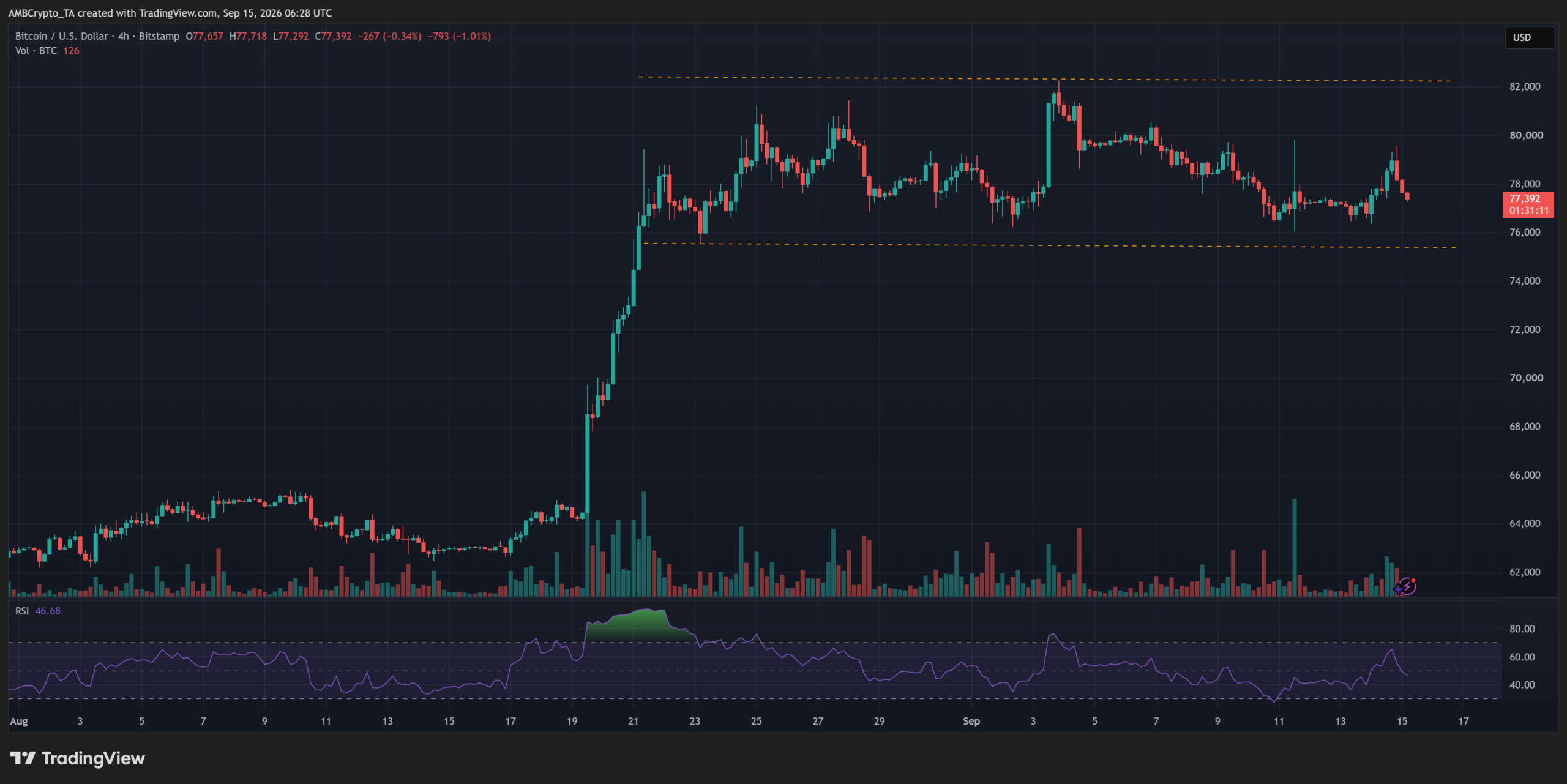
To resume its upward trajectory, Bitcoin must reclaim $80,000 and breach the $82,000 resistance level. However, a drop below $75,500 could jeopardize the ongoing recovery, shifting focus to lower support levels.
Final Thoughts
- Bitcoin’s holder dynamics reflect a changing market landscape with increased retail participation.
- Bitcoin’s price recovery hinges on breaking past $80,000 while maintaining support at $75,500.
As we continue to navigate through the challenges of the modern world, it has become increasingly important to prioritize our mental health and well-being. The fast-paced nature of society, combined with the pressures of work, relationships, and everyday life, can take a toll on our mental health if not properly managed. This is why it is crucial to make self-care a priority in our daily routines.
Self-care encompasses a wide range of activities and practices that promote our mental, emotional, and physical well-being. This can include anything from taking a relaxing bath, going for a walk in nature, practicing mindfulness or meditation, to simply taking a break and giving ourselves permission to rest and recharge.
One of the key aspects of self-care is setting boundaries and prioritizing our own needs. This means learning to say no to things that drain our energy or cause us stress, and instead focusing on activities that bring us joy and fulfillment. By setting boundaries, we are able to protect our mental health and create a sense of balance in our lives.
Another important aspect of self-care is practicing self-compassion and self-kindness. It is easy to be hard on ourselves and hold ourselves to impossibly high standards, but this only serves to increase our stress and anxiety levels. By treating ourselves with kindness and compassion, we are able to cultivate a more positive and nurturing relationship with ourselves.
In addition to setting boundaries and practicing self-compassion, self-care also involves taking care of our physical health. This can include eating a balanced diet, getting regular exercise, getting enough sleep, and staying hydrated. Taking care of our physical health is essential for our overall well-being and can have a positive impact on our mental health as well.
It is important to remember that self-care is not selfish, but rather a necessary practice for maintaining our mental health and well-being. By prioritizing self-care in our daily routines, we are able to better cope with the stresses and challenges of life, and ultimately lead happier and more fulfilling lives. So take some time for yourself today and practice self-care – your mental health will thank you for it.