

Bitcoin rose above the $72,000 level as easing geopolitical tensions brought a wave of optimism to global markets. The movement caused a sharp collectionclearing key liquidity levels and pushing BTC higher in short order, with momentum largely driven by sentiment rather than underlying structural strength.
Will CPI confirm the breakout or trigger a reversal?
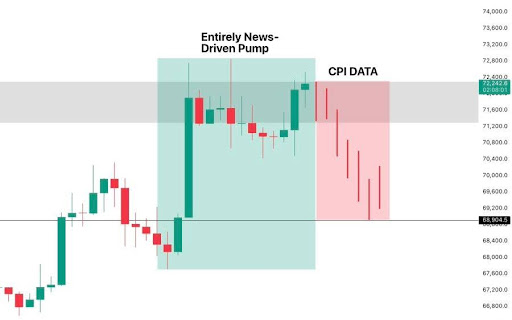
Bitcoin has regained the $72,000 level after headlines that Israel has agreed to talk with Lebanon, triggering a sharp rise and engulfing a key liquidity cluster that is above recent highs. Crypto trader Max Trades has declared on
With the Consumer Price Index (CPI) numbers just around the corner, the market is headed straight for a major volatility event. Max pointed out that these types of pumps rarely last in major events that occur just before high-impact macro releases.
An investor known as Columbus on X has done just that noted that Bitcoin is currently showing signs of weakness despite recent attempts to move higher. Using Hyblocks heatmaps, the data shows that price action remains heavy, with no real uptake above the $72,000 supply zone.
Thus, the path of least resistance remains downward until BTC can maintain acceptance above the $72,000 zone again. On the other hand, liquidity pools of around $68,000 to 69,000 remain the primary target for continuation.
Which signals a decline in profit supply to the market
The current state of the Bitcoin market reveals a deeper shift beneath the surface. A verified author for CryptoQuant Darkfost marked that BTC’s profit supply has fallen to levels typically associated with bear market conditions. Only about 59% of the total BTC supply remains profitable, a level close to that observed during the last bear market.
Currently, almost 1 in 2 BTC is held at a loss. Historically, the average bull sits at about 75% of the supply in profit, which puts the market well below typical levels. Darkfost explained that while this may seem counterintuitive, the market needs investors in profits to maintain positive momentum.
According to the data, the 50% level appears to be an important threshold. Although the market has not yet reached that level, recent cycles show that bear market bottoms often form around this area.
This trend is critical as it will help assess when profit losses in the market become significant. Thus, the strategy continues to accumulate consistently when losses reach extreme levels, allowing investors to position themselves ahead of the majority.
On the other hand, when the profit offer approaches 100%, it often indicates overheated conditions where reduced exposure is more favorable. Despite the pressure, the current environment appears more conducive to accumulation than sales.