



Bitcoin held close to $78,000 on Friday as oil prices rose above $100 per barrel. This tested whether the biggest digital asset can sustain its recovery in April as the US-Iran conflict keeps energy markets tense.
The move came after President Donald Trump escalated his rhetoric over the Strait of Hormuz, saying the US Navy controlled the waterway and that no ship could enter or leave without US approval.
The comments reinforced fears that the conflict, now focused on maritime power rather than direct attacks, could keep one of the world’s most important energy routes closed for longer.
Brent crude oil rose to around $107 per barrel, while West Texas Intermediate was trading around $97. WTI was on track for a weekly gain of more than 17% as stalled peace talks, tanker seizures and the ongoing blockade of Hormuz added to supply concerns.
Bitcoin’s response was more measured. The key digital asset rose to $78,300 after briefly trading above $79,000, extending its April recovery by about 15%.
The advance came even as U.S. stock prices fell, the dollar strengthened and traders reassessed the risk that higher oil prices could keep inflation high at the Federal Reserve’s next policy meeting.
That combination has made Bitcoin a cleaner test for the market’s inflation trade. Traders are wondering whether the token can benefit from renewed demand for scarce assets while avoiding the pressure that a stronger dollar and higher real yields usually put on speculative markets.
Oil returns to the center of Bitcoin trading
The Strait of Hormuz has become the main channel through which the US-Iran conflict reaches global markets.
Before the war, approximately 20 million barrels of oil and petroleum products were transported through the waterway every day.
However, shipping has since slowed sharply, with Iran demanding authority over ship passage and the US blocking Iranian maritime trade. The result is a physical disruption that weighs more heavily on traders than the formal ceasefire.
Trump tightened that pressure on Thursday, proverb on Truth Social that the US had “full control” of the strait and that it would remain “tightly closed” until Iran reached an agreement. He also ordered the navy to destroy Iranian boats that were laying mines in the waterway.
Oil traders have been quick to assess the risk of a longer disruption. Brent’s move above $100 revived memories of previous energy shocks that fueled headline inflation and forced central banks to tighten policy for longer.
This creates a complicated background for Bitcoin.
Higher oil supports the argument that investors should own assets outside the fiat system, especially if inflation rises while central banks avoid additional tightening. At the same time, an oil-induced inflation shock could push the dollar higher, put pressure on stock valuations and reduce the liquidity of risky assets.
The first version of that trade helped Bitcoin hold on Friday. The second remains the biggest risk for traders looking to break above $80,000.
Futures traders are the driving force behind this movement
The strongest part of Bitcoin’s rally in this market resilience came from derivatives.
CryptoQuant facts showed that Bitcoin’s rise on Thursday from $76,351 to $79,447 was driven mainly by futures activity.
According to the company, open interest rose from about $24.88 billion to nearly $28 billion as the price moved higher, a pattern that suggests leveraged positioning rather than a broad spot market bid.
The rally forced a major exit from bearish positions. Bitcoin short liquidations reached approximately $607.9 million, while Ethereum short liquidations totaled approximately $581 million. Across the two assets, short liquidations totaled nearly $1.19 billion.
Long liquidations were much smaller. Bitcoin’s long liquidations totaled approximately $12.8 million, while Ether’s long liquidations reached approximately $98.5 million. The combined long liquidations totaled nearly $111.4 million.
This imbalance explains the speed of the movement. Traders who built up short exposure in the March and April weakness were forced to buy back positions as Bitcoin broke higher. The purchase added fuel to the rally, sending the price quickly towards $79,000.
Alphractal data had indicated the same pressure before the move. Bitcoin perpetual futures funding had remained negative for 46 consecutive days on a 30-day average basis, while open interest rose about 12% during that period.
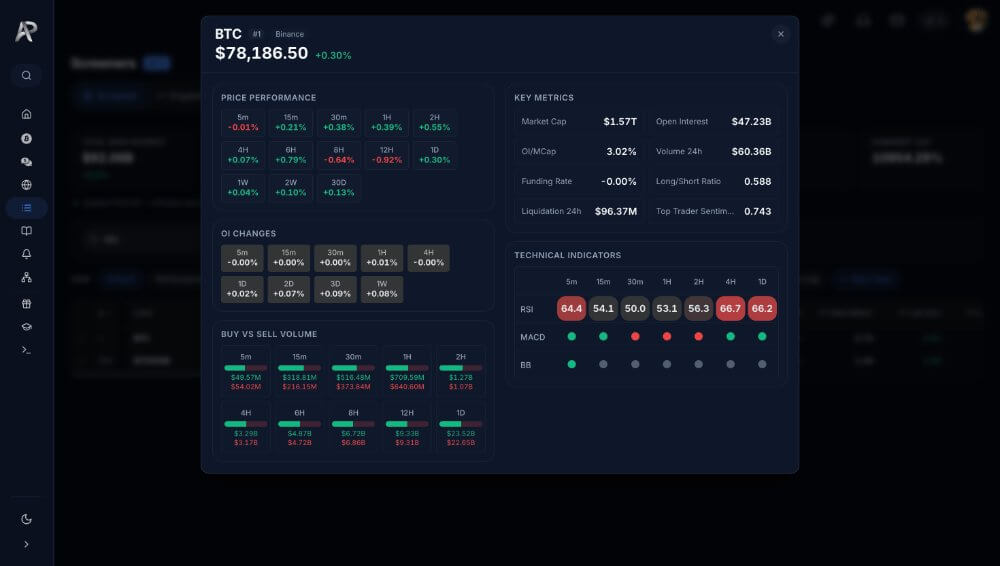
This negative funding means that bearish traders paid to keep positions open, a crowded situation that can quickly unravel if the price reverses.
The pressure gave Bitcoin momentum, but also raised the bar for the market to continue. A derivatives-based rally could continue if spot buyers intervene after the breakout. Without that confirmation, the movement could fade once forced buying subsides.
The options market remains cautious
Meanwhile, options traders are giving Bitcoin room to rise without showing the kind of aggressive upside chase that often marks overheated conditions.
Greeks.live facts showed 109,000 Bitcoin options expiring on Friday with a put-call ratio of 0.93, a maximum pain level of $72,000 and a notional value of $8.55 billion.
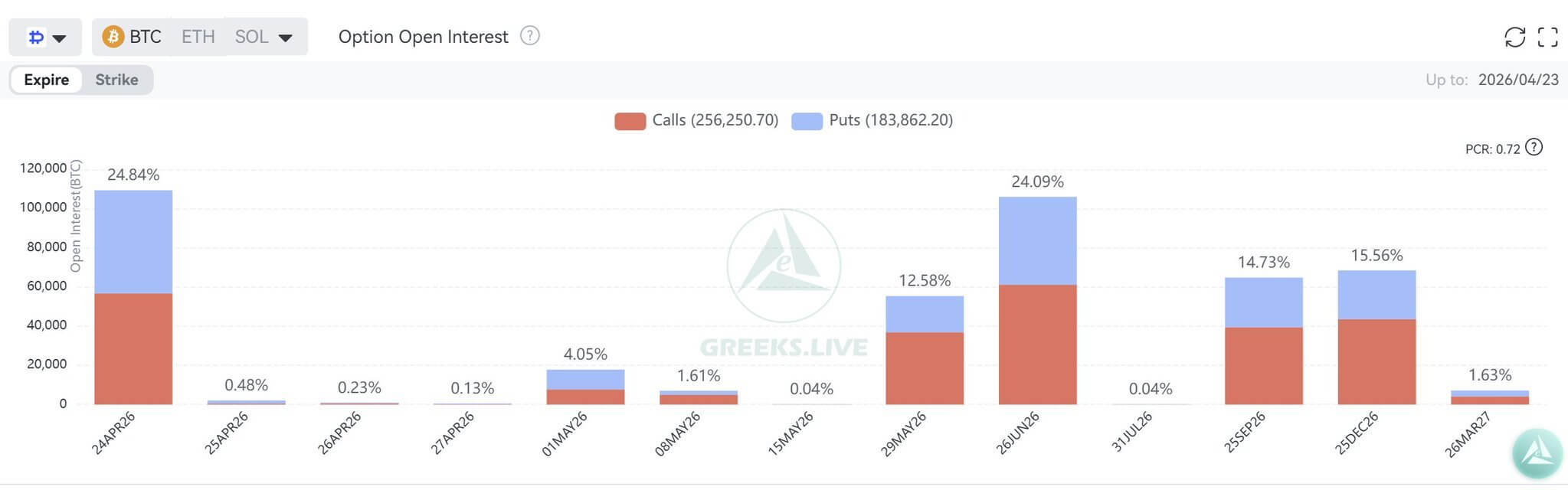
The company said 25% of open options would expire in the monthly settlement, with 12% of open interest expiring at the end of May and 24% at the end of June.
Bitcoin’s implied volatility has continued to decline across key maturities, with several maturities falling 1 to 2 percentage points and falling below 40%. The skew numbers have also fallen back, indicating that the recovery was not dominated by panic buying of upside positions.
That puts Bitcoin in a more stable position than the size of the short squeeze would suggest. Traders are not ignoring the rally, but they are not aggressively paying for calls.
Essentially, the options market leaves room for a continuation while still pricing in the risk that oil, the dollar and Fed expectations could interrupt the move.
However, Andre Dragosch, head of research at Bitwise Europe, says noted that several macro forces still favor Bitcoin. He pointed to declining recession risks, falling real interest rates if the Fed remains on hold while inflation rises, and a wide gap between Bitcoin and global money supply trends.
In that context, financial repression remains one of the strongest conditions for these assets.
This view has gained momentum as the oil sector’s rally puts the Fed on a narrower path. If policymakers cut interest rates while energy prices remain high, real yields could fall, strengthening Bitcoin’s appeal.
On the other hand, if policymakers remain restrictive to keep inflation expectations in check, Bitcoin’s recovery in April could face the same pressures that weighed on the asset earlier this year.
For now, traders consider $78,000 as the first line of evidence. Holding that level thanks to a spike in oil, a stronger dollar and weaker equities suggests demand has improved. However, a failed breakout of $80,000 would leave the move vulnerable to the same macro forces that caused previous pullbacks.