
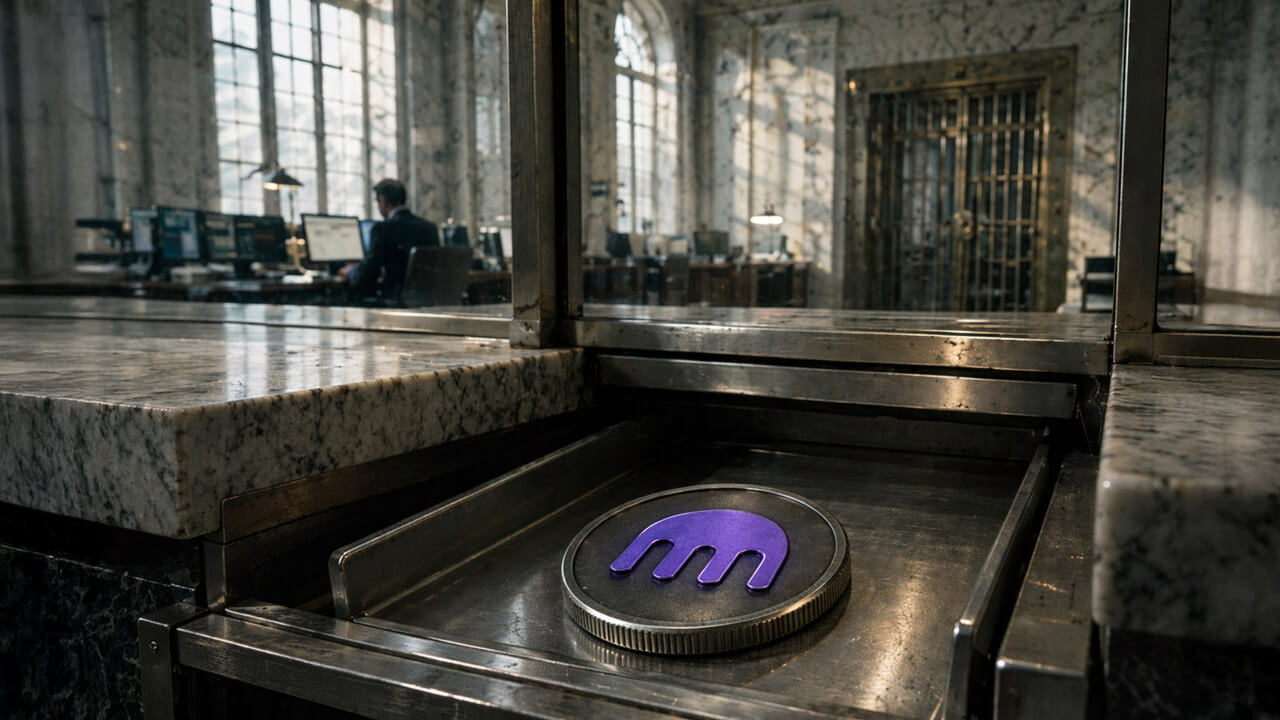
For most of its life, crypto lived outside the financial system. If you wanted to move dollars in or out of an exchange, that money had to go through a regular bank somewhere along the way. Most people assumed it would stay that way until Washington finally decided how to regulate it.
But that assumption is now being demolished. In March 2026, a regional Federal Reserve bank approved a limited account for Kraken, the first time a crypto exchange had ever been allowed to connect directly to the US central bank’s payment system. More approvals could follow, and the GENIUS Act, passed last year, has paved the way for mainstream banks to issue their own digital dollars.
None of this needed a sweeping “crypto law”: it was a series of smaller, technical decisions that completely changed the picture.
Crypto may no longer wait for permission. Maybe it’s already finding a way in.
What a ‘backdoor into the system’ actually means
The U.S. financial system runs on a series of payment networks operated by the Federal Reserve. Banks use them to move money between each other, settle transactions at the end of the day and tap dollar liquidity when they need it. The most important one, called Fedwire, moves trillions of dollars between banks every day.
To use these networks, an institution needs an account with the Fed, which has traditionally been reserved for licensed banks. Everyone else had to rent access through a partner bank that already had one.
That’s what just changed. Kraken’s banking unit now has its own direct connection to the Fed’s payment system, without first routing dollars through another bank. The account is restricted, meaning there is no interest on reserves or access to the Fed’s emergency loans, but Kraken lets Kraken settle its own dollar transactions on the same infrastructure that banks use.
Think of the difference this way: Instead of using a third-party app to talk to your bank, you have your own connection to the bank’s backend. Faster, cheaper and no longer dependent on an intermediary who can say no.
For years, U.S. crypto policy has developed slowly, between bodies that disagreed on the basics. At the same time, demand for crypto services from large institutional investors has not disappeared. They want cleaner, regulated ways to influence the asset class.
So the system adapts practically, not politically.
The GENIUS Act gave digital dollars their first true federal rulebook and effectively invited regulated banks into the market. Regulators began handing out special charters that allowed non-bank companies like Circle to operate with bank-like privileges.
The Fed has opened a public comment period for a lighter bill aimed at payments-oriented companies. Wyoming’s crypto-friendly banking charter, once treated as an experimental oddity, became the legal vehicle that brought Kraken through the door.
All this means that your bank’s exposure to digital assets is increasing, whether through partners, products or its own tokens. Citi has said it is targeting a launch of crypto custody in 2026. A group of major global banks, including JPMorgan, Bank of America and Goldman Sachs, have explored a jointly backed digital dollar. Even if you never buy crypto, it now remains on the edge of the account you already have.
However, this entails quite a few risks for the markets. When the pipes between crypto and traditional finance widen and shorten, money moves faster in both directions, and so do shocks.
For crypto, direct access to payment systems is a stamp of legitimacy that would have been unthinkable just a few years ago. But it also means losing the “outside the system” identity that defined it, and taking on some of the same responsibilities.
The more connected crypto becomes, the less isolated its risks are.
The real tension: stability or contagion for crypto?
One view (call it the normalization case) is that bringing crypto within the regulated perimeter makes everyone more secure. Companies with direct access to the Fed must meet stricter standards and reserves become easier to monitor. This is a net positive for users, as they ultimately have fewer opaque intermediaries between their dollars and the exchange. Viewed through this lens, integration reduces risk rather than creates it.
The other view is difficult to ignore, because the fears of the 2008 financial crisis are still fresh for many.
The US banking lobby responded to the Kraken decision by warning that lightly regulated companies like these with direct access to the payment system pose all kinds of money laundering and operational risks. However, they would also open a Pandora’s box of new risks: in a panic, the money could actually overflow inside these new accounts, causing deposits to flow away from the community banks and credit unions that finance the real economy.
The Bank Policy Institute, which represents the nation’s largest banks, said the approval came before the Fed had even finished writing its own rulebook for these bills.
The question behind this battle is quite simple: if crypto becomes part of the system, does it make the system stronger or more vulnerable?
Financial crises are rarely about the risks that everyone is looking at. They are the result of the connections that no one has modeled, and many believe that the new direct connection between crypto markets and the Fed’s payment rails is exactly that kind of link.
The subtle part
Part of what makes such a huge shift so hard to see is that no one is announcing it as such.
There is no press conference where “crypto joins the banking system” because there is no need. A regional Fed approval here, a stablecoin rulebook there, and a charter granted to a company most people have never heard of.
Each of these items is boring on its own terms, which is why they disappear without the kind of political fight that most comprehensive crypto laws have been mired in for years.
More crypto companies will almost certainly follow Kraken once the Fed finalizes its lighter bill framework, and the approvals will be granted one at a time, in different districts of the Federal Reserve, with terms that will take pages of legal language to unpack.
Big banks will continue to roll out custodial services and their own digital dollars as regular product launches, not as ideological statements, while this spring’s Kraken cybersecurity incident (an extortion attempt around insider access) gives the banking lobby exactly the kind of material it needs to argue that lightly regulated companies should not be on the same track as JPMorgan.
A comprehensive crypto market structure law could still be passed, and it probably will eventually, but by the time it does, what it is intended for will already have been built around it, and the interesting question will no longer be what the rules say, but how much of the system no longer needs them.