

Ethereum has once again fallen below the key $2,000 level, reflecting renewed selling pressure in the broader crypto market. This move puts ETH back in a technically vulnerable zone, where sentiment tends to deteriorate quickly as traders reassess risk exposure and liquidity conditions tighten.
Related reading
A recent CryptoQuant report provides additional context by analyzing so-called “accumulating addresses,” a specific class of wallets designed to isolate holders of long-term convictions. These addresses show no history of outflows, have received at least 100 ETH in their last inflow, have recorded multiple incoming transactions, maintain balances above 100 ETH, and have remained active for the past seven years, excluding exchanges, miners, and smart contract wallets.
According to the report, these accumulation addresses now hold approximately 27 million ETH, representing approximately 23% of the circulating supply. This concentration suggests that a significant portion of Ethereum remains in strong hands despite recent volatility.
Still, continued selling pressure below $2,000 highlights the market’s sensitivity to macro conditions, leverage dynamics and shifting capital flows, putting Ethereum at a critical inflection point in the near term. Whether buyers defend this area or allow further negative impacts will likely determine sentiment, volatility expectations, and short-term positioning in the Ethereum derivatives and spot markets.
Ethereum’s recent price action gets additional context from the same CryptoQuant analysis. It highlights how ETH is currently trading against the realized price of address collection. This metric reflects the average acquisition cost of long-term holders – wallets that consistently receive ETH without distributing it back to the market. Historically, trading below this level has been rare and often associated with periods of increased stress.

According to the report, ETH has traded below the realized price of these accumulating addresses only twice in the past nine years. The first occurrence occurred during the 2025 cycle low, a time when general market weakness and liquidity contractions pushed prices into deep discount territory. The second example has occurred since January 2026. This suggests that current market conditions are once again testing long-term cost bases.
From a structural point of view, this type of deviation can have two interpretations. It could indicate capitulation and undervaluation, with weak hands disappearing while stronger investors pile up. Alternatively, prolonged trading below realized cost levels could reflect persistent macroeconomic headwinds, weak demand or declining debt levels that are slowing the recovery.
Related reading
Price action showing weakness
Ethereum’s price action continues to show structural weakness on the weekly chart, with ETH recently losing the psychological $2,000 level after failing to stay above its key moving averages. The break below this zone puts the price back below the mid-cycle support area that previously acted as both an accumulation and breakout area.
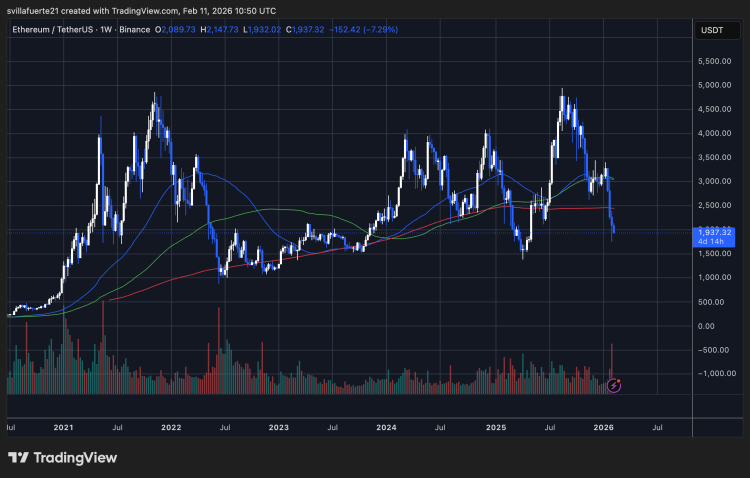
ETH remains below its shorter-term weekly moving average. The longer-term trendlines appear to be flattening, reflecting a weakening of momentum rather than a clear continuation of the trend. Volume patterns also indicate distribution, with recent sell-offs accompanied by rising activity, usually accompanied by risk reduction and unwinding of positions.
Related reading
Historically, similar designs have preceded longer consolidation phases or deeper corrective actions. This usually depends largely on broader liquidity conditions and macro risk appetite. If buyers fail to regain the $2,000 region quickly, negative targets could shift to earlier high-volume nodes near $1,600-$1,700. Where historical questions arose earlier.
Conversely, a decisive recovery above that level would improve sentiment. And would also suggest that the recent move was primarily a leverage-induced flush, and not the start of a broader structural downtrend for Ethereum in this cycle. Until then, price action is likely to remain sensitive to shifts in macro liquidity and the overall positioning of the derivatives markets.
Featured image of ChatGPT, chart from TradingView.com