

Bitcoin fell hard over the weekend and remained low until Monday, keeping traders on edge and prompting many to reduce risk.
Prices slipped from about $84,000 to about $74,600 in a few days, a drop that erased some of the recent gains and forced rapid reassessments in the markets.
Nervousness around the Federal Reserve leadershipgrowing concerns about employment and new geopolitical pressure points piled up all at once.
Related reading
Average ETF price above market
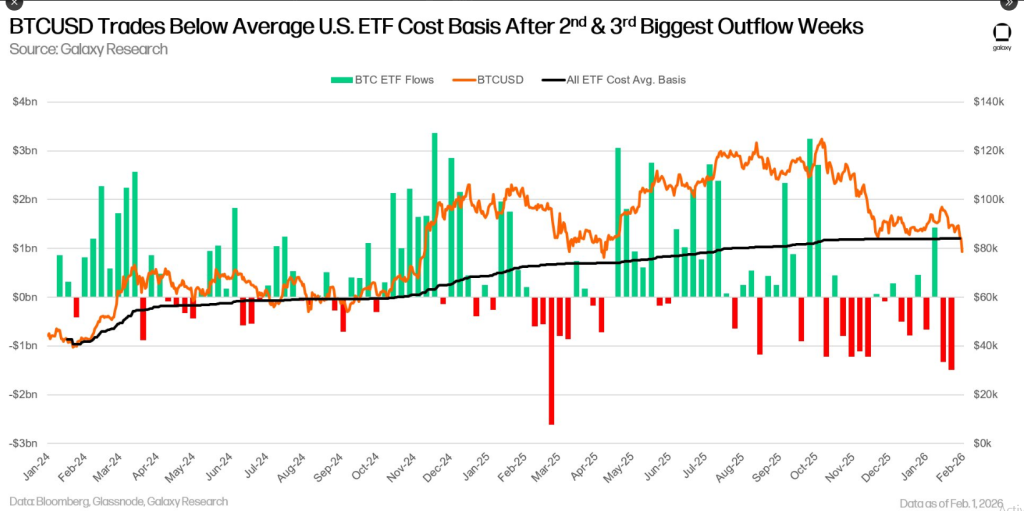
According to Coinglass, the combined assets of US Spot Bitcoin ETFs are in the neighborhood of $113 billion, while reports say they hold around 1.28 million BTC.
Based on these figures, the typical ETF purchase price averages around $87,830 per coin – well above current trading levels.
This gap means that many ETF holdings are currently showing losses on paper. Rather, some funds have continued to buy and hold positions that are underwater.
BTC trades below US ETFs’ average cost basis after second and third largest outflow week on record (last week and week before)
(and last week’s outflow will increase after IBIT reports Friday’s numbers tomorrow)
this means the average bitcoin ETF purchase is underwater pic.twitter.com/XowzrnBaSM
— Alex Thorn (@intangiblecoins) February 2, 2026
The outflow is increasing
Over the past two weeks, investors have pulled nearly $3 billion from the 11 spot ETFs, with $1.50 billion leaving in one week and $1.30 billion the week before that, according to MintGlass.
These moves suggest that some market participants are locking in profits or reducing exposure after the recent run-up.
At the same time, cumulative ETF inflows remain significantly lower than previous peaks; buying hasn’t fully returned yet, even if some holders remain steady.
Technical signals and bear fears
Reports indicate that spot BTC is down about 40% from its October peak, while ETF AUM is down about 31%. Due to this difference, analysts warn that continued weak demand could push Bitcoin into a deeper downtrend.
Technical charts show that longer-term selling pressure is increasing in certain metrics. If demand doesn’t reemerge, the momentum could push prices lower and expand selling in the crypto markets.
Policy, politics and market sentiment
Market watchers point to additional uncertainty around monetary policy and geopolitics as fuel for the recent moves. Reports have indicated that the proposed U.S Clarity Act stuck in Washington.
At the same time, headlines about tensions in the Middle East and trade frictions prompted a rush to traditional safe havens like gold and the dollar.
Even a hint of policy change matters: US President Donald Trump’s choice for the next Fed chairman was discussed by investors as another factor shaping expectations.
Related reading
Liquidity and the way forward
Not all institutional investors have capitulated. Many are said to have retention, which can cushion sharp falls.
But when the average cost basis for large ETF holders is above the current market price, trust can be vulnerable.
Liquidity has become thinner in certain periods, exacerbating price fluctuations. A recovery requires renewed purchases from both private and large investors, otherwise sellers can determine the direction for longer.
Featured image from Unsplash, chart from TradingView