



Institutional interest in XRP is increasing on multiple fronts, but digital asset prices continue to struggle amid broad market consolidation.
CryptoSlate Data shows that XRP has fallen more than 5% to $1.40 over the past 24 hours, marking a decline that contrasts with improving activity across several market indicators.
The decline has traders wondering whether the latest accumulation signals can overcome near-term selling pressure after XRP briefly rose above $1.54 for the first time in two months.
The disconnect is evident in three areas: ETF flows, exchange withdrawals, and XRP Ledger (XRPL) activity. Together they point to increasing interest in these assets, even as spot market momentum remains fragile.
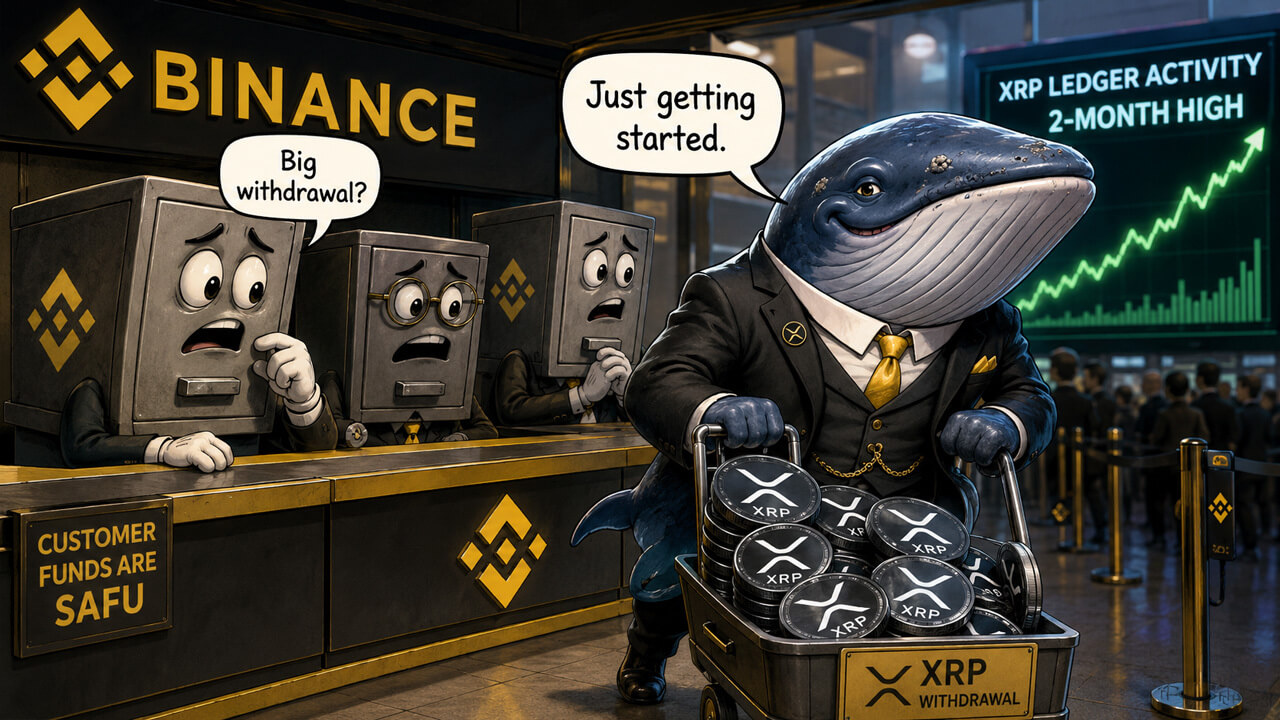
XRP ETFs are seeing the strongest weekly inflows this year
US-listed XRP exchange-traded funds (ETF) posted their strongest week of inflows this year, adding a new institutional support line under the token’s market structure.
Data from SoSoValue shows that the four
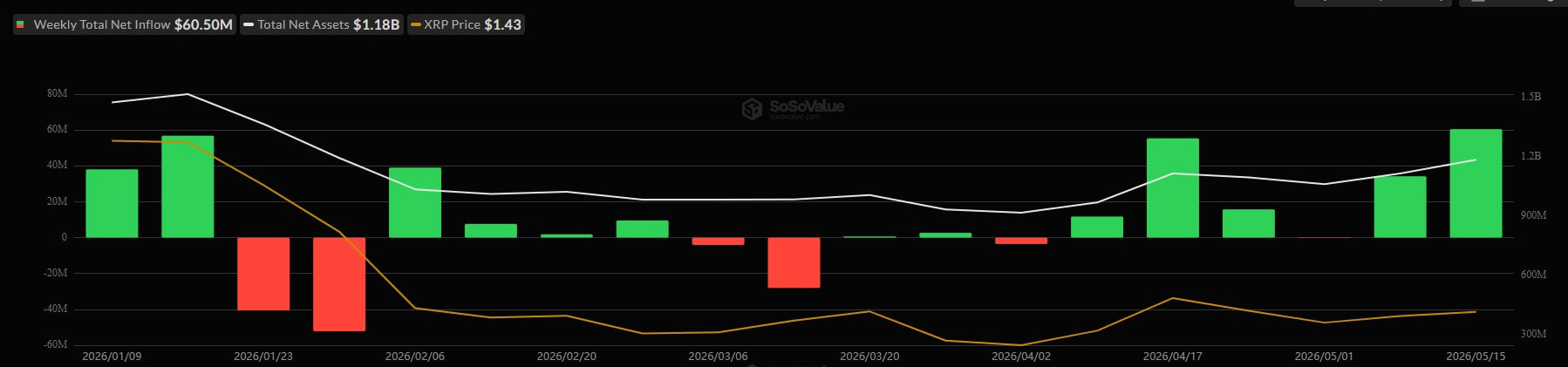
The latest inflow started on Monday with $25.8 million, the largest single-day inflow in more than four months. Then the funds added $5 million on Tuesday, saw no flows on Wednesday, raised $18 million on Thursday and ended the week with another $10 million on Friday.
The new demand increased cumulative inflows into XRP funds to $1.39 billion, while total net assets reached $1.18 billion.
That flow profile suggests that institutional buyers are still allocating to XRP despite the token’s weak daily performance. It also shows that demand for ETFs has not yet been sufficient to stem the pressure on the spot market.
Withdrawals from Binance indicate a reduced supply of currency
In addition to Wall Street products, large-scale crypto investors are actively moving their assets into private custody, adding another bullish signal to the market.
CryptoQuant facts show that approximately 403 million XRP has been withdrawn from Binance since May 3 through transfers of more than 1 million XRP. The threshold filters out smaller retail activity and records movements that are more likely to be linked to whales, funds or high net worth holders.
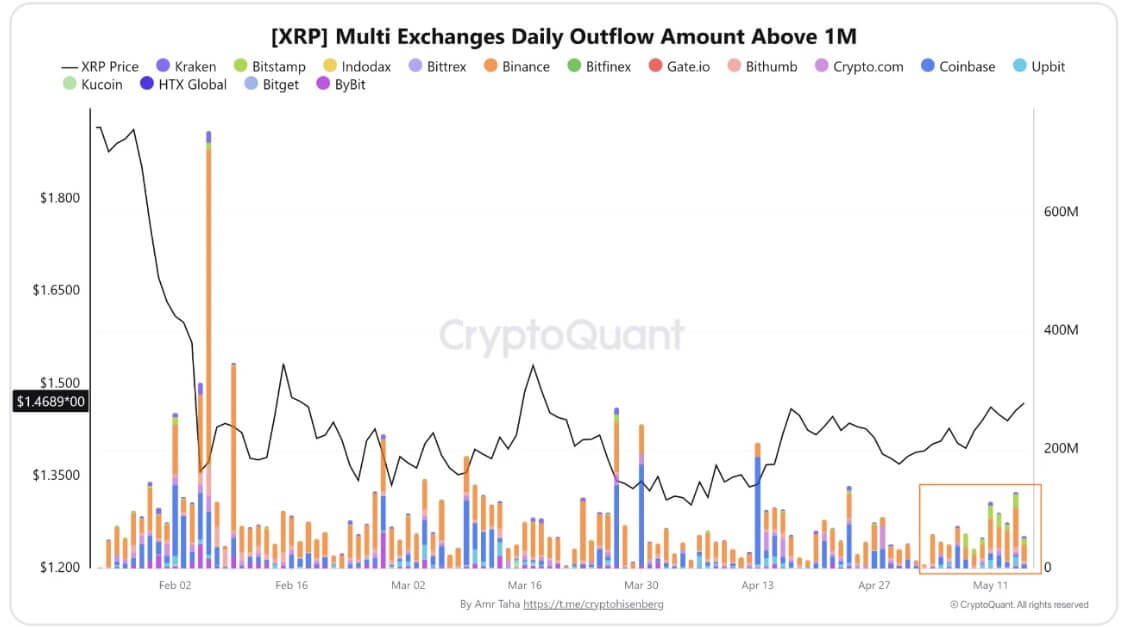
The pullbacks are occurring almost daily, making the pattern more durable than the isolated spikes recorded earlier this year.
In late March and mid-April, the major XRP outflows were mainly focused on Coinbase, especially around March 27, March 30, and April 13, when XRP was trading around $1.34.
That previous behavior suggested that large holders were pulling coins from exchanges during periods of price weakness.
The latest pattern has shifted to Binance, with withdrawals continuing as XRP tried to recover towards $1.47 this week.
Typically, currency outflows are often seen as a sign of investors moving assets into private custody or longer-term storage. That could reduce the amount of XRP immediately available for sale on trading platforms.
However, the effect is not automatic, but continued pullbacks could tighten liquidity on the exchange rate side if the trend continues.
XRPL activity hits two-month high
Parallel to these accumulation signals, the XRP Ledger (XRPL) is experiencing a resurgence in utility.
Data from Santiment shows that XRPL recently recorded the highest level of on-chain activity since late March after XRP climbed above $1.54. Active addresses reached 48,453 over a 24-hour period, the highest level since March 30.
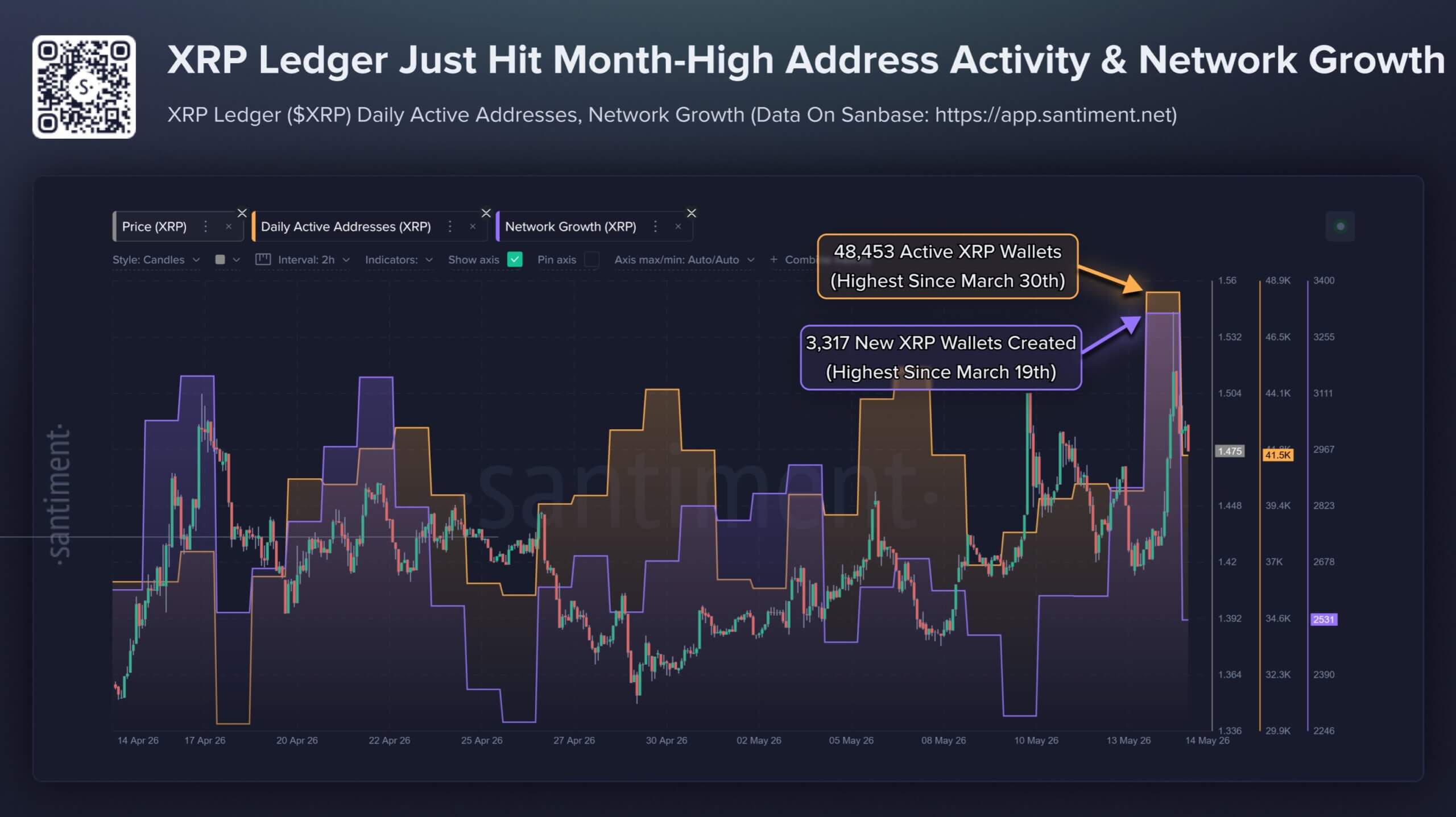
Network growth also accelerated: 3,317 new addresses were created. That marked the strongest pace of new wallet creation since March 19.
While some of the on-chain spikes can be attributed to retailers chasing the short-term price increase, continued transactional activity and address growth provide a fundamental basis for network valuation.
Strengthening these foundations is a growing wave of traditional financial inclusion. Last week, Ripple announced a partnership with JPMorgan, Mastercard and Ondo Finance to test cross-border transactions using tokenized US Treasuries on the blockchain network.
XRP must now prove that its signals can survive the pullback
Given the above, the short-term setup leaves XRP in a tough position as improving flows and network activity have not translated into a sustainable breakout.
This makes the next phase dependent on the maintenance of the current signals. Traders will be keeping an eye on whether XRP ETFs continue to attract inflows, whether Binance’s withdrawals remain stable, and whether XRPL activity holds up after the initial price-driven burst.
A continued improvement in these indicators could give bulls stronger evidence that XRP’s latest correction is taking place amid stronger demand.
However, a slowdown in flows, currency withdrawal, or network activity would weaken that setup and leave the token more exposed to further consolidation.