
Crypto moves fast, and timing matters. You’ve probably entered a trade only to watch it reverse seconds later—or hesitated too long and missed the move entirely. That’s where momentum indicators can be helpful.
The stochastic oscillator is one of the most widely used tools in technical analysis: It helps you spot when an asset’s momentum is shifting before price fully confirms it. Here’s how to read it, use it, and avoid the most common mistakes.
What Is the Stochastic Oscillator in Crypto?
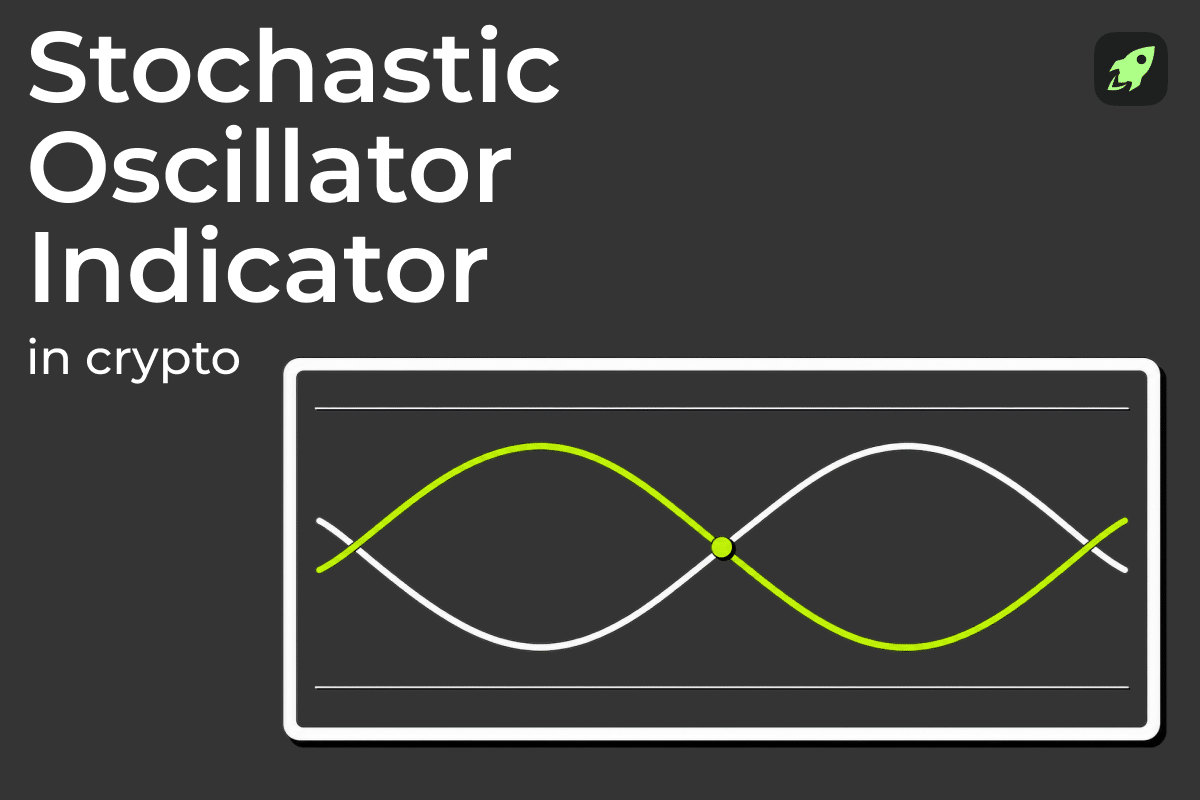
The stochastic oscillator is a momentum indicator that compares a token’s current closing price with its highest and lowest prices over a set period. This comparison produces the %K line, which is then smoothed into the %D line—a simple moving average of %K. Together, these lines help you identify overbought conditions, typically above 80, and oversold conditions, typically below 20.
Highly liquid crypto assets like Bitcoin, Ether, and Solana often produce frequent stochastic readings because they trade continuously and move across wide intraday ranges. When Bitcoin’s %K line crosses above the %D line while both are in the oversold region, it could indicate a potential price reversal. Traders use the stochastic oscillator to gauge market momentum and make more informed decisions about entering or exiting positions.
The Core Idea Behind the Indicator
The stochastic oscillator compares an asset’s current closing price with its high and low prices over a chosen period. This creates the %K line, which shows where the closing price sits within the recent range. If it’s near the top, that suggests bullish momentum. If it’s near the bottom, that suggests bearish momentum.
One of the indicator’s strengths is that it doesn’t try to predict future moves. Instead, it shows whether an asset’s trading near its recent highs or lows. That context can help you spot potential reversals or confirm trends, even though it doesn’t guarantee outcomes.
How the Stochastic Oscillator Works
The stochastic oscillator has two main components: the %K line and the %D line. The %K line is the main line and reflects where the closing price sits within the asset’s recent high-low range over a chosen period, usually 14. The %D line is a 3-period simple moving average of %K and acts as a signal line by smoothing short-term price fluctuations.
Together, these lines help you judge whether the market’s likely to continue its current momentum or show early signs of a reversal.
Stochastic Formula and Calculation
The stochastic oscillator uses the same core formula across platforms and markets, including crypto. It compares the closing price with the high and low over a set period—often 14—to show where the token sits within that range. The basic formula looks like this:
%K = [(Current Close − Lowest Low) / (Highest High − Lowest Low)] × 100
Here, the “lowest low” and “highest high” refer to the selected lookback period. On crypto charts, “14 periods” could mean 14 minutes, 14 hours, or 14 days, depending on your timeframe.
This indicator is bounded, meaning it always produces a %K value between 0 and 100. The higher the value, the closer the closing price is to the top of the lookback range. A lower value means the price is closer to the bottom of that range, which may signal weak momentum or stronger selling pressure.
How to Read the Stochastic Oscillator
The stochastic oscillator includes two lines: %K, which reacts quickly to price movements, and %D, a smoothed version that helps confirm trends. When %K crosses above %D, it may suggest bullish momentum. When %K crosses below %D, it can signal potential weakness. Some traders also watch for divergences between the indicator and price action.
Read more: Overbought vs. Oversold Signals
Overbought: What Above 80 Means
When the stochastic oscillator rises above 80, the asset’s trading near the top of its recent range. This is an overbought condition. However, overbought doesn’t automatically mean a reversal’s coming. In strong bullish trends, the indicator may stay above 80 for an extended period while price continues to climb.
Experienced traders often wait for added confirmation before selling—such as a bearish crossover where %K crosses below %D, or a nearby resistance level on the price chart. An overbought reading is best used as context, not as a hard exit rule.
Oversold: What Below 20 Means
A reading below 20 means a crypto asset is closing near the bottom of its recent range: an oversold condition. This can serve as an early warning of potential exhaustion, but it doesn’t guarantee an upward move.
George Lane developed the stochastic oscillator based on the idea that momentum often slows before price reverses direction. In crypto markets, assets can stay oversold for long periods, especially during strong downtrends. Using the indicator alongside other tools—such as price charts and support zones—can help you avoid acting too early on false signals.
The Main Signals Traders Watch
Traders focus on two main stochastic oscillator signals: crossovers and divergences.
Bullish Crossover: When %K Crosses Above %D
A bullish crossover occurs when the %K line crosses above the %D line, especially when the indicator’s in oversold territory below 20. This pattern suggests downward momentum is slowing and buyers may be stepping in.
For example, Bitcoin traded near record highs in March 2024, with sharp intraday moves around the $70,000–$73,000 range. In conditions like that, traders may use a bullish stochastic crossover as a confirmation signal, but not as proof that a reversal will follow.
Bearish Crossover: When %K Crosses Below %D

A bearish crossover happens when the %K line crosses below the %D line, especially when both lines are in the overbought region above 80. This can signal that momentum’s slowing and may warn of an upcoming pullback.
Ethereum Classic surged from the mid-$20s to above $30 in late May 2024 before cooling off. A bearish stochastic crossover near an overbought zone can become more useful when it appears close to resistance, but it still needs price confirmation.
Bullish Divergence

A bullish divergence forms when price makes a new lower low while the stochastic oscillator forms a higher low. This suggests selling pressure may be easing even as price continues to fall, which is an early sign that bearish momentum is fading.
This setup can help you prepare for a possible reversal, especially when other signals confirm it, such as support bounces or bullish crossovers. Divergences are useful for spotting momentum shifts early, but you still need confirmation from price action, volume, or other indicators.
Bearish Divergence

A bearish divergence occurs when price makes a higher high but the stochastic oscillator forms a lower high. This mismatch suggests bullish momentum is fading even though the market still looks strong. You might use it to tighten stops or reduce risk before a potential reversal.
A high stochastic reading can suggest a peak in momentum, but context still matters. Resistance levels, fading volume, and other tools help confirm whether the signal’s actionable.
Fast vs. Slow vs. Full Stochastic
There are three main versions of the indicator. Each uses the same core formula but applies a different level of smoothing.
Fast Stochastic
The Fast Stochastic produces the quickest signals because the %K line reacts to price changes with minimal smoothing. This can be useful for trading breakouts or short-term moves, but it can also generate false signals in choppy or sideways markets. In crypto, it’s usually best for active traders who can manage quick shifts.
Slow Stochastic
The Slow Stochastic applies a 3-period smoothing to %K, reducing the impact of sudden price spikes. This extra smoothing helps you avoid reacting to every small intraday move and focus on clearer momentum shifts. In noisy crypto markets, the Slow Stochastic can be more dependable for swing trades, range strategies, or confirming directional moves.
Full Stochastic
The Full Stochastic lets you customize both the lookback period and the degree of smoothing applied to %K and %D. A longer smoothing period can reduce noise and highlight stronger trends. A shorter period helps in faster trading environments but adds more noise.

How to Get Free Crypto
Simple tricks to build a profitable portfolio at zero cost

Stochastic Oscillator vs. StochRSI
The stochastic oscillator measures momentum by comparing the latest closing price with the asset’s recent high-low range. StochRSI applies the stochastic formula to RSI values instead, making it more sensitive and prone to noise. StochRSI is often better suited to experienced traders who want faster signals and already have a broader strategy. For beginners, the classic stochastic oscillator is usually easier to read.
| Feature | Stochastic Oscillator | StochRSI |
| Input | Price (close, high, low) | RSI value, not direct price |
| Purpose | Identify price momentum and overbought/oversold conditions | Identify RSI momentum and overbought/oversold conditions |
| Sensitivity | Moderate by default | Higher and more reactive |
| Typical use | Standalone or with other indicators | Often paired with other tools for confirmation |
| Beginner risk | Easier to interpret | Can trigger too many signals |
Stochastic vs. RSI vs. MACD: How Do They Compare?
Stochastic, RSI, and MACD all help you spot momentum but do it differently. The stochastic oscillator tracks where price closes within recent ranges. RSI focuses on the strength of price gains vs. losses. MACD measures the distance between moving averages. There’s no universal best—results depend on market context and how you use the tool.
| Feature | Stochastic Oscillator | RSI | MACD |
| Core input | Price vs. recent range | Price gains vs. losses | Moving averages |
| Signal style | Crossovers, 80/20 levels, divergence | Overbought/oversold, 70/30 levels, divergence | Crosses, histogram, trends |
| Best use | Range-based momentum shifts | Exhaustion and trend strength | Trend and momentum confirmation |
| Sensitivity | High by default, customizable | Moderate | Variable depending on smoothing |
When the Stochastic Oscillator Works Best, and When It Fails
The stochastic oscillator works best in the right market context. When prices move within a clear range, its signals often align well with reversals near highs or lows.
Good Conditions
The stochastic oscillator often performs best in sideways, range-bound crypto markets where overbought and oversold readings tend to line up better with reversals. It’s also most effective when the market shows clear support and resistance zones and works well as a confirmation tool—if it shows a divergence and price action or volume support that view, the setup becomes more convincing.
Weak Conditions
In strong trends, use the stochastic oscillator with caution. When the market continues moving in one direction, the indicator can stay overbought or oversold for long periods and produce misleading reversal signals. Highly volatile conditions can also reduce its usefulness, as sudden spikes and flash reversals may produce constant, unreliable signals.
Choppy Conditions and False Signals
In choppy markets, the stochastic oscillator can produce false signals as price swings quickly without a clear direction. An altcoin can trade in a tight range on the hourly chart while the oscillator flips rapidly from overbought to oversold and back—leading you to enter and exit at the wrong time. Always consider the timeframe you’re trading before acting.
Best Stochastic Oscillator Settings for Crypto
There’s no single best setting for crypto trading with the stochastic oscillator, but common setups can help you adjust the indicator’s sensitivity to volatility and trend.
The Default 14-Period Setup
The standard 14-3-3 setup uses a 14-period lookback with 3-period simple moving averages applied to %K and %D. It’s often used on daily charts because it offers a practical balance between speed and noise—catching momentum shifts without reacting to every small move.
Shorter Settings: Faster but Noisier
Shorter settings like 5-3-3 make the oscillator react more quickly and can help you spot momentum shifts sooner. The tradeoff is more noise—quick price swings can create jumpy signals that are easy to misread without confirmation.
Longer Settings: Slower but Smoother
Longer settings like 21-5-5 create a smoother oscillator that’s less affected by sudden market moves. This can work well for swing traders who want to avoid getting whipsawed by every spike, though it may catch reversals later.
Final Words
The stochastic oscillator remains popular in crypto because it’s simple, flexible, and easy to combine with other tools. It can’t guarantee reversals, but it adds useful context by highlighting overbought and oversold conditions, momentum shifts, and possible confirmation points.
When you combine it with volume analysis or price action, it becomes more useful. Use it as a guide—not a complete trading system.
FAQ
Is the stochastic oscillator good for crypto?
Yes, it works well in range-bound markets and pairs effectively with other tools, though it can produce false signals during strong trends or high volatility.
What timeframe works best?
It depends on your trading style. The daily chart suits swing traders, while shorter timeframes like the 4-hour or 1-hour work better for more active setups.
Is a stochastic oscillator better than RSI?
Neither is universally better. The stochastic oscillator is more useful for range-based momentum shifts, while RSI is often used to judge overbought or oversold conditions and the strength of recent price moves.
Is StochRSI the same thing?
No—StochRSI applies the stochastic formula to RSI values rather than price directly, making it more sensitive and better suited to experienced traders.
Can it predict reversals?
It can’t predict reversals, but it can flag early signs of weakening momentum. Always confirm signals with support/resistance levels, volume, or trend analysis before acting.
Disclaimer: Please note that the contents of this article are not financial or investing advice. The information provided in this article is the author’s opinion only and should not be considered as offering trading or investing recommendations. We do not make any warranties about the completeness, reliability and accuracy of this information. The cryptocurrency market suffers from high volatility and occasional arbitrary movements. Any investor, trader, or regular crypto users should research multiple viewpoints and be familiar with all local regulations before committing to an investment.