
A dollar-pegged stablecoin built to comply with Islamic financial standards now operates on a new blockchain network anchored in the Middle East, adding a second digital currency to a settlement platform backed by some of Abu Dhabi’s biggest financial names.
Related reading
Backed by Gulf currencies, not just the dollar
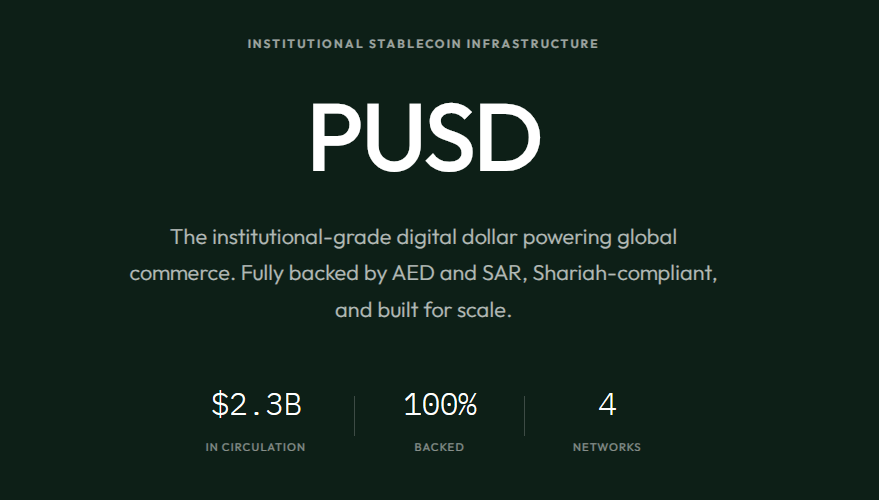
PUSDissued by Palm Azgar Finance, holds reserves in Saudi riyals and UAE dirhams – both pegged to the US dollar – rather than holding US dollars directly.
That structure is central to the Shariah-compliant design, which targets institutions operating under Islamic financial rules that prohibit interest and require asset support.
The stablecoin has approximately $2.3 billion in circulation and runs on several major blockchains, including Ethereum, BNB Chain, Solana and Tron. ADI Chain is the latest addition.
ADI chain was built as a settlement layer for a dirham-backed token that emerged from a partnership between International Holding Company and First Abu Dhabi Bank. The UAE Central Bank has licensed it.
Now that PUSD is on board, institutions using the network can transact in dollar-pegged or dirham-denominated tokens operating on the same platform.
The ADI Foundation says the network is designed to support payment corridors in the Gulf, the wider Middle East and parts of Africa.
A $3 trillion market in sight
According to the ADI Foundation, Islamic financial assets worldwide are estimated at over $3 trillion. That market has traditionally been served by conventional banks and funds that operate under their activities Sharia guidelines, but blockchain-based alternatives have struggled to break through on a large scale.
Sharia law at a glance
Sharia law bans interest, limits speculation and requires financial instruments to be backed by real assets – rules that outright disqualify most crypto products. To meet that standard, a stablecoin must maintain verifiable reserves and not generate interest-based returns.
Certification by a board of qualified Islamic scholars is typically required, although the report does not confirm whether PUSD has obtained one.
PUSD’s move to ADI Chain is an attempt to change that, targeting corporate bonds, exchanges and payment processors looking for compatible digital settlement tools.
The UAE has become one of the more active countries regulatory environments for stable coins. There are several frameworks set up by the Central Bank and the Abu Dhabi global market, covering both dirham-pegged and dollar-denominated tokens.
Related reading
Global players are already present in the UAE space
Recognitions have also been extended to established names. Tether, Ripple USDand Circle have all been approved to operate within ADGM’s financial zone by the Financial Services Regulatory Authority.
That puts PUSD in a field that includes some of the largest stablecoin issuers in the world, vying for a share of the institutional transaction flow in one of the region’s most active financial centers.
Featured image from Unsplash, chart from TradingView