
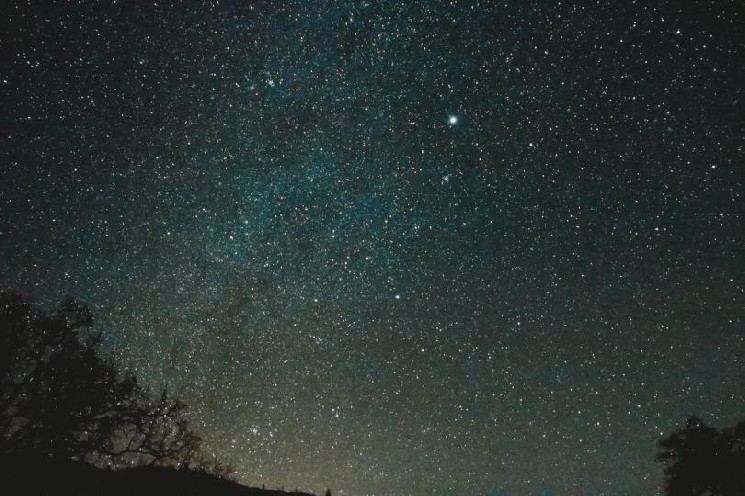
Avalanche is going beyond the financial sector and into space, with a new network designed to verify telescope data in real time.
SkyMapper has introduced a dedicated Avalanche-based network that cryptographically records observations from telescopes around the world, converting each data point into a secure, verifiable digital record.
The new network, SkyMapper L1, collects data from a wide range of telescopes and sensors around the world and turns every observation into a secure digital record. The company calls this a ‘Proof of Space Observation’ (POSO) – essentially a way to prove that a specific event in the sky was actually seen, at the time it occurred, and that the data has not been altered. This verified data can then be used by scientists, companies or government agencies that need reliable space data.
The SETI Institute, known for its search for extraterrestrial intelligence, is contributing live observation data, marking one of the first production-scale integrations of institutional science into a blockchain-based verification system.
SkyMapper’s pitch focuses on a growing problem: the explosion of data from satellites, drones and space missions, and the difficulty of verifying that data has not been altered or misattributed. The team says blockchain can help solve this by creating a permanent, tamper-proof record of every observation that anyone can independently verify.
The system works by validating observations at the time they are recorded. When a networked telescope records an event – such as a satellite pass or a deep-space signal – the data is immediately cryptographically signed, essentially creating a unique fingerprint associated with that device. The observation is then timestamped and sent via SkyMapper’s infrastructure.
Instead of keeping all data in one central database, SkyMapper distributes it across a decentralized storage network. At the same time, it stores a kind of digital fingerprint of that data on the Avalanche blockchain. This fingerprint means that anyone can check it later to confirm that the data is real and has not been altered.
The network uses smart contracts to monitor and organize incoming data and determine who has access to it. Some information – such as sensitive government or defense data – can be kept private, while other data, such as scientific research, can be shared openly.
The result is a system where every observation can be independently verified: users can check when and where it was captured, confirm it hasn’t been tampered with, and trace it back to the source.
“We are building blockchain infrastructure for real-world impact,” said Emin Gün Sirer, founder and CEO of Ava Labs. “SkyMapper’s work anchoring observatory data on Avalanche shows how this technology can transform science and deliver tamper-proof, verifiable telescope records.”
Read more: FIFA partners with Avalanche to build its own blockchain, expanding Web3 ambition