

The Bitcoin [BTC] The recovery in March and April restored positive sentiment in the market, but the retracement below $60,000 in early June dented this optimism again.
The $60k-$70k was a key demand zone, both from a technical perspective and based on the findings of the on-chain metrics.
AMBCrypto reported that 20% of the circulating BTC supply within this key structural support zone has changed hands. This was claimed to be one of the largest transfers from weak to strong hands in Bitcoin history.
The forced selling of Bitcoin is not over yet
Long-term holders have been steadily unloading their tokens. At the same time, Bitcoin reserves continued to decline, indicating that fewer coins were readily available to be sold.
Strategy added their holdings again last week, but there were indications that whale portfolios were treating the $61.5k zone as a critical buying zone.
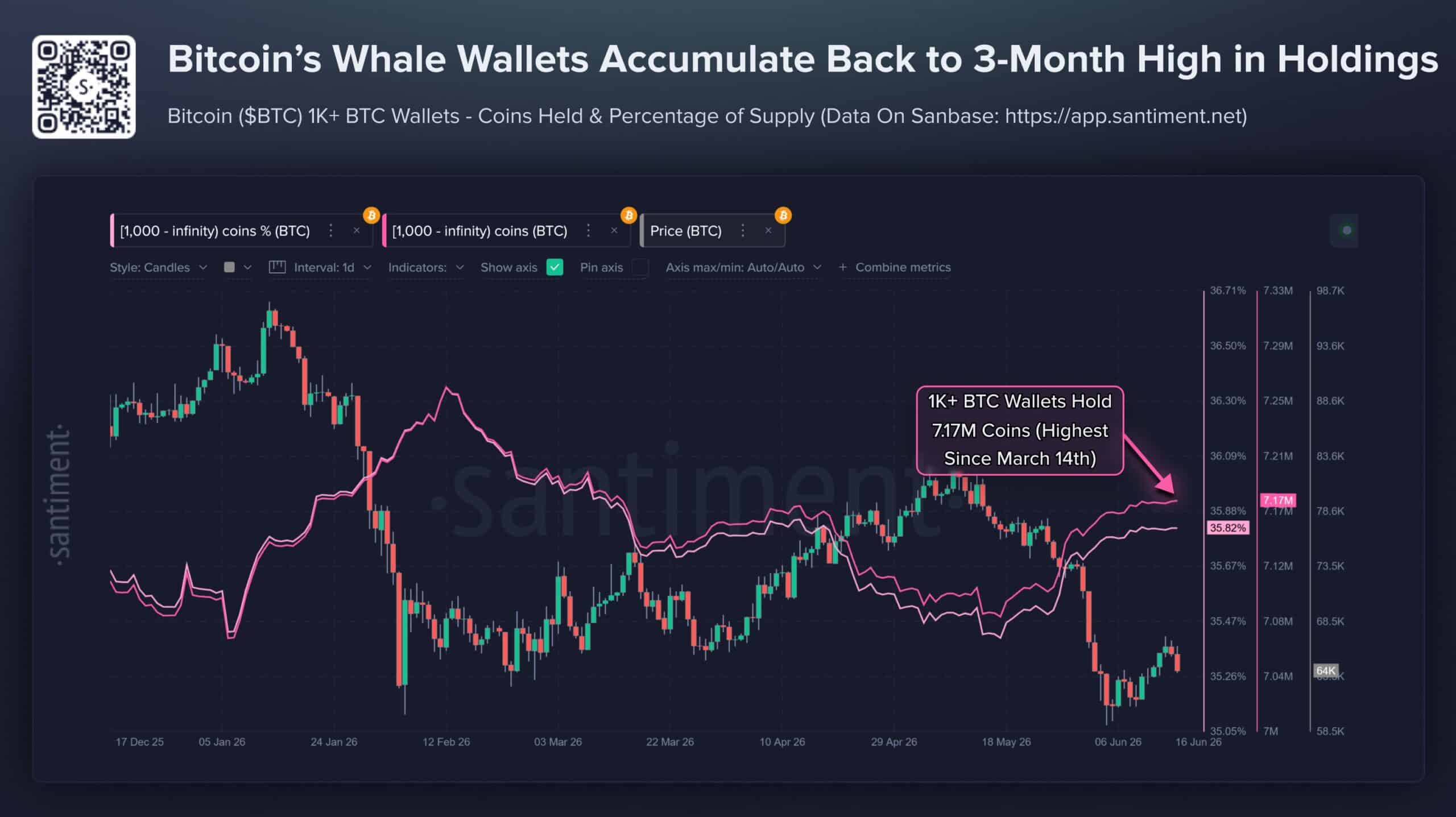
In a post on Their holdings have risen to 7.17 million coins, the highest amount in three months.
The accumulation of whales during times of price problems has been an encouraging sight, but on its own it may not be enough to reverse the long-term downward trend. AMBCrypto had reported that miner stress has not subsided, nor has the extreme bear phase of the cycle been reached.

Crypto analyst Axel Adler Jr. drew attention to how gold and Bitcoin reacted differently to the Fed’s decision not to change interest rates. Gold fell to $4,220, but quickly regained $4,300.
Meanwhile, beleaguered Bitcoin tested the short-term support zone at $64k.
Capital favors defensive assets over risky assets, the analyst noted. If gold continues to be purchased while BTC hovers around the low of $63.5k, this would be confirmation of relative weakness.
Final summary
- Increased selling by miners, steady outflows from BTC Spot ETFs, and selling by large holders reflected increasing market pessimism.
- The recovery from the $60,000 bottom has been fragile, and the rejection of $67,000 and a wave of steady selling could see prices wobble again.