
So far, the 2026 cycle has been a bear market.
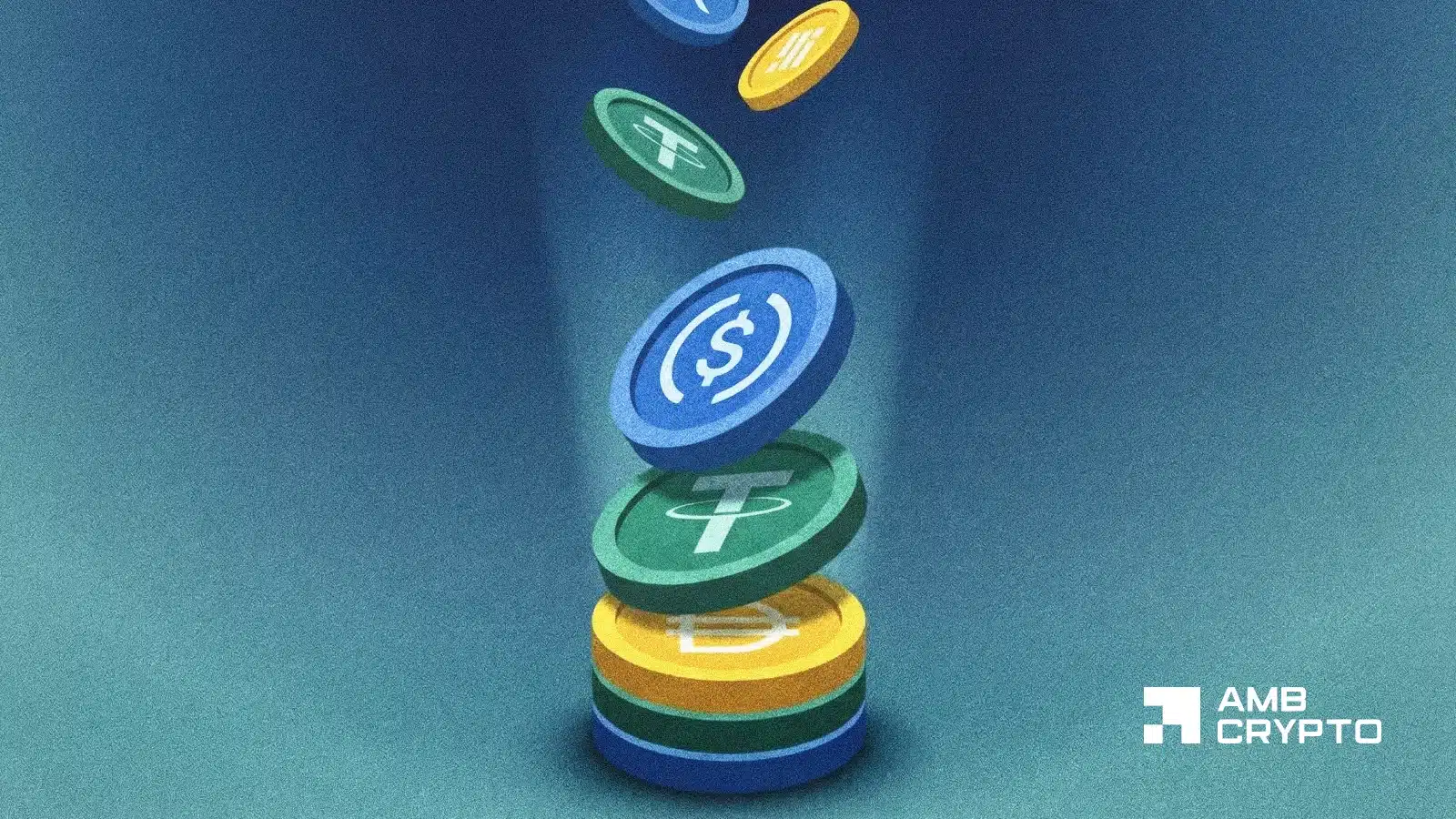
One clear signal in particular is when stablecoin market caps fall along with crypto prices. In the first quarter, USDT fell 1.6%, showing that money was leaving crypto instead of sitting on the sidelines as would be the case in a bull market, where investors are holding dry powder for the next risky move.
The result? The overall crypto market fell by 20.8% during the same period, confirming the bearish trend.
Investors weren’t looking for dips. Instead, they left. TOTAL2 (market cap ex-BTC) fell 19.17%, meaning capital did not turn into altcoins either, which only reinforces the bearish picture.

Essentially, stablecoins played a central role in defining crypto’s Q1 trend.
According to AMBCrypto, this makes the recent 10x Research report relevant.
It highlights that USDT issuance on Ethereum [ETH] recently surpassed Tron [TRX]with a monthly volume increase of almost 2.6% on ETH. That closes the gap with TRX, which is now up just 1%, indicating liquidity is starting to flow into high-cap networks, in line with a 1.6% increase in the total crypto market cap so far in April.
From a technical perspective, this combination of rising market capitalization and stablecoin inflows is significant.
When stablecoins return to large networks, it suggests investors are redeploying capital. This type of flow often provides a basis for price support, and we are already seeing this in action.
ETH is up 1.87% from its open value of $2.1k, reinforcing that this setup is gaining popularity.
Naturally, the question arises: Now that stablecoins are back in play, could this momentum lay the foundation for a broader rally in the second quarter, potentially reversing the bearish trend from the first quarter?
Stable coin flows are hitting major networks and the market is seeing a potential rally base
In addition to serving as a hedge or a bridge, stablecoins often act as an early signal for market activity.
A striking example is the recent activity around Solana [SOL].
Circle issued $3.25 billion USDC on Solana in just seven days, the largest weekly issuance of 2026. This sudden influx of liquidity into the network naturally raises questions about investor intent and market positioning.
But it doesn’t stop there.
According to Artemis Terminal, monthly changes in stablecoin supply on Ethereum have reached a staggering $10.3 billion, the largest of any L1 network. This “coordinated” increase in stablecoin supply across major networks suggests that investors are actively redeploying capital.

The critical question now becomes: Do these issuers understand opportunities or risks that the broader market has not yet priced in?
According to the 10x Research reportEthereum’s relative undervaluation appears to be driving much of this inflow.
From a technical perspective, Ethereum is down 57% from its August 2025 peak, making it look relatively cheap, especially compared to Bitcoin, which is down around 42% over the same period.
This is especially important as BTC’s dominance still faces resistance at around 60%.
In addition to this, The integration of Wall Street into DeFi is gaining momentum and bringing institutional capital to the market.
Taken together, these factors suggest that Ethereum and other high-cap L1s may be positioning themselves for early Q2 momentum, with stablecoin flows acting as a leading indicator of where capital may move next.
Final summary
- The rising issuance of USDT on ETH and the large issuance of USDC on SOL indicate that capital is being reallocated.
- With ETH down 57%, BTC’s dominance under challenge, and Wall Street entering DeFi, stablecoin inflows could act as a leading indicator of second-quarter momentum.