
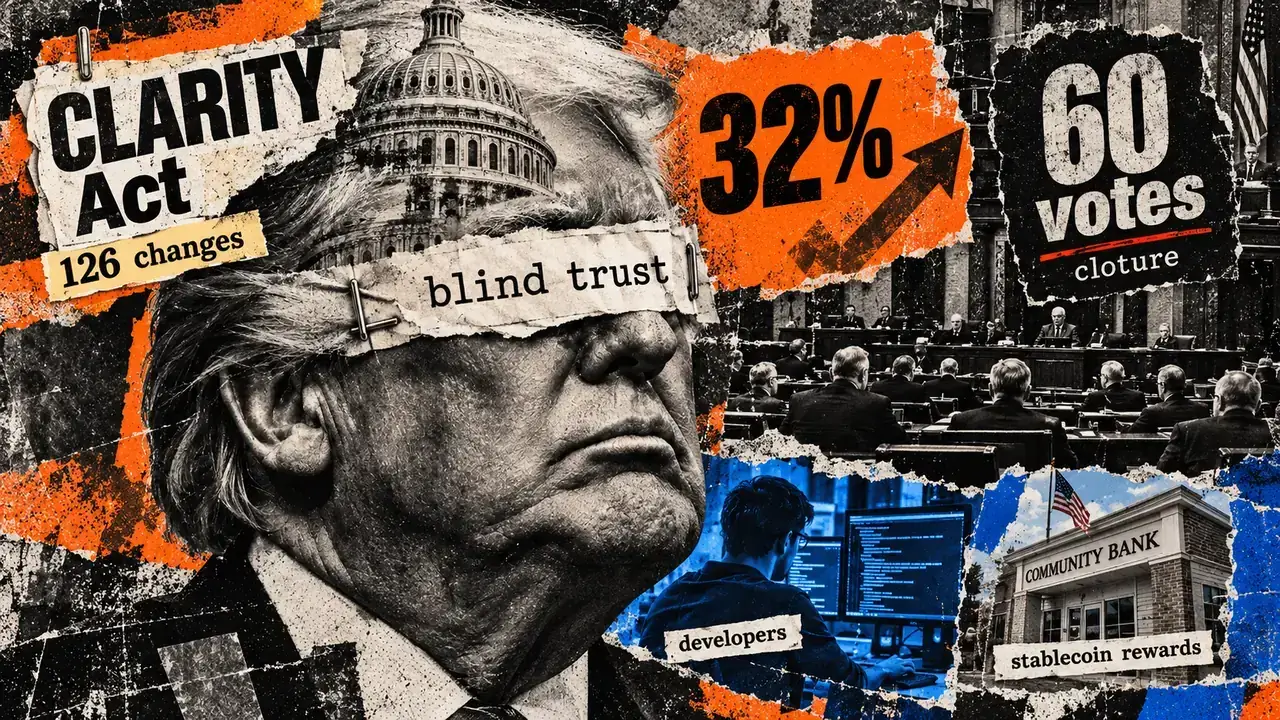
The CLARITY Act, a crucial piece of legislation aimed at regulating the crypto market structure, has seen a significant boost in its chances of becoming law. Senate Republicans recently unveiled a final compromise before the upcoming cloture vote, pushing the probability of the bill being enacted in 2026 to its highest level since August 2.
After weeks of skepticism surrounding the legislation, Polymarket traders have shown renewed confidence following the release of a 635-page final draft that addresses several key disputes that have hindered the bill’s progress. While the current prediction-market pricing is lower than earlier this year when it reached about 82% in February, the recent developments indicate a positive shift in momentum.
The upcoming cloture vote on H.R. 3633 scheduled for Tuesday will be a crucial test for the CLARITY Act. If invoked, the final text of the bill will be offered as a substitute amendment. The latest version of the bill includes 126 substantive changes that Democrats had requested during more than a year of negotiations. These revisions touch on contentious issues such as financial ethics rules for elected officials, stablecoin rewards, protections for blockchain developers, and conflicts involving digital-asset trading platforms.
One of the most significant changes in the final draft involves President Donald Trump and other federal officials with substantial crypto-related financial interests. Trump has agreed to comply with an ethics proposal that would require covered officials to divest their crypto interests or place them in a qualified blind trust, with state attorneys general playing a role in enforcing these restrictions.
Additionally, Republicans have added a stablecoin “circuit breaker” to address concerns from community banks regarding crypto-based rewards potentially accelerating deposit flight. The bill’s provisions around the Blockchain Regulatory Certainty Act have also been refined to protect software developers from money-transmission registration requirements while ensuring that protections for software developers do not override derivatives regulation or the existing authority of the Commodity Futures Trading Commission.
As the Senate prepares for the cloture vote, Republicans are presenting these concessions as their final offer. The increase in Polymarket odds indicates that traders view the revised package as enhancing the bill’s prospects. However, the ultimate test will be whether enough Democrats will join Republicans to reach the 60-vote threshold for cloture.
The outcome of Tuesday’s vote will depend on whether senators who previously raised objections to the bill are willing to support cloture after their demands have been addressed. If enough of them shift towards supporting the bill, the prediction market’s optimism may continue to rise. However, if they remain uncommitted despite the concessions, Republicans may still face challenges in garnering the necessary votes to advance the legislation.