

Following an investigation by the regulator, it was revealed that the funds of clients in the Fundsz case were never actually traded and the returns on investments were fabricated. Early and Kingrey were found to have misled clients about profit expectations, risk levels, and previous performance of the investment.
These allegations are consistent with warnings issued by the FTC, particularly regarding investment offers that downplay risk while promising unusually high returns.
Looking beyond the headline numbers
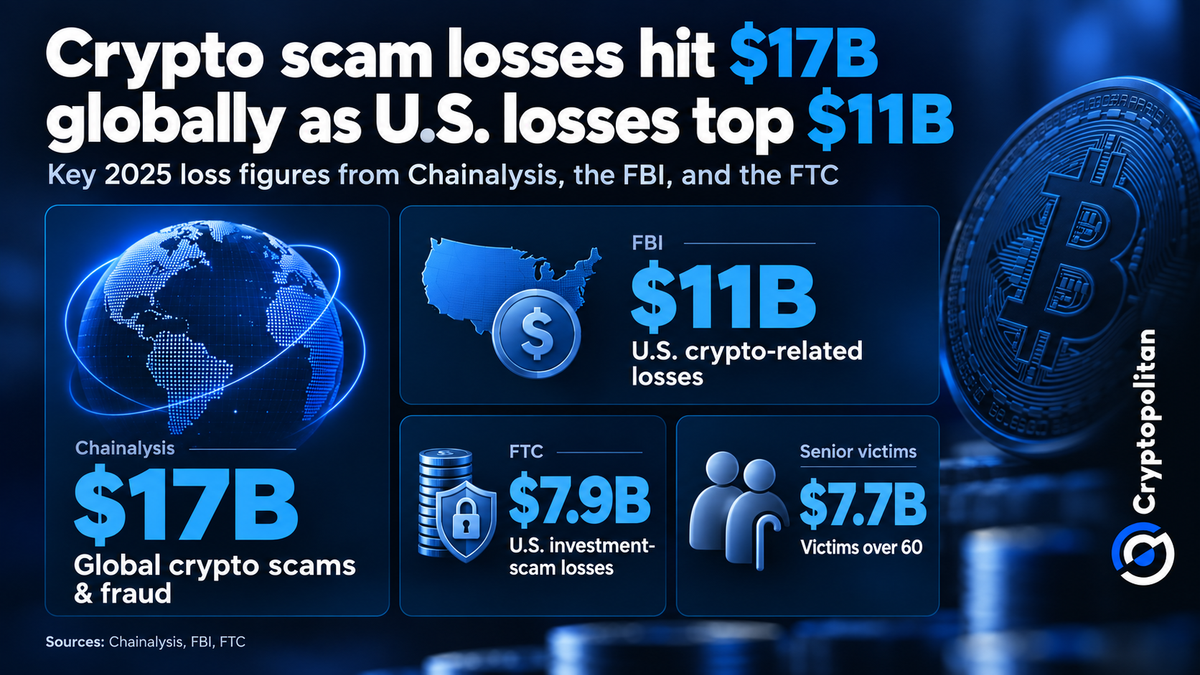
While the Fundsz case is significant, it is just a small piece of the larger problem of investment fraud. In 2025, the FBI received over 181,000 reports related to cryptocurrency with losses exceeding $11 billion. Investment fraud accounted for nearly half of the total losses due to fraud, with individuals over 60 years old experiencing a 37% increase in losses compared to the previous year.
According to the FTC, scams resulted in losses of over $7.9 billion in 2025, with a median loss of over $10,000 per scam. Chainalysis reported that crypto-based scams and fraud led to losses of at least $14 billion, potentially rising to $17 billion when considering additional unidentified fraudulent activities.
Increasing enforcement, but challenges persist
The Fundsz case is not an isolated incident. In August, the SEC and CFTC filed lawsuits against Goliath Ventures and founder Christopher Delgado, alleging that they raised hundreds of millions of dollars from thousands of investors. However, cross-border enforcement remains complex, with a review by the FSB highlighting gaps and inconsistencies in national crypto regulations.
What comes next
The key question now is how much of the ordered restitution victims will actually receive. The CFTC has warned that repayment orders do not guarantee full recovery if defendants lack sufficient assets.