

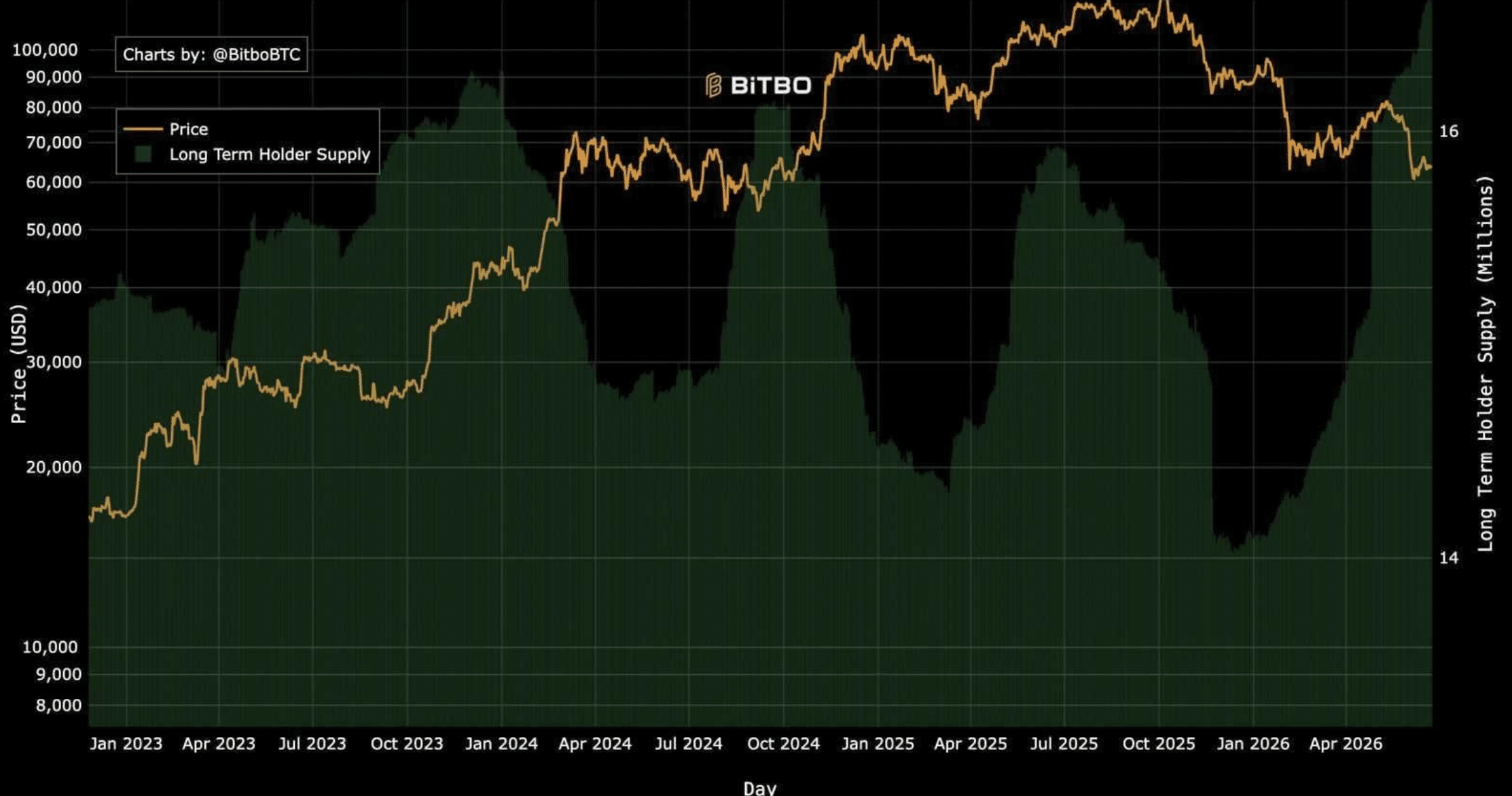
The market in 2026 appears to be different from previous years. This is because of Bitcoin’s long-term behavior [BTC] holders (LTHs) was significantly different from that of the 2024 ETF-driven rally.
At the time, many of them took advantage of the spike in demand and rising prices to make profits and sell their coins. However, as the price of Bitcoin falls, these same holders are now buying instead of selling.
2026: Another year for long-term BTC holders
The fact that a record 83% of Bitcoin supply is currently in the hands of long-term holders suggests that more Bitcoin is ending up in steady hands with little chance of being sold.
Interestingly, this type of accumulation during price weakness has historically been viewed as a bullish signal. This is because it reduces the amount of Bitcoin available in the market and could lead to supply constraints as demand increases.
Analyst compares Bitcoin to gold
However, Adam Livingston recently argued that a $200,000 Bitcoin is not as unrealistic as many people think. According to him, Bitcoin would only need an additional $2.75 trillion in market cap to rise from $63,000 to $200,000. Gold, in turn, has added approximately $12 trillion in value at a time of demand for safe-haven investments by 2025.
His idea is that the fixed supply of 21 million Bitcoin and the smaller market size could make such a price target feasible if it can capture even a small portion of the money flowing into gold.
At the same time, Livingston also believes that everything depends on investors’ growing perception of Bitcoin as a digital replacement for gold.
Supporters support Bitcoin
Echoing somewhat similar sentiments, Bitcoin Therapist noted:
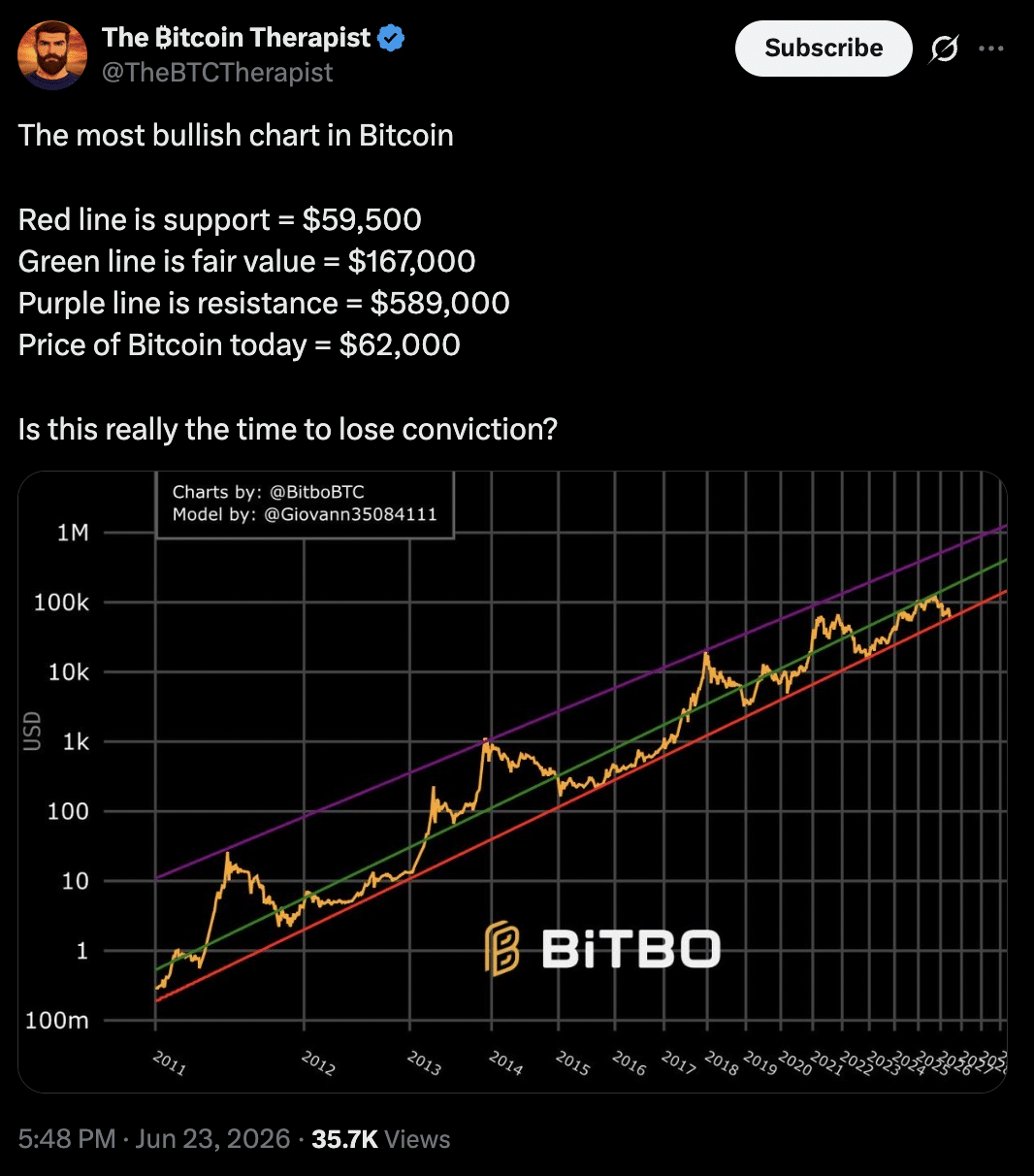
Using this, the analyst indicated that Bitcoin may be trading close to a modeled support level of $59,500, with long-term resistance at $589,000. The estimated fair value appeared to be $167,000.
According to the bullish view, Bitcoin is more likely to be at the bottom of its historical valuation range than at the top. This suggested that the continued decline could be an opportunity for accumulation, rather than a cause for concern.
Statistics on the chain suggest otherwise
Meanwhile, Bitcoin’s 90-day Futures Taker CVD turned neutral in June 2026 after nearly five months of buyer-dominated Futures activity.
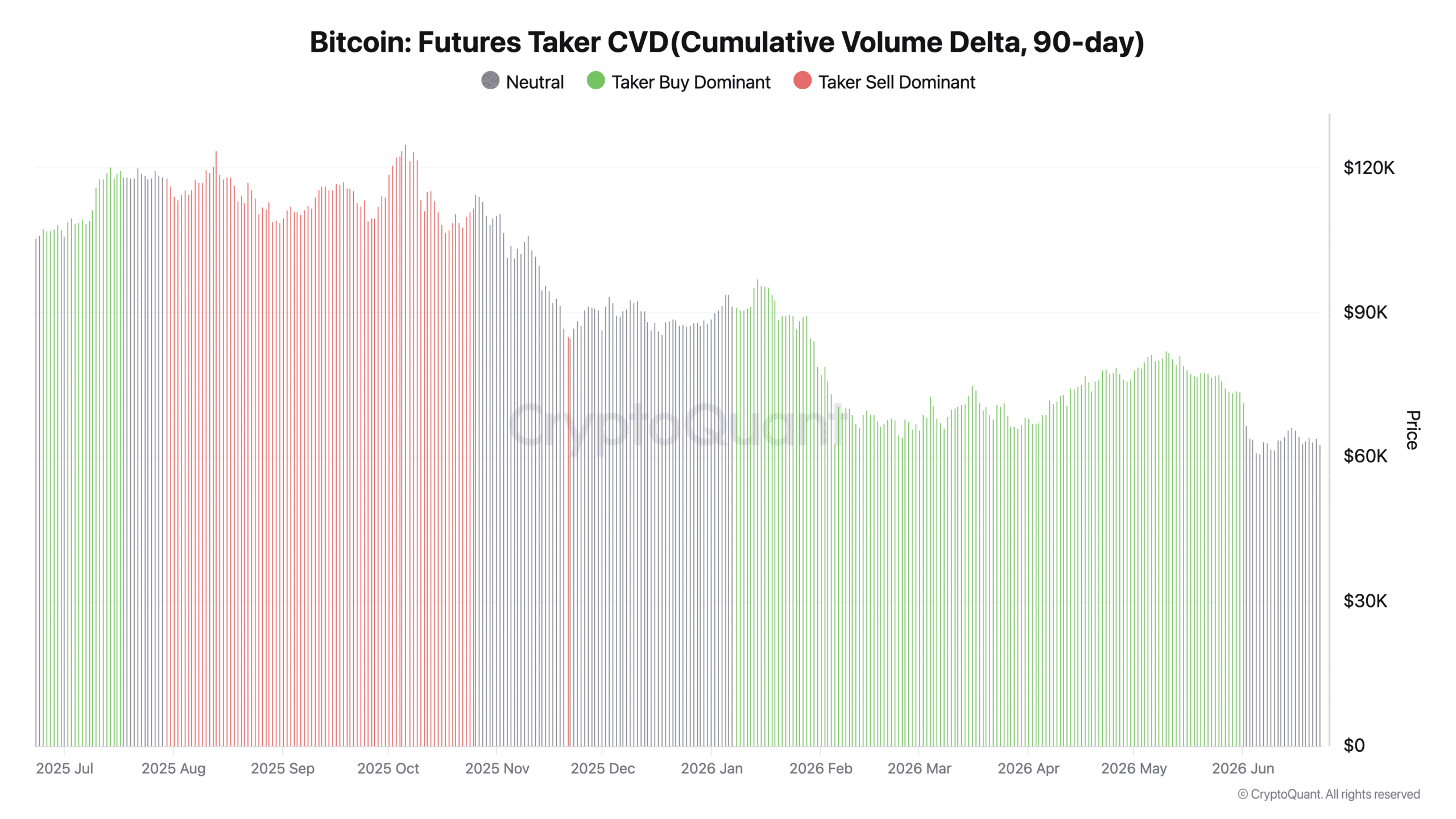
The change implies that traders may be entering a consolidation phase rather than actively pushing prices higher. This could be evidence that aggressive accumulation has decreased.
Interestingly, the lack of seller-dominated bars also suggested that broad selling pressure may not yet have displaced bullish conviction.
It further coincided with Bitcoin seeing $169.28 million in liquidations during that time, with long liquidations making up the majority. In fact, a total of $612.04 million has been liquidated in the market, of which $548.72 million were bullish bets.
Final summary
- 83% of Bitcoin’s supply is currently in the hands of long-term holders.
- The Futures Taker CVD chart indicated that selling pressure has not yet replaced bullish conviction.