
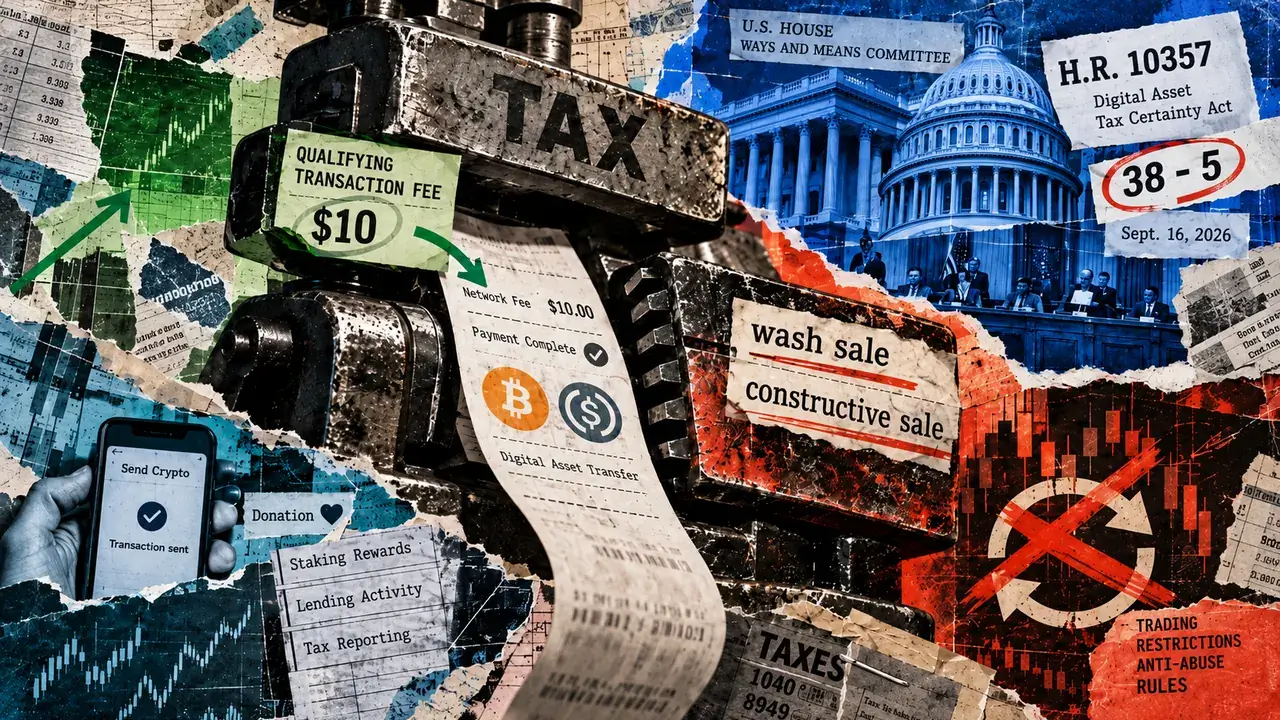
Crypto groups are pushing for expanded tax relief in the wake of the House Ways and Means Committee’s approval of H.R. 10357, the Digital Asset Tax Certainty Act. The bill covers various aspects of the crypto industry, including payments, stablecoins, trading, lending, staking, and mining. While the committee’s vote was seen as a historic step, industry groups are advocating for further refinements to address key concerns.
Alison Mangiero, from the Crypto Council for Innovation, highlighted the need for adjustments to the timing of income recognition for staking and mining rewards, as well as the expansion of de minimis treatment for everyday crypto transactions. These issues have been raised with lawmakers to ensure that the final legislation meets the industry’s needs.
The bill aims to provide relief for crypto payments by eliminating gain-or-loss recognition when digital assets are used to pay qualifying network and transaction fees of up to $10. However, industry groups like the Crypto Council for Innovation are pushing for broader de minimis relief for everyday digital-asset transactions to make it easier for users to transact with crypto.
In addition to payment relief, the bill also includes special treatment for US dollar stablecoins, a simplified accounting election for widely traded digital assets, and extends financial-market treatment to various industry segments. It tightens rules for investors by extending wash-sale and constructive-sale provisions to digital assets.
One key unresolved issue is the treatment of income from mining and staking activities. While the legislation establishes sourcing rules and treats income from validation activities as ordinary income, it does not address the timing of income recognition for miners and stakers. This omission leaves operators exposed to price fluctuations between receiving token rewards and liquidation.
The bill also directs the Treasury to issue guidance on the tax treatment of foreign entities associated with decentralized autonomous organizations, providing clarity for crypto organizations established outside the US. This provision could potentially encourage innovation and job creation to return to the US while allowing crypto foundations to operate under a domestic tax structure.
Overall, the industry sees the bill as a step in the right direction but believes that further technical changes are needed to address key concerns and ensure that the final legislation supports the growth and innovation of the crypto industry.