
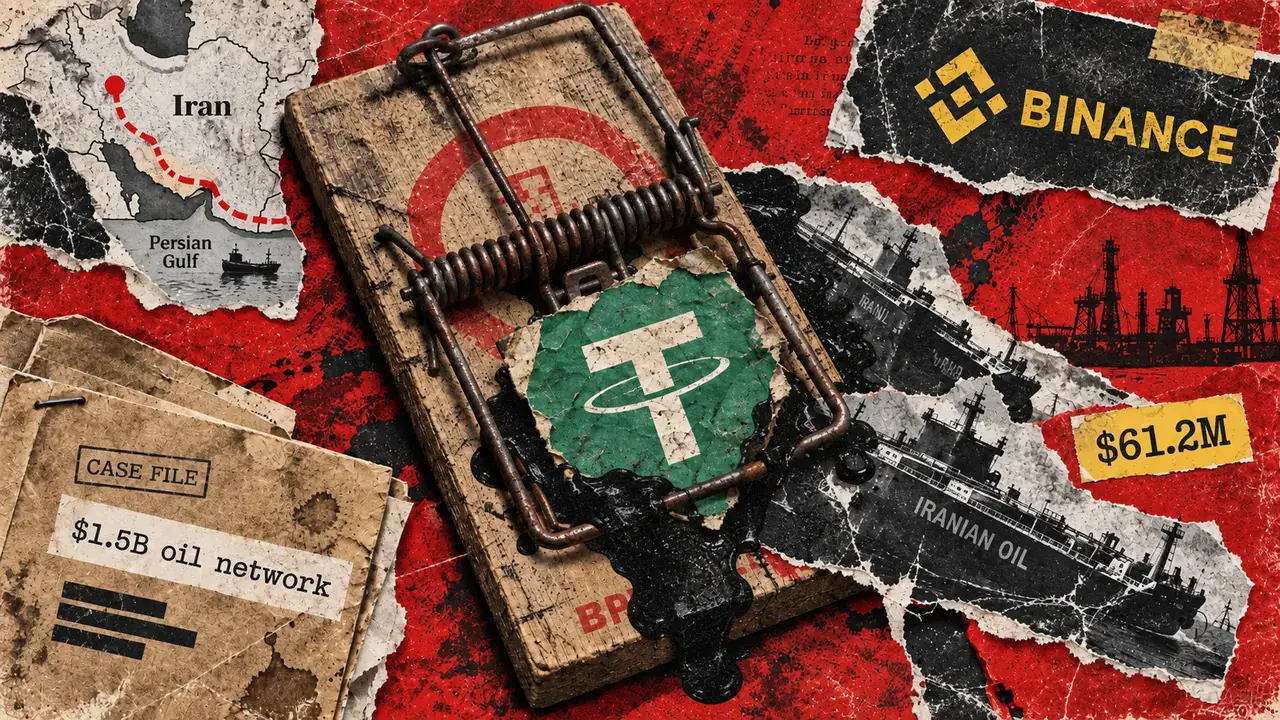
US prosecutors have taken action to seize $61 million in Tether’s USDT that is tied to alleged black-market Iranian oil sales. The US Attorney’s Office for the Southern District of New York filed a civil forfeiture complaint targeting approximately 61.2 million USDT across 10 Tron addresses on September 14. The funds are believed to have come from Iranian crude and petroleum sales intended to benefit the country’s government and military, including the Islamic Revolutionary Guard Corps (IRGC).
Tether had already frozen seven of the targeted addresses in June 2025 and three more in July. A recent seizure warrant now authorizes federal agents to transfer the value into government custody. The process involves Tether burning the frozen tokens and issuing replacements of the same value for transfer to an FBI-controlled hardware wallet.
This action demonstrates a growing enforcement relationship between US agencies and Tether, the issuer of the world’s largest stablecoin. Prior to the Iran filing, Tether had assisted in a separate action involving over $52 million linked to Xinbi Guarantee, an alleged money-laundering marketplace. Tether has collaborated with more than 340 law enforcement agencies across 67 countries and helped freeze over $5 billion tied to suspected illicit activity.
The seizure of $61 million is just a small part of a larger network of alleged illicit Iranian oil sales. Prosecutors mentioned a cluster of at least seven interconnected addresses that received and distributed more than $1.5 billion in proceeds from these sales. The addresses allegedly sent cryptocurrency to Iran-based exchange Nobitex and Middle Eastern money transmitters believed to be fronts for the IRGC.
Blessed Trust Limited and Hexa Whale Trading Limited, based in Hong Kong, were implicated in converting oil-sale proceeds into cryptocurrency and moving funds through trading accounts at Binance, the largest crypto exchange. Blessed Trust posed as a wealth-management or digital asset custody business, while Hexa Whale presented itself as a commodities broker. The network also made use of conventional US banking channels for transactions.
It is important to note that Binance is not accused of any wrongdoing in this case. CEO Richard Teng emphasized that the exchange has a zero-tolerance policy for sanctions violations or illicit activity. Binance cooperates with law enforcement and takes necessary actions to restrict or freeze accounts involved in suspicious activities.
Overall, the actions taken by US prosecutors highlight the role of stablecoin issuers and cryptocurrency exchanges in enforcing sanctions and combating illicit financial activities. This case underscores the importance of collaboration between regulatory authorities and crypto platforms to prevent misuse of digital assets for illegal purposes.