
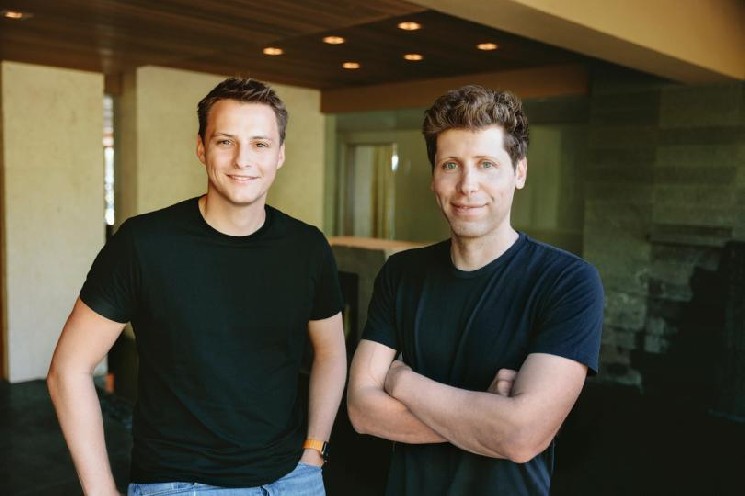
World, the Sam Altman-backed digital identity project, on Friday unveiled what it calls the most significant upgrade yet to World ID, positioning the system as a “full-stack proof of human” infrastructure aimed at consumers, enterprises and AI agents.
The overhaul, announced at an event in San Francisco, comes as concerns grow in the tech industry about bots, deepfakes and AI agents impersonating humans online, a trend the world is explicitly targeting with a broader push in authentication, payments and internet services. Altman’s other big project is OpenAI, the company behind ChatGPT and tools that use the large language model AI platform.
The world system relies on its custom-made ‘Orb’ devices to establish what it calls ‘proof-of-humanity’. To obtain a World ID, users must personally visit an Orb, where the device scans their face and iris to generate a unique cryptographic code representing that person.
According to the company, the images are deleted after processing and only anonymized snippets of code are sent over a distributed network to confirm that the person has not previously registered. The result is an identification that can prove that someone is a unique person online, without revealing their identity or personal information. However, some critics have identified the use of biometric scanning through the Orb as a controversial aspect of the system.
At the heart of the update is a redesigned architecture intended to improve privacy, security and usability. New features include account-based identity, multi-key support, and recovery mechanisms, providing capabilities typically expected in large-scale security systems.
“World 4.0 is powerful, scalable and open,” senior executive Daniel Shorr said at the event. “In the age of AI, being human will be incredibly valuable and the internet will want to know you are human,” he added.
The company is also introducing a dedicated World ID app, currently in beta, that will allow users to manage login credentials and authenticate across platforms. The app reflects a broader ambition to make proof of human identity as seamless as logging into a social media account.
From dating apps to Zoom calls
In addition to the protocol update, World detailed a series of integrations aimed at embedding the identity layer on consumer platforms.
On the consumer side, the company is expanding partnerships with platforms like Tinder, where users can display a “verified human” badge, and introducing “Concert Kit,” a tool designed to help performers reserve tickets for verified individuals to combat scalper bots.
Gaming and online communities are another focus, with partnerships between Razer and Mythical Games, while Reddit has indicated it is exploring similar identity tools for bot detection.
Enterprise use cases are also central to the rollout. World said it is working with Zoom on a feature called “Deep Face,” which verifies that a meeting participant is a real human rather than a deepfake, and with Docusign to incorporate “proof-of-human” checks into digital agreements.
In addition, World is introducing new tools, including “AgentKit,” which will allow developers to link credentials that prove human existence to agents, which will be necessary for sensitive actions and enable agent-based trading tied to verified individuals.
The company is working with companies like Okta, Vercel and Browserbase on these capabilities, which aim to establish a layer of trust for automated workflows without the need for personal data.
“World ID is on its way to becoming a truly human network for the Internet,” said Sam Altman, co-founder of World, at an event marking the announcement in San Francisco.
Read more: Sam Altman’s World Crypto Project Launches in the US with Eye Scanning Bulbs in 6 Cities