
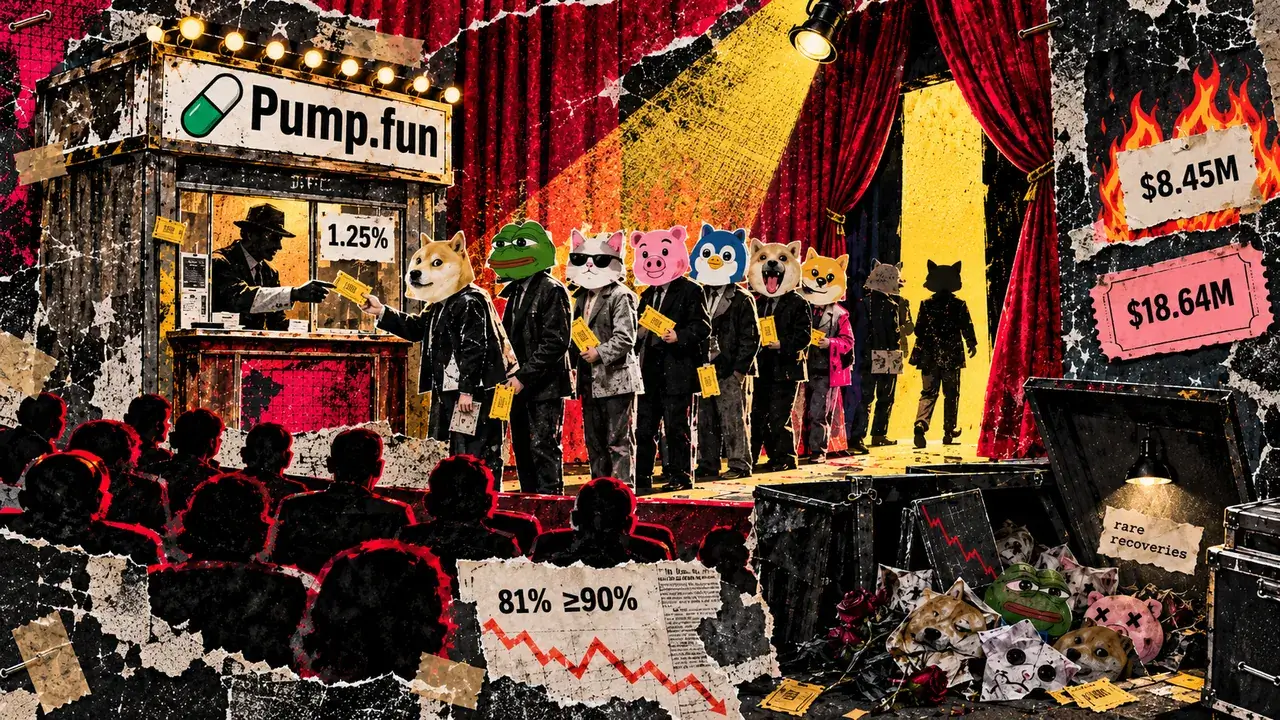
Pump.fun, a prominent Solana token launchpad, continues to generate substantial revenue from memecoin trading despite the struggles of established tokens to recover from significant losses. According to data from DefiLlama, the platform generated approximately $18.6 million in protocol revenue over the seven days leading up to Oct. 7. In contrast, a study by Talos revealed that 81% of selected memecoins had dropped by at least 90% from their all-time highs, with very few experiencing any significant recoveries.
This disparity highlights a fundamental issue within the memecoin economy. While trading on Pump.fun can benefit the platform, support PUMP buybacks, and reward certain users, it may not necessarily help individuals holding tokens that have lost demand. Talos conducted an analysis of 150 memecoins for survival rates and 151 for return comparisons, focusing on tokens with pricing available on centralized exchanges. Despite this already selecting for relatively successful coins, the results still underscored the severity of losses within the cohort.
The median token typically reached its peak around 17 days after trading began on an exchange, with a collapse defined as a 95% decline from that high. The median duration between the peak and collapse was estimated to be roughly 370 days. Only a small percentage of collapsed tokens managed to revisit their previous highs, with just five out of 151 coins in the return sample surpassing their initial prices. Additionally, active addresses for major Solana memecoins had decreased to no more than 7% of their peak levels.
This trend indicates that attention often shifts away from older positions rather than returning to revive them. Talos found that around two-thirds of the Solana-era memecoins analyzed did not experience a significant second rally after their initial surge. This poses a different economic exposure for traders compared to Pump.fun itself.
Pump’s revenue relies on transactions occurring within its ecosystem, regardless of whether older tokens recover. Traders moving between coins, new launches, and speculative bursts can generate fee-producing transactions that support platform income while early buyers may still be at a loss. DefiLlama data showed traders paying approximately $52.5 million in fees over seven days, with around $18.64 million going to the protocol. Over 30 days, fees totaled $184.5 million, with protocol revenue reaching $60.7 million.
The distribution of platform economics varies among users, creators, and liquidity-related recipients. The native PUMP token also benefits from buybacks and burns, with about $8.45 million of PUMP burned over seven days and $27.29 million over 30 days. Pump has committed to buying and burning PUMP for a year starting in April.
While Pump.fun’s revenue model may not directly benefit holders of separate memecoins, the platform aims to increase the share of economics reaching users. Co-founder Alon Cohen stated that over 140,000 users collectively received $4.46 million in a recent 24-hour period, including Holder Rewards, Callout Rewards, and creator fees. The platform emphasizes the distribution of trading economics to participants, although rewards are allocated differently among creators, promoters, and holders.
As Pump expands its rewards programs, the gap between platform revenue and individual token performance may become more significant. If distributions can offset declining token values, investors may reconsider staying invested after the initial speculative phase. However, if trading continues to focus on new launches rather than older tokens, Pump.fun may continue to convert churn into revenue while many traders struggle to break even on their original positions.