
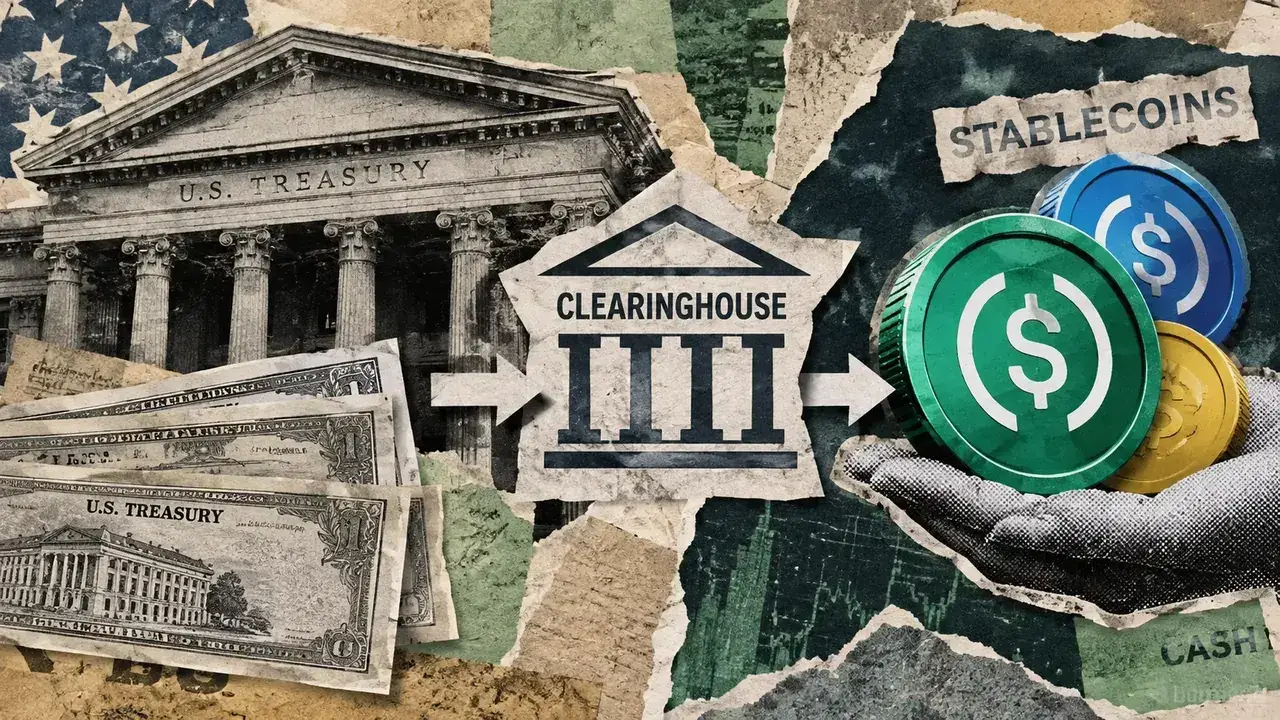
The US government debt is widely known as one of the most accessible assets to borrow against globally. This allows financial companies to obtain cash without permanently relinquishing their investments. Recently, Washington has been implementing new regulations for this borrowing process, which will have implications for the crypto industry through the companies that use Treasury securities to back their dollar tokens.
The Securities and Exchange Commission (SEC) is pushing for more Treasury transactions to go through a central clearinghouse. This institution acts as the buyer to each seller and the seller to each buyer, providing a safety net in case one trading company fails. This move by the SEC will impact the cost and availability of Treasury trading, ultimately affecting how stablecoin issuers convert reserve assets into dollars for their customers.
The SEC has set deadlines for eligible outright purchases and sales of Treasuries by December 31, followed by eligible repurchase agreements (repos) by June 30, 2027. These requirements apply to specified trades involving clearing members, rather than every purchase of a Treasury by any owner.
The process of owning a Treasury bond involves more than just holding the security. For instance, an investment fund that owns Treasury securities but requires immediate cash can either sell the securities or engage in a repo transaction. In a repo, the fund sells the securities with an agreement to buy them back at a later date for a slightly higher price, effectively borrowing cash while using the Treasuries as collateral.
Dealers play a crucial role in connecting parties in these transactions, facilitating the movement of cash from lenders to borrowers. The repo market, which uses the Secured Overnight Financing Rate (SOFR) as a benchmark, has seen significant growth in recent years, with trillions of dollars in transactions taking place.
Central clearing can streamline this process by reducing the financial burden on companies through netting, which offsets obligations. This can result in lower costs for borrowing and trading, depending on how much of the savings the dealer passes on to customers.
However, participants in these transactions must still provide collateral to cover potential defaults. Clearinghouses require margin, either in cash or eligible securities, to cover potential losses in case a company fails to fulfill its obligations.
The new regulations may lead to increased costs for stablecoin issuers, as they rely on these services to convert reserves into dollars for their customers. The ability to access clearing services and the cost associated with them will play a crucial role in determining the efficiency and affordability of Treasury-backed tokens.
In conclusion, the overhaul of Treasury trading regulations could have far-reaching implications for stablecoin issuers and their ability to meet redemption demands. The impact of these changes will depend on how efficiently dealers can manage resources and provide services, ultimately influencing the cost and availability of Treasury-backed tokens.