
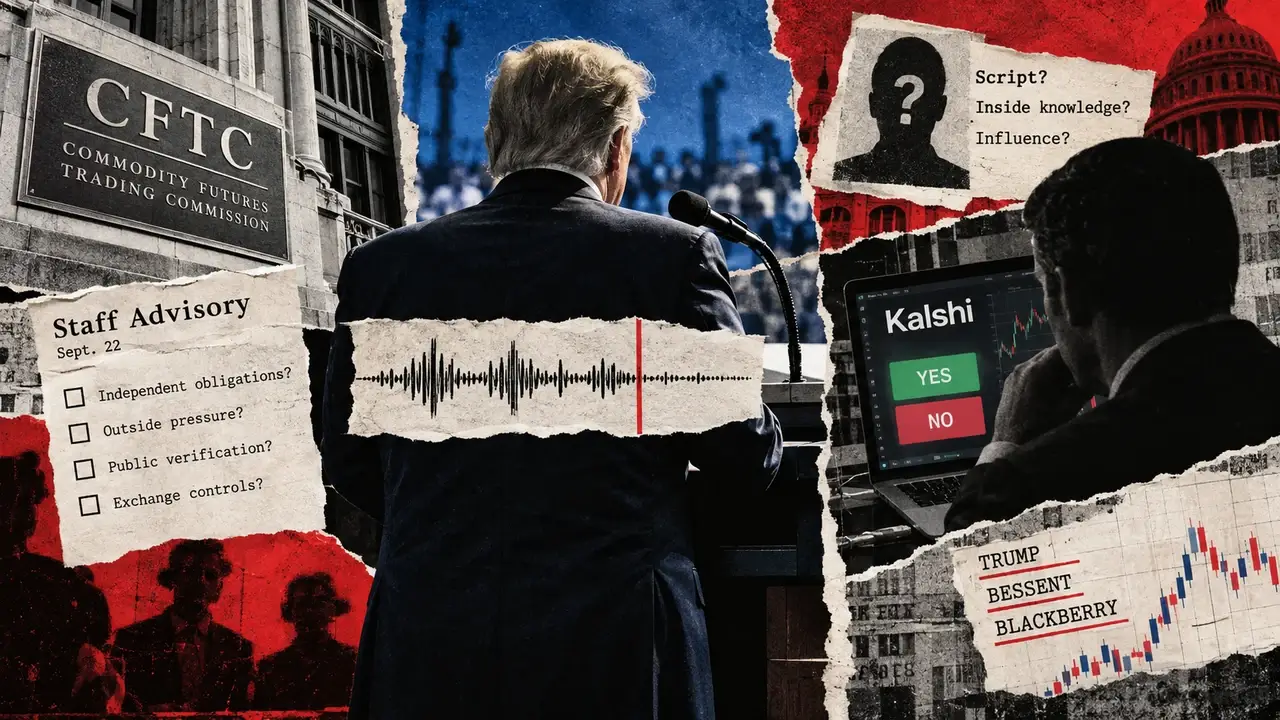
The Speech Markets Advisory from the Commodity Futures Trading Commission (CFTC) highlights the potential risks associated with contracts tied to a public figure’s words, appearance, or interactions. While a clear video can confirm what was said, it does not address issues such as advance knowledge of the script or potential manipulation of outcomes for financial gain.
The advisory outlines four key questions that exchanges must address when offering speech market contracts. These questions focus on the independence of the outcome determiner, the potential for outside pressure or influence, the ability for public verification of results, and the adequacy of the exchange’s controls to mitigate manipulation risks.
Public proof of what was said is just one aspect of the evaluation process. Exchanges must also demonstrate how they identify and prevent individuals with privileged access or control over outcomes from trading. The goal is to ensure that the trading restrictions, surveillance measures, and other controls are tailored to address the specific risks associated with speech markets.
A recent examination of Kalshi’s speech markets revealed contracts related to statements made by public figures like Donald Trump and Treasury Secretary Scott Bessent. These markets saw significant trading volume, indicating a high level of interest in betting on specific words or actions by prominent individuals.
The Trump contract, for example, allowed traders to bet on the number of times he would mention a specific word during a speech. The rules stipulated that only statements made in an official capacity would be considered, and trading by individuals with inside information was prohibited.
While exchanges like Kalshi have implemented controls to mitigate manipulation risks, questions remain about how effectively these measures prevent insider trading or undue influence over outcomes. The CFTC’s past settlements with individuals like Gabriel Perez and George Santos highlight the potential for abuse in speech markets, where advance knowledge or the ability to control outcomes can lead to unfair advantages.
In conclusion, the CFTC’s advisory serves as a reminder of the complex challenges posed by speech markets and the need for exchanges to implement robust safeguards to protect against manipulation. As the industry continues to evolve, it is essential for regulators, exchanges, and traders to work together to ensure the integrity and fairness of these unique market offerings.