
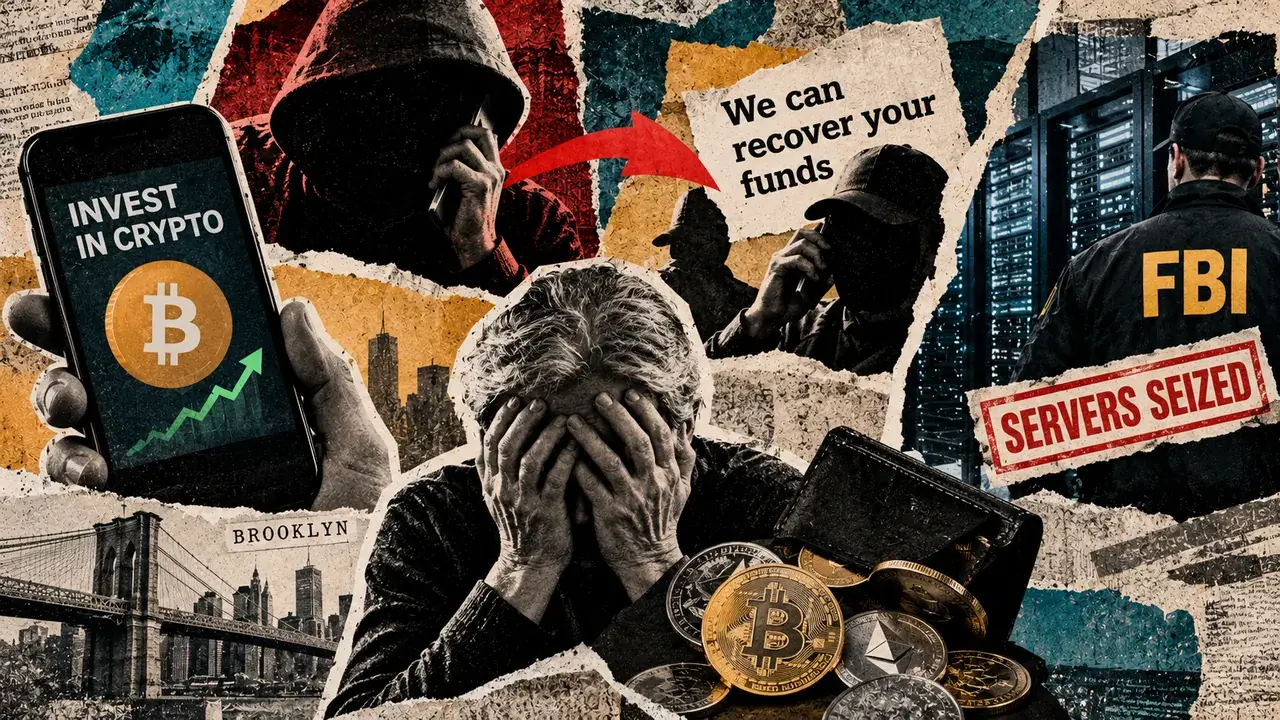
Brooklyn prosecutors recently revealed a disturbing trend among crypto scammers who targeted Russian-speaking investors. These scammers not only stole millions of dollars from their victims but also approached them again weeks later, offering to recover their losses. This revelation came to light on Oct. 14, following an international enforcement operation that disrupted 112 servers and 241 websites associated with a cryptocurrency investment scheme that defrauded victims across the United States.
With assistance from the Federal Bureau of Investigation (FBI), investigators targeted the infrastructure used by the scammers to run their fraudulent investment platforms and maintain contact with victims. What they discovered was a pattern of the same criminal network attempting to exploit people who had already been victimized by the initial scheme. Brooklyn District Attorney Eric Gonzalez stated that the scammers initially targeted Russian-speaking Americans through an intricate investment operation, only to later try and extract additional payments by offering to recover stolen cryptocurrency.
The investigation, spanning three years, revealed a concentration of victims in Brooklyn, which is home to a sizable Russian-speaking population. Some victims reportedly lost their entire life savings to these fraudsters. The recovered data also shed light on how the scammers maintained relationships with victims even after the initial theft, providing them with opportunities to solicit more payments once their fraudulent investment platforms ceased processing withdrawals.
The operation was traced back to Russian-language Facebook ads promoting cryptocurrency investment opportunities. Respondents to these ads would receive calls from individuals posing as Russian-speaking investment advisers, who would then guide them to cryptocurrency trading websites, help them set up accounts, and instruct them to purchase digital assets. Victims would transfer their cryptocurrency to wallet addresses associated with the investment platforms, believing their money was being invested legitimately.
However, weeks or months later, when victims tried to withdraw their funds, they discovered their accounts were locked, or were asked to pay additional fees or taxes to access their money. The scammers took advantage of these losses by contacting victims again, claiming they could help recover the missing assets. This second approach allowed the network to target individuals already facing substantial financial losses, using information gathered during the initial scam.
The FBI has warned of fraudulent cryptocurrency recovery businesses targeting people who have already fallen victim to investment scams, demanding upfront payments, providing misleading reports, or falsely claiming ties to law enforcement agencies to coax victims into sending more money.
In response to this scam, investigators focused on dismantling the infrastructure that enabled the criminal network to maintain their websites and repeatedly contact victims. Despite previous efforts to seize or disrupt domains linked to cryptocurrency fraud, replacement websites would surface quickly, allowing the fraudulent operations to continue.
In a recent operation spanning multiple time zones, prosecutors executed search warrants and disrupted cloud-based servers hosted in Eastern Europe and the United States. The criminal network relied on infrastructure and internet addresses in countries like Ukraine to operate. By targeting these servers, investigators aimed to cut off access to the software, website data, and victim records needed for the fraudulent platforms to operate, as well as prevent scammers from quickly rebuilding their websites.
The enforcement effort involved collaboration from the FBI and several private-sector organizations, including Shadowserver, Coeus, and UltaHost. While the disruption was significant, recovering the stolen cryptocurrency remains a challenge. Prosecutors estimate that tens of millions of dollars were stolen, but only around $300,000 in assets have been seized thus far. Efforts to recover additional assets are ongoing, with most of the money stolen through this multinational operation still unaccounted for.
The District Attorney’s Office has not disclosed whether victims have received any restitution or provided a timeline for the same. The announcement did not reveal the identities of the alleged operators or mention any arrests. Investigators continue their work to recover more assets and bring justice to those impacted by this elaborate cryptocurrency scam.