
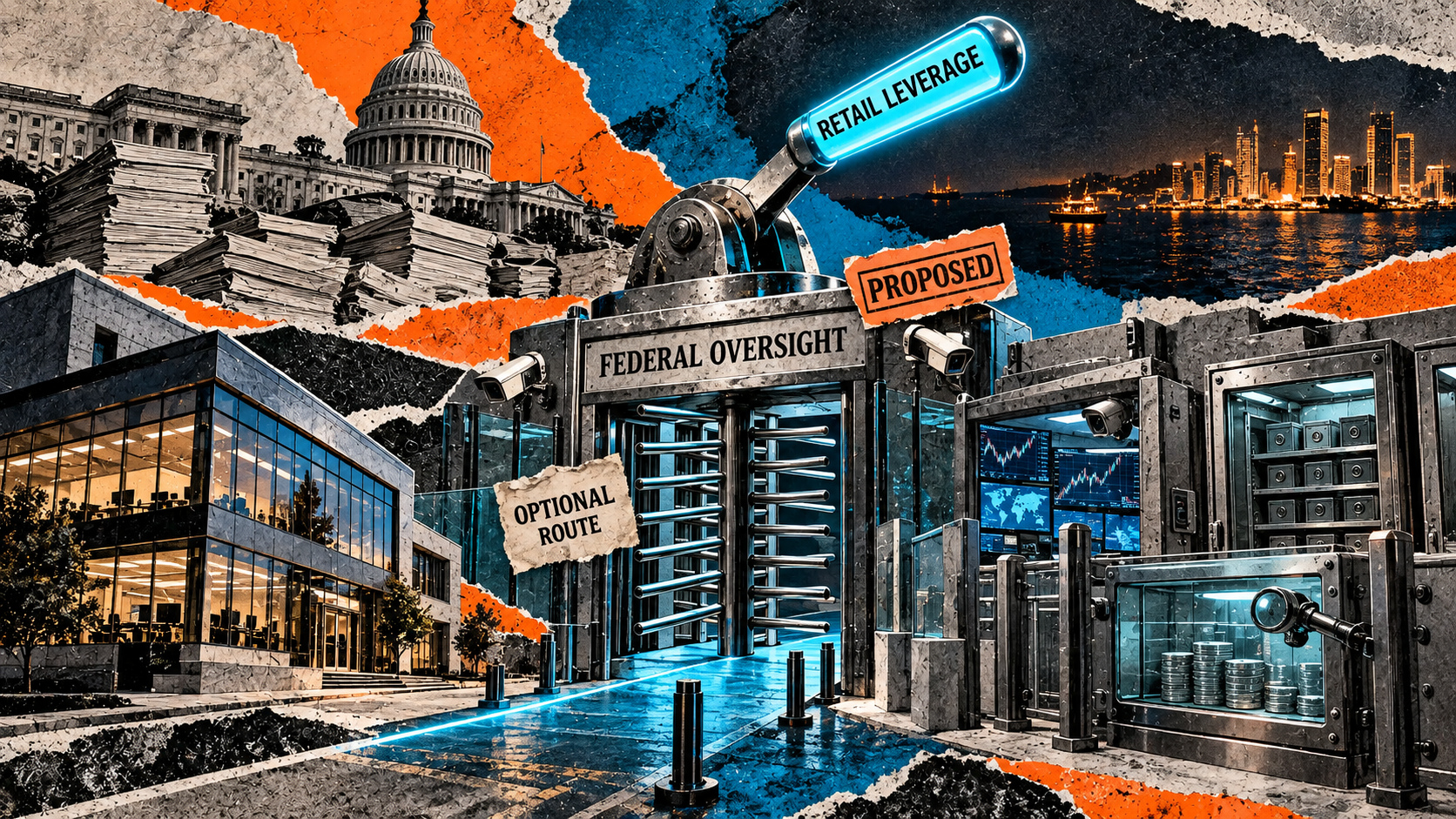
The Commodity Futures Trading Commission (CFTC) is taking steps to offer US crypto exchanges a federal route to retail leverage as Congress continues to stall on market-structure legislation. This move by the financial regulatory agency comes as a way to establish a national framework for platforms that provide retail customers with margined, leveraged, or financed crypto trading.
On October 5, the CFTC introduced rulemaking for Regulation Crypto Asset Transactions (CTX) and Regulation Crypto Asset Markets (CAM). These regulations would allow exchanges to offer leveraged products to retail customers, giving them access to options that state money-transmitter licensing alone does not provide. While participation in this framework would be optional for ordinary spot exchanges, the incentive for exchanges to join would be the ability to offer leveraged products.
The CFTC is leveraging existing authority under the Commodity Exchange Act to create this framework, as Congress has not yet enacted comprehensive legislation governing crypto spot markets. The proposed framework would establish three regulatory paths based on the types of products exchanges want to offer to US customers. Ordinary spot exchanges could continue operating under state licensing regimes, with the CFTC providing anti-fraud and anti-manipulation oversight.
Platforms offering leveraged or financed retail crypto transactions could opt for federal registration under the new framework, while exchanges offering futures and other derivatives would fall under the existing designated contract market regime. This structure aims to give exchanges a clearer regulatory ladder, with state licensing covering spot activities, CFTC oversight for leveraged products, and the derivatives framework for futures and perpetual contracts.
One of the goals of this initiative is to close the product gap between US exchanges and offshore competitors, who have been able to attract traders with leveraged trading and perpetual contracts. By offering federal registration and access to leveraged products, the CFTC hopes to bring more trading activity to regulated US markets.
However, joining the federal framework comes with additional requirements and costs for exchanges. Platforms offering leveraged products would need to comply with core requirements related to financial integrity, surveillance, conflicts of interest, and operational safeguards. They would also need to meet crypto-specific requirements, such as assessing token concentration and implementing proof-of-reserves requirements for customer assets.
The CFTC’s move is part of a broader effort to define where decentralized markets and software developers fit within federal commodities law. The commission is seeking public input before finalizing detailed rules on leverage limits, capital standards, and intermediary requirements. If major platforms decide that the benefits of federally regulated retail leverage outweigh the costs of deeper oversight, the CFTC could see more trading activity shift to regulated US markets.