
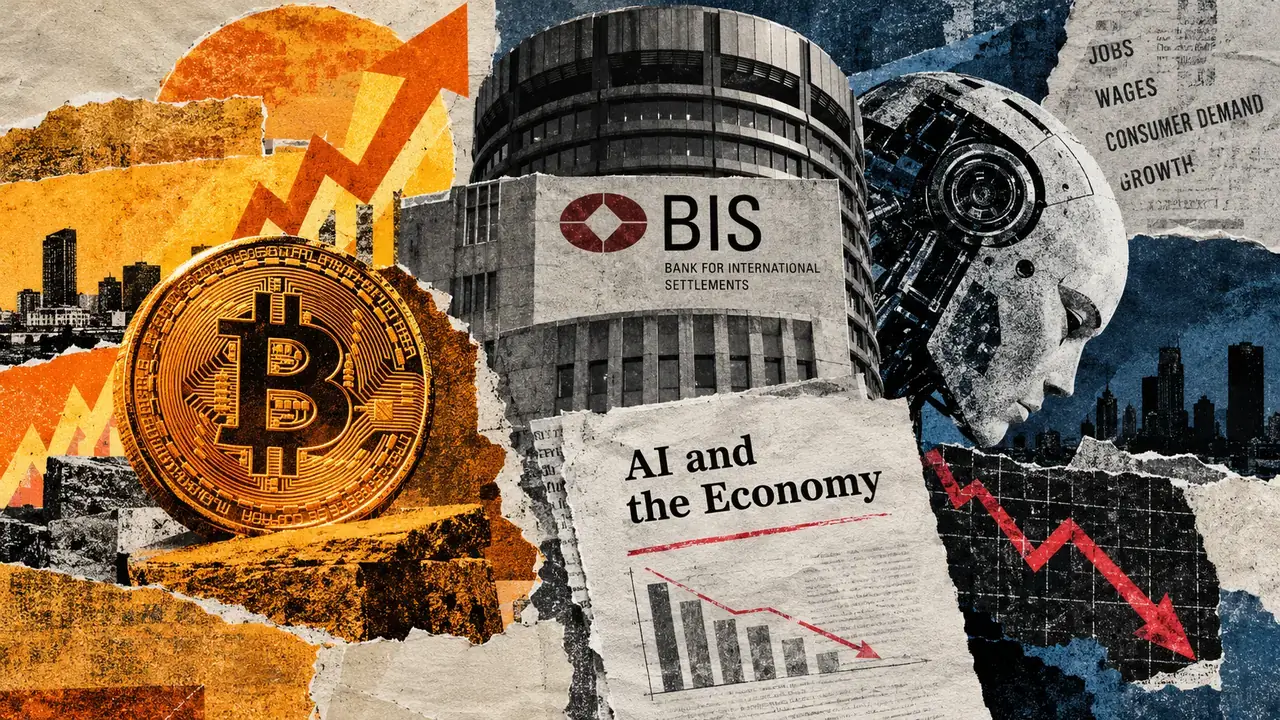
In a recent memo, Bitwise CIO Matt Hougan outlined three potential macroeconomic paths that could lead to Bitcoin’s value increasing. One of these paths involves an extraordinary AI productivity boom that makes scarce assets, like Bitcoin, more valuable. However, a working paper published by the Bank for International Settlements presents a fourth path where AI automation leads to a decrease in consumer demand, ultimately causing growth to fade.
Hougan’s memo discusses the potential outcomes of an AI abundance scenario where intelligence-based services become cheaper, leading to a shift in value towards scarce assets like Bitcoin. Another scenario involves a bursting AI investment bubble triggering a recession, followed by policy intervention and monetary expansion that boosts demand for Bitcoin. Despite potential risks and drawdowns, each path assumes that abundance, instability, or monetary expansion will result in increased demand for Bitcoin.
The BIS working paper, titled “Transformative AI and demand bottlenecks,” highlights how AI productivity gains can automate more tasks and lead to a decrease in consumer demand as a share of GDP. This decrease in consumer demand can affect further AI innovation profitability and long-term sustainable growth. The paper models different growth scenarios, including a high-growth case where output expands rapidly over time.
The model also predicts a decrease in labor’s share of tasks over three decades, resulting in real wages settling below their potential path. The natural rate of interest can fluctuate during an investment boom and once a demand bottleneck emerges, impacting asset demand including Bitcoin.
Early evidence from the Federal Reserve’s Beige Book suggests that businesses are reducing headcount and delaying hiring in anticipation of AI-related productivity gains. Consumer spending has remained flat, with higher-income households driving most of the spending. The US trade deficit has widened due to strong imports of AI hardware, with a significant portion of AI-related capital spending going towards imports.
In conclusion, the impact of AI on Bitcoin’s value will depend on how AI wealth is distributed, how it reshapes consumption patterns, and its effect on financial conditions. While Bitcoin’s fixed supply remains constant, its demand will be influenced by various economic factors, including productivity growth, real wages, and market liquidity. It will be essential to monitor these developments closely to understand how Bitcoin’s value may be affected in the future.