
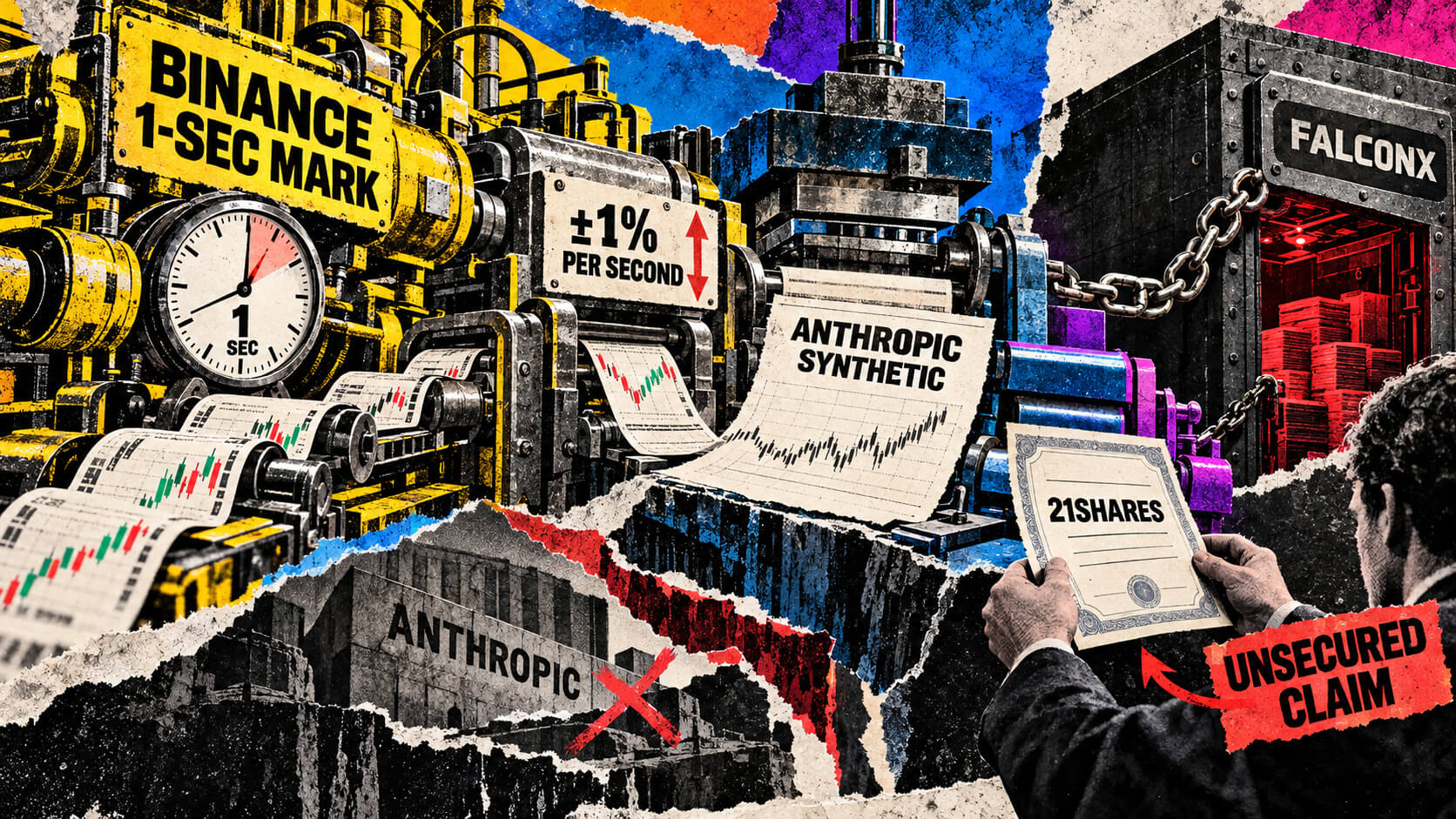
Binance’s Head of Exchange and Trading, Shunyet Jan, recently provided insights into how Binance prices Anthropic-linked perpetual futures in an article published by 21Shares on October 13. According to Jan, the pricing mechanism involves updating a mark every second based on executed trades, with limits on price movements and fallbacks in place during periods of low trading activity.
The article coincided with the contractual issue date of the 21Shares Anthropic Synthetic ETP, a certificate that offers synthetic exposure to a private company. Investors who purchase this certificate essentially become unsecured creditors of a Cayman issuer, with the underlying exposure managed by FalconX. The returns on this investment are contingent on the issuer’s ability to fulfill its obligations and the movement of Anthropic-linked prices.
The legal summary of the issuer discloses that the terms of the contract are negotiated within the same corporate group without independent approval or external verification. This includes a 1% annual product fee, along with financing, trading, and perpetual-funding costs.
The certificate introduces a counterparty-failure risk that can impact returns regardless of the performance of the reference price. Investors hold unsecured and unsubordinated debt in the issuer, with no guarantee from another entity. In the event of a default by the counterparty, investors could face significant losses.
The terms of the contract also highlight the relationship between the issuer and the contract counterparty, emphasizing the lack of independent oversight in determining the fairness of the terms. While there are measures in place to manage potential conflicts, the effectiveness of these arrangements is not guaranteed.
The pricing of the certificate is influenced by various inputs, including the Anthropic mark on Binance, the Kaiko Anthropic USD Reference Rate, and Binance’s ANTHROPICUSDT funding rate. The NAV of the certificate reflects the value of the underlying instrument, investor fees, and other costs such as note financing, trading, and funding charges.
Investors should be aware of the fees associated with the certificate, including the annual investor fee, note financing charges, trading costs, perpetual funding costs, and redemption fees. These costs can impact the overall return on investment, even if the reference price performs well.
In the event of a public listing for Anthropic, the pricing of the synthetic exposure would align with the stock market price, potentially affecting liquidity and returns for investors. The certificate continues to provide synthetic exposure post-listing, with the issuer’s payment obligation and associated costs remaining relevant.
Overall, investors should carefully consider the risks and costs associated with investing in Anthropic-linked perpetual futures and understand the implications of a potential public listing on their investment.