
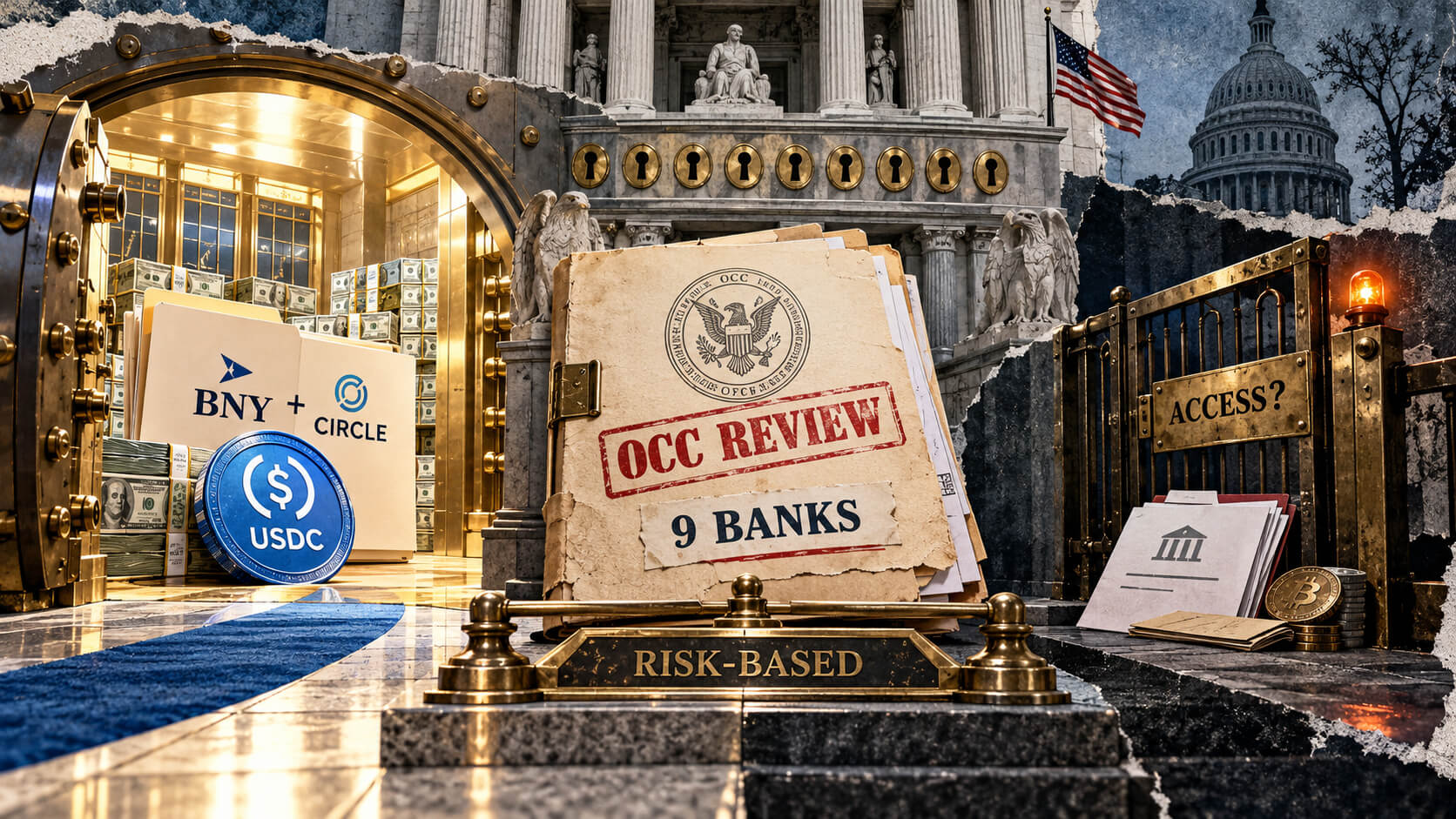
The Office of the Comptroller of the Currency recently released findings on Oct. 14 regarding the debanking practices of major national banks when it comes to digital asset issuers, exchanges, and administrators. These historical restrictions have often been linked to concerns about financial crime.
The review conducted by the OCC looked at the crypto banking decisions made by nine of the largest national banks under its supervision. For smaller crypto businesses, gaining access to banking services is still dependent on individual bank risk assessments. Comptroller Jonathan Gould emphasized the importance of maintaining objective customer evaluations while also challenging any unjust exclusion.
One of the key tests facing the OCC is how it differentiates between legitimate financial, operational, or compliance constraints and unjust disapproval of a lawful business. The goal is to ensure that the scrutiny leads to the provision of usable banking services for all eligible customers.
One significant development in the crypto banking space was the announcement by BNY on June 29, 2026, regarding stablecoin services for institutional clients. This included the ability to hold USDC in BNY custody and facilitate the minting or redemption of USDC through Circle. While this offering is targeted at institutional clients, the eligibility criteria for smaller crypto businesses and the potential impact on competition remain unresolved.
The findings by the OCC covered the period between 2020 and September 2025 and included policies from banks such as JPMorgan Chase, Bank of America, Citibank, and others. The review involved a detailed examination of nearly 100,000 complaints and 50,000 documents totaling around 420,000 pages.
Many of the institutions reviewed had imposed restrictions on digital asset issuers, exchanges, or administrators, citing concerns related to financial crimes. These restrictions varied from outright prohibitions to additional reviews and approvals. The challenge for the OCC lies in ensuring that these restrictions are based on legitimate risk assessments and not arbitrary decisions.
In his remarks on Oct. 14, Gould stressed the importance of banks using objective, risk-based criteria when evaluating customers. This approach aligns with the fair-banking executive order issued by the administration in August 2025, which aims to maintain existing statutory protections while promoting fair access to banking services.
The OCC has also implemented a reputation-risk rule in collaboration with the Federal Deposit Insurance Corporation, which prohibits supervisors from using anti-money laundering concerns as a pretext for reputation-risk supervision. Additionally, the OCC recently imposed a $750 million civil money penalty on Bank of America for deficiencies in transaction monitoring and reporting.
Overall, the OCC is working towards ensuring that customer access decisions are based on sound risk management practices. The banking industry is advocating for fair access and clear standards while maintaining robust risk management protocols. The ultimate measure of progress will be seen in broader eligibility criteria that translate into increased access to banking services for all customers.