
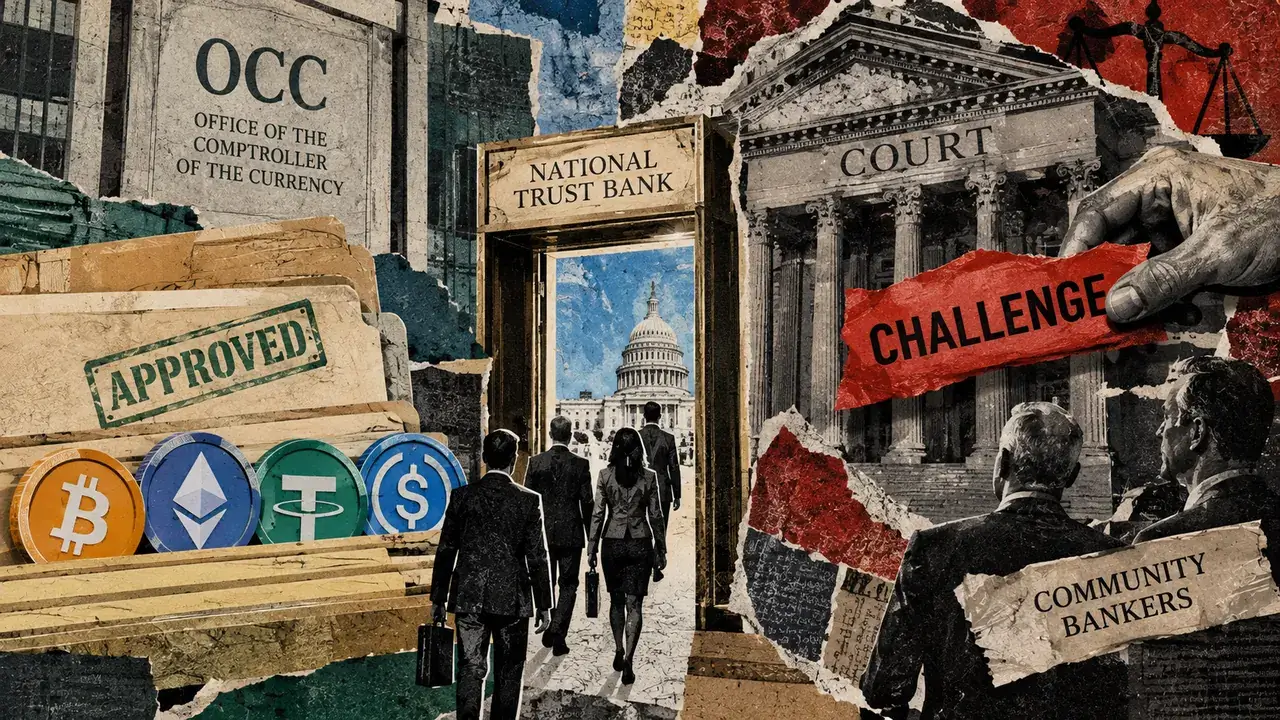
The battle between traditional banks and fintech/crypto firms continues to escalate, as the Independent Community Bankers of America (ICBA) filed a lawsuit against the Office of the Comptroller of the Currency (OCC) in federal court in Washington. The lawsuit, filed on October 2, came just two weeks after the OCC approved the charters for Agora National Trust Bank, Catena Trust Bank, and Bastion Platforms.
According to a report by American Banker, the ICBA’s complaint seeks to overturn the OCC’s national trust bank rule and Interpretive Letter 1176. The ICBA argues that the OCC overstepped its authority by expanding limited-purpose trust charters to include fintech and crypto companies.
The OCC has been busy approving trust banks, with 21 approvals so far, 13 of which are linked to the crypto industry. Despite objections from banking groups, the OCC has continued to approve applications from crypto-linked companies.
The OCC finalized its national trust bank rule in February, replacing the term “fiduciary activities” with the broader phrase “the operations of a trust company and activities related thereto.” The OCC maintains that this change falls within its chartering authority, citing 12 U.S.C. 24(Seventh) as the basis for nonfiduciary activities like custody.
The ICBA’s lawsuit challenges the OCC’s rule, claiming that it extends limited-purpose trust charters to cover non-depository, non-fiduciary crypto businesses under a less stringent regulatory framework than traditional banks.
The court will now have to decide the legal basis for these charters, as the OCC had previously stated that a court would ultimately determine the validity of these approvals. The exposure for these trust banks varies depending on their business plans, with activities like custody and settlement being closely scrutinized.
If the court rules in favor of the OCC, national trust banks could become a key player in the crypto custody and stablecoin infrastructure space. However, if the rule is overturned or narrowed, it could have a significant impact on firms involved in stablecoin issuance, custody, and payment services.
The outcome of this legal battle will have far-reaching implications for the crypto industry and could shape the future of banking services for digital assets. As the court considers the scope of activities allowed within national trust banks, the OCC’s digital-asset licensing page lists several pending applicants, including major players like Kraken and Coinbase.
The decision of the court will not only impact the crypto industry but could also have broader implications for the financial sector as a whole. The future of nonfiduciary market infrastructure within national trust banks hangs in the balance, awaiting a ruling from a federal judge.