

Bitcoin [BTC] may have bottomed out after liquidity outflows that began in October 2025 wiped $1.04 trillion from the market at the time of writing.
The latest numbers suggest the asset could form that bottom, with a possible rally from the structural base built over the past day.
CVDD signals a value floor
Cumulative Value Days Destroyed (CVDD) weighs destroyed coin days in BTC history against the current market value. The measure estimates Bitcoin’s fair value floor by taking into account the behavior of long-term holders.
At the time of writing, CryptoQuant data showed that Bitcoin’s CVDD had fallen into extremely low territory, reaching a value of 0.3.
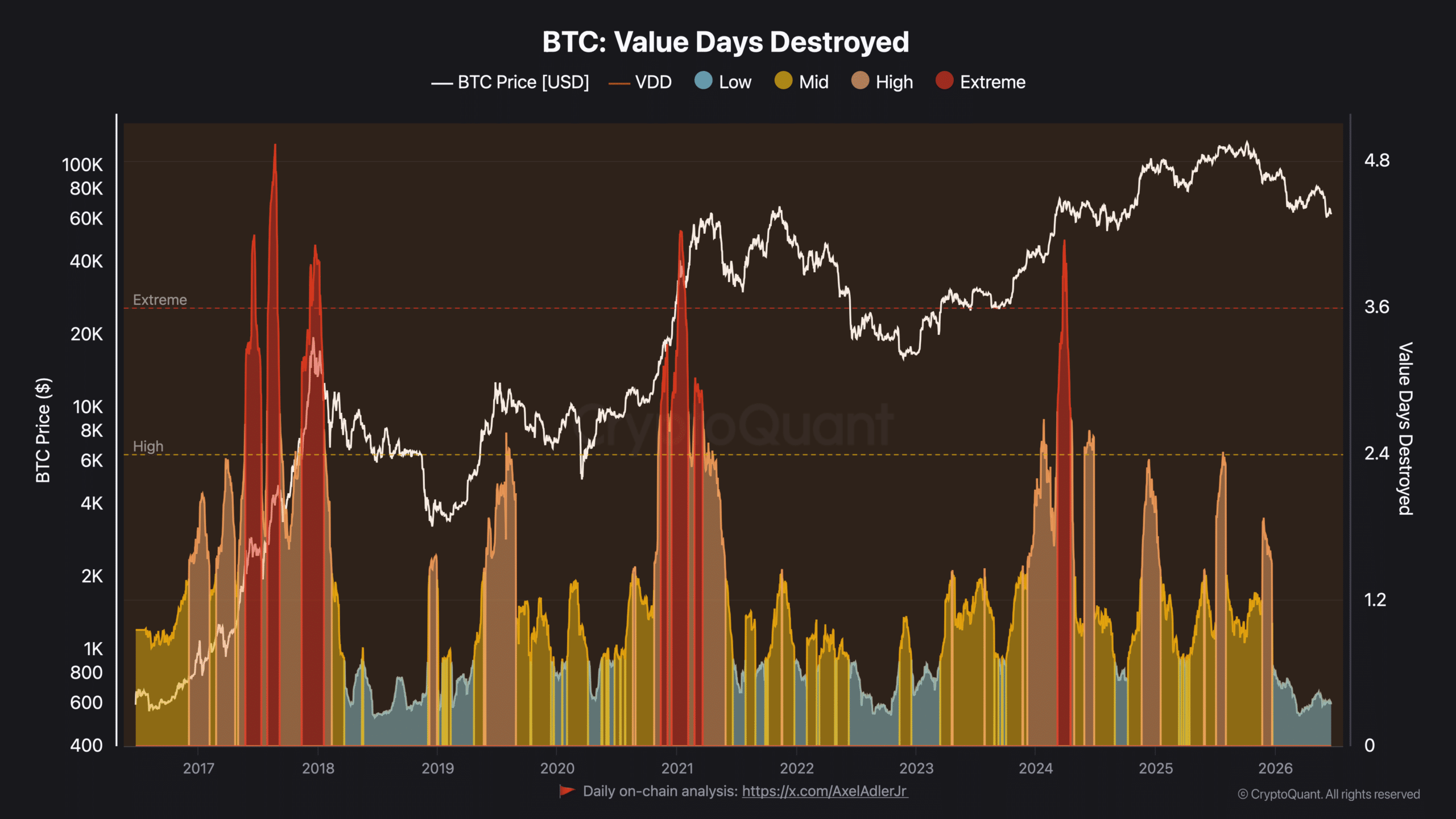
Levels like these have marked price tops and bottoms on several occasions, most notably in 2019 and 2022. In both cases, the price fell into this zone before a major recovery, pushing the asset to new highs.
Should that pattern repeat, Bitcoin’s swing between $60,000 and $64,000 in recent weeks could mark the bottom. For the time being, that base would form the floor from which the assets would build.
Bitcoin maintains its 200-week structural support
On the weekly time frame, Bitcoin is trading at its 200-week SMA (simple moving average), a level that has historically served as support and fueled previous rallies. The last time Bitcoin fell to this level, it consolidated for months between July 2022 and October 2023.
That stretch was followed by a significant increase, which ranged from $27,112 to about $73,777. Notably, Bitcoin is trading in the same range as before, with no indication of which way it will go.
The path could result in a quick recovery or another long-term consolidation.
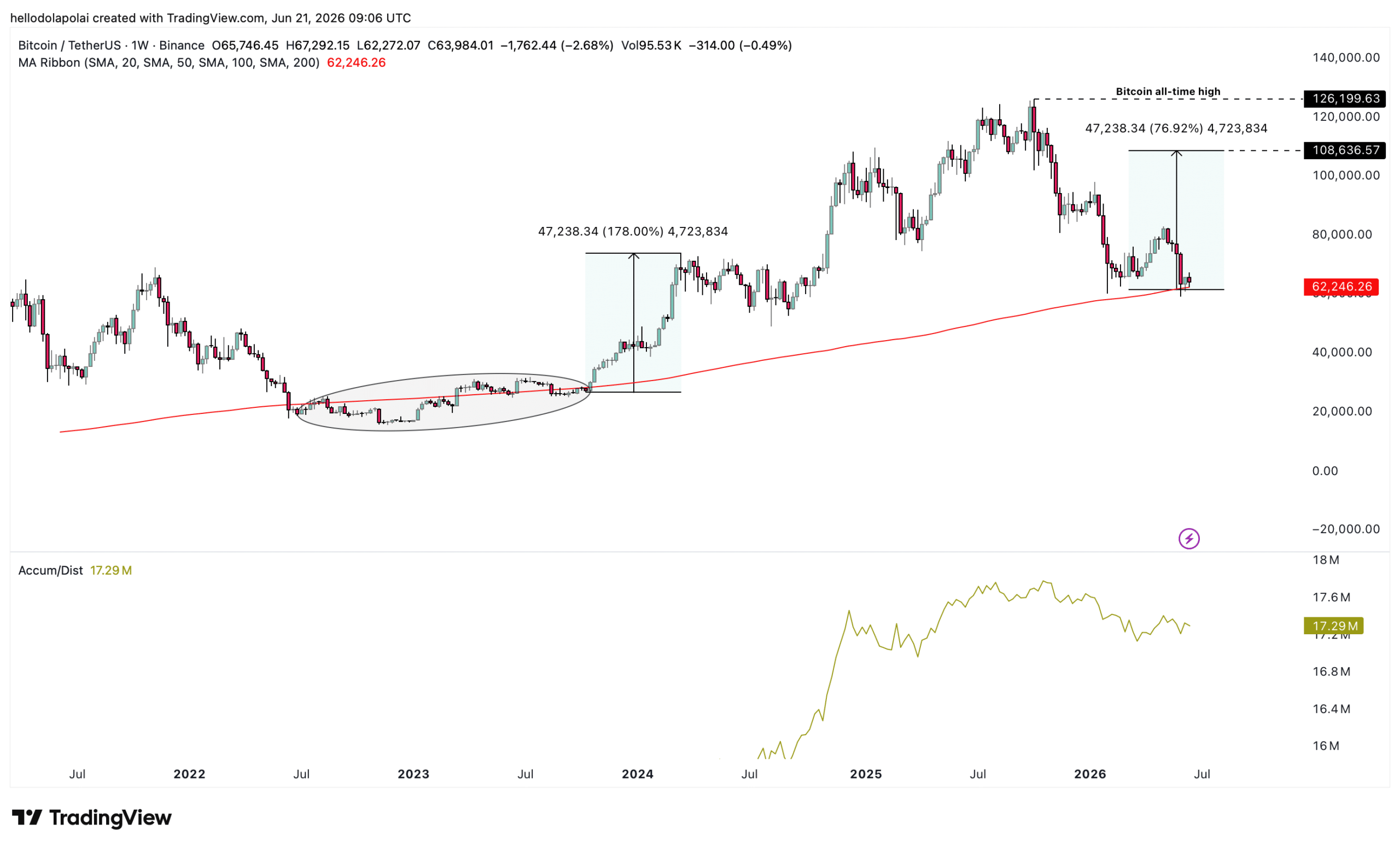
If a rally similar to 2023 occurs, Bitcoin has a high chance of rising 76% to a high of around $108,636 on the chart. The accumulation/distribution indicator reinforces this argument, pointing to continued buying pressure with volume at 17.11 million Bitcoins.
Such steady inflows are a net positive for the asset in the short to short term.
Bitcoin’s momentum depends on exchange and ETF flows
Measuring whether momentum still holds means tracking the key locations where traders trade. The net flows on the spot exchanges in addition to the US spot ETF flows are two important indicators of this.
The spot flow on the centralized exchanges over the past seven days shows net buying, with a net buying flow of approximately $234.75 million. That demand pushed total Bitcoin purchases over the same stretch to $9.36 billion.
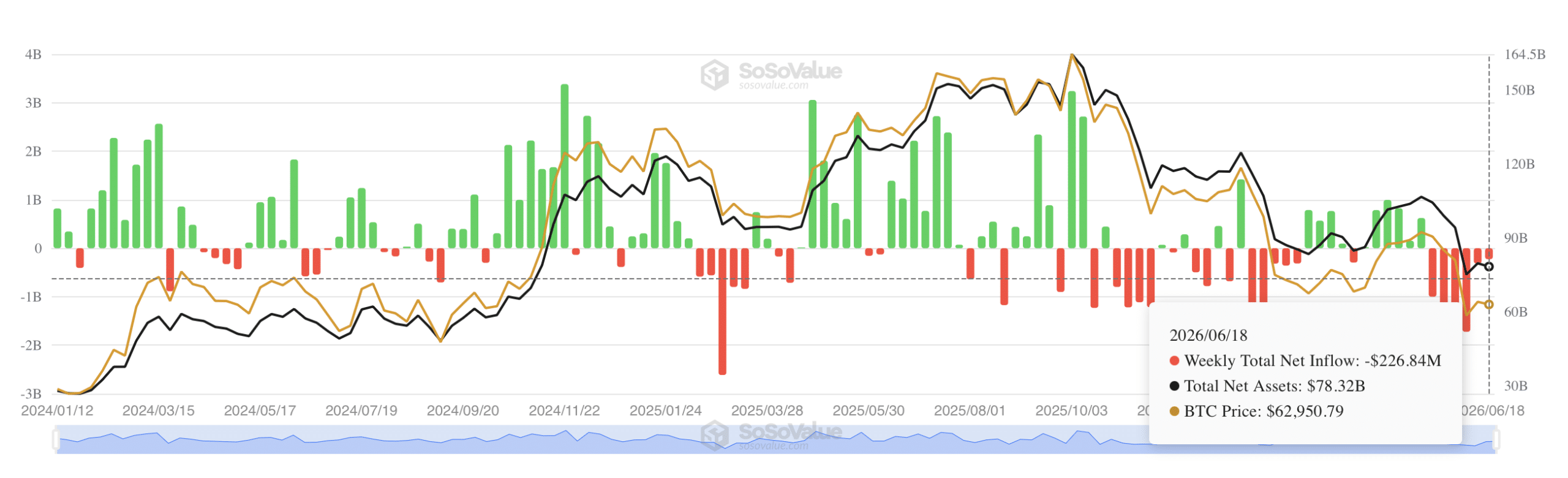
Source: Sosowaarde
The US market tells a more bearish story, with overall net flows trending towards selling. Investors there recorded a net sales flow of approximately $226.84 million, confirming that seller dominance continues.
Until clear bullish demand emerges on multiple fronts, Bitcoin may remain subdued in the near term.
Final summary
- Bitcoin may have already hit its bottom of this cycle, with several long-term indicators sending the same signal as before previous recoveries.
- If the 2023 pattern repeats again, Bitcoin could rise around 76% from here, although heavy selling in the US market will hold this back for now.