
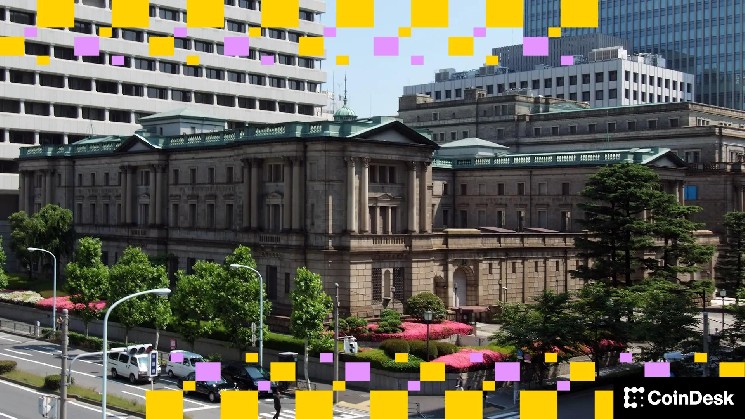
The Bank of Japan (BOJ) announced expansion of its blockchain experiments for settling central bank reserves, while emphasizing that efforts for a central bank digital currency (CBDC) are underway.
The BOJ has launched a “sandbox project” to experiment with settlements and bank deposits using central bank money, Governor Kazuo Ueda said on Tuesday in a speech titled “The New Financial Ecosystem and the Role of Central Banks.”
“In this experimental project, the Bank will conduct technical experiments related to settlement using central bank money in the form of current account deposits on a system using blockchains,” Ueda said.
The bank plans to “explore methods for connecting to the existing system and explore use cases such as domestic interbank settlement and securities settlement,” he added. Analysts say the introduction of blockchain for reserve settlement would enable instant 24-hour settlement and reduce the risk of lockups during stress events.
Ueda emphasized that the retail CBDC project is still ongoing. “First, the ongoing Central Bank Digital Currency Pilot Program (CBDC) involves the continued conduct of technical experiments by the bank, which will allow it to… provide a digital form of cash when there is demand for it among the general public.”
Japan began CBDC experiments in 2021 and launched a pilot program in 2023. But the central bank has not committed to issuing a digital yen. According to an earlier report, the BOJ will decide this year whether to issue a retail CBDC.
Ueda also spoke about Project Agorá,” an international experiment involving multiple central banks and major private financial institutions. He said participants are considering “building a mechanism that would allow central banks, including the Bank of Japan, to issue central bank money as tokenized deposits on the blockchain.” If successful, he said, the effort “could deliver innovation in the field of streamlining cross-border payments.”
Unlike a retail CBDC, which would function as a digital form of yen for the general public, tokenized central bank deposits would represent wholesale central bank money used by financial institutions on blockchain-based infrastructure, Ueda’s speech said.
The move to use blockchain technology to settle reserves follows decisions in Britain and Hong Kong to issue government bonds on the blockchain.