

Announcements
October 17, 2025·Last updated on October 17, 2025
A top-level domain (TLD) is the last segment of a domain name that appears after the last period. For example, in ‘example.com’, the ‘.com’ part represents the TLD. TLDs function as the highest level in the Internet’s hierarchical Domain Name System (DNS), after the root domain. They help identify websites and their purpose within the global Internet infrastructure.
TLDs serve multiple functions in the online ecosystem. They help web browsers direct users to the correct domains by acting as an important part of the DNS lookup process. When you visit a website, DNS resolvers begin their search by communicating with the TLD server, which then provides the resolver with the correct IP address. TLDs also indicate specific characteristics of a website, such as its purpose, ownership type, or geographic origin.
The Internet Corporation for Assigned Names and Numbers (ICANN) retains authority over all TLDs used on the Internet. ICANN delegates management responsibilities to various organizations. For example, VeriSign Global Registry Services manages the .com and .net TLDs. These organizations operate under the supervision of the Internet Assigned Numbers Authority (IANA), which is managed by Public Technical Identifiers (PTI), an ICANN affiliate.
TLDs date back to the 1980s, when they were initially divided into three different groups: categories, multi-organizations, and countries. The first TLDs had specific purposes:
- .com – Commercial websites
- .org – Organizations
- .edu – Educational institutions
- .tech – Technology projects, startups and developers
- .xyz – A flexible, modern extension often used for creative, experimental and next-generation projects
- .io – Originally a country code domain for the British Indian Ocean Territory, now widely accepted by technology companies and developers as a symbol of innovation
While .com is still the most popular and trusted TLD worldwide, the TLD landscape has expanded dramatically. As of 2024, there are more than 1,400 TLDs available, including newer options such as .info, .pizza, and .travel. This expansion has reduced pressure on the original generic TLDs while providing more domain name options.
The domain structure generally consists of three main components. Using ‘blog.example.com’ as an illustration, ‘blog’ is the subdomain (optional), ‘example’ is the second-level domain (often called the domain name), and ‘.com’ is the top-level domain. Together, these elements form a fully qualified domain name, which becomes a full URL when a protocol such as “https://” is added.
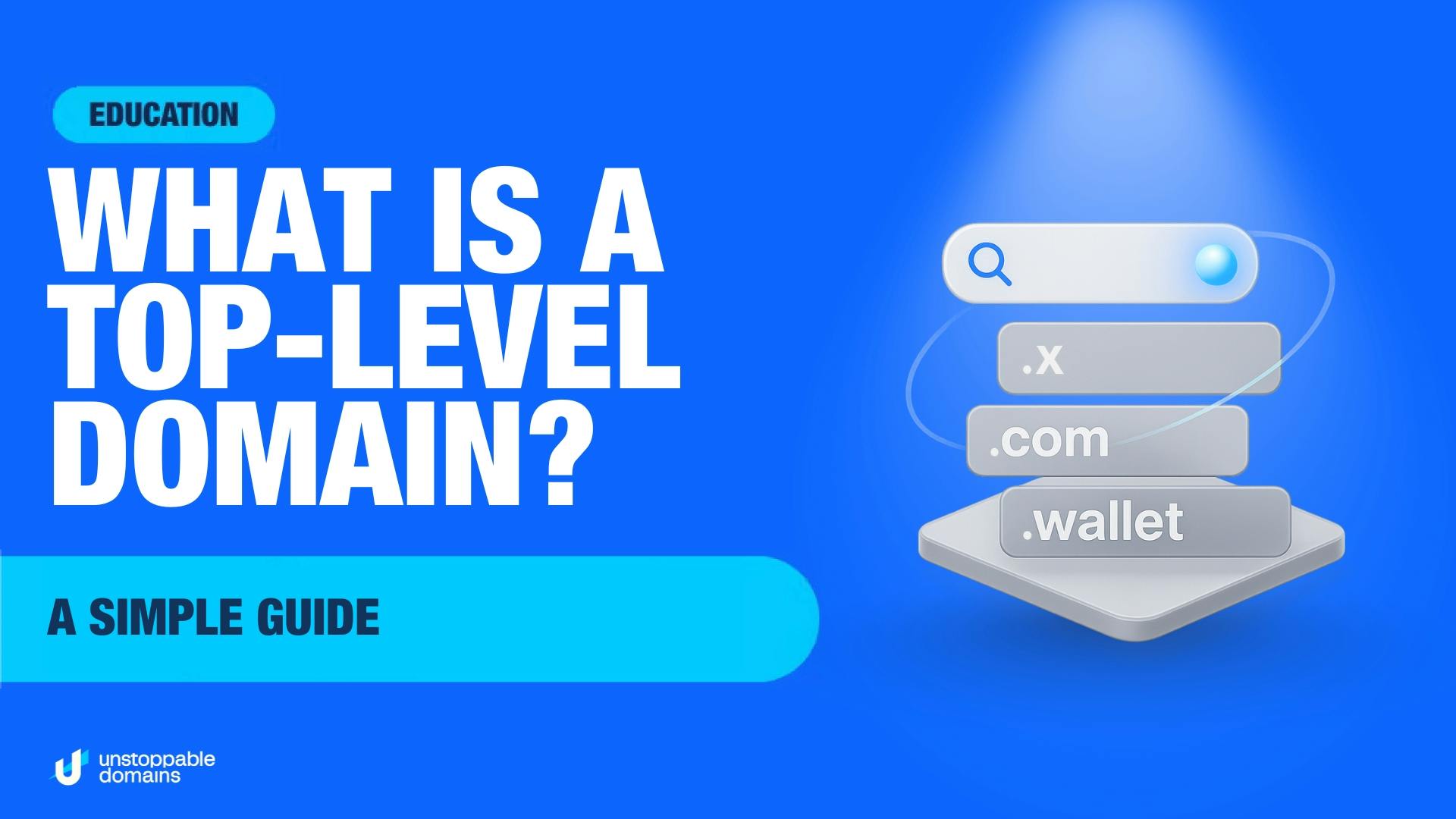
In addition to traditional DNS-based TLDs, the rise of blockchain technology has introduced Web3 domains, a new generation of top-level domains that exist outside the DNS root zone and are instead registered on-chain. Examples of Web3 TLDs include .crypto, .x, .wallet and many more.
Web3 domains perform similar functions to traditional TLDs in that they identify online identities and web resources. However, they also unlock onchain utilities such as:
- Send and receive cryptocurrency
- Possibility of decentralized websites hosted on IPFS
- Enabling verified identity profiles and login systems
- Support for onchain messaging and group chat systems
Unlike traditional domains, which are typically leased through annual renewals, Web3 domains are often purchased once and owned permanently, with no renewal fees. Ownership is verifiable on-chain and the domains can be traded like any other digital asset.
Web3 domains are not managed by ICANN, but are increasingly complementary to the traditional Web. Some are even integrated into browsers and platforms that support resolving both DNS and blockchain-based domains side by side.
TLD categories reflect the evolution of the Internet from a simple network to today’s complex digital ecosystem. Each type serves different purposes within the domain hierarchy.
These well-known extensions (.com, .org, .net) dominate the global namespace. Originally designed with specific purposes in mind (.com for commercial entities, .org for organizations, .net for network providers), these limitations have largely disappeared. Today, almost every non-sponsored gTLD welcomes individuals, companies, and organizations with no eligibility requirements. The 2012 ICANN expansion launched hundreds of new options, such as .top, .xyz and .loan, although .com remains the undisputed champion of trust and recognition.
Two-letter extensions associated with countries and territories using ISO 3166-1 alpha-2 codes. Think of .uk for the United Kingdom, .us for the United States, .de for Germany. Unlike their generic counterparts, ccTLDs operate under rules set by each country’s domain authority. These extensions have serious market power and represent approximately 40% of the domain industry with over 150 million registrations as of 2022.
Purpose built for specific communities. Each sponsored extension has a designated sponsor who verifies eligibility and enforces community standards. Educational institutions claim .edu, government agencies use .gov and the aviation industry flies with .aero. These domains maintain their exclusivity through strict qualification requirements.
The .arpa extension handles the behind-the-scenes activities of the Internet. .arpa emerged from ARPANET (the predecessor to the Internet) and now manages reverse DNS lookups that convert IP addresses back into domain names. Critical infrastructure, invisible to most users.
Reserved for technical purposes and documentation. RFC 2606 reserves .test for DNS testing, .example for documentation examples, .invalid for purposely broken names, and .localhost for loopback addresses. These extensions keep the testing and documentation of the Internet clean.
The latest category is completely disrupting traditional domain ownership. Web3 extensions such as .crypto and .x operate on blockchain networks, eliminating middlemen and renewal fees. These domains ensure secure digital identities, cryptocurrency payments, and censorship-resistant websites, representing digital sovereignty in action.
Whether in Web2 or Web3, top-level domains play a key role in shaping identity, establishing trust, and protecting a name online.
On the traditional Internet, a well-known TLD such as .com or .org indicates legitimacy. These extensions are recognized and trusted by users worldwide, building brand authority from the very first impression.
TLDs also influence behavior. While they don’t directly impact SEO rankings, recognizable extensions can improve rememberability, increase click-through rates, and drive more return visits. Country code TLDs (such as .uk, .jp, or .de) further support local SEO strategies by tailoring your domain to a specific region.
For companies and public websites, choosing the right TLD is often the first step in claiming digital territory and expressing professionalism.
In the onchain world, TLDs are also about recognition, with an added emphasis on ownership and control.
Web3 domains allow users to secure the exact name they want for apps, wallets, and profiles, all tied to a verifiable on-chain identity. With new TLDs such as .x, .polygon or .bitcoin, both individuals and brands are claiming names that reflect their role in the ecosystem.
And just like with Web2, it’s important to protect your name early. Popular keywords, handles and short names are often registered quickly. Whether for personal identity or future branding, securing a domain with a meaningful TLD helps you lock down your presence before anyone else does.
Securing your perfect domain name starts with understanding the registration process. Here’s what you need to know to effectively claim your digital identity.
Domain registration starts with searching for availability. On Unstoppable domainsthen use the search function on the homepage or the special domain search page to find your preferred domain name. The platform displays several domain statuses: Available (purchasable domains with prices shown), Taken (already registered by others), Unreleased (reserved for future premium sales), Protected (branded domains), and For Sale by Owner (listed on the marketplace by current owners).
For faster ideation and real-time checks, you can also use UnstoppableBota custom ChatGPT assistant that generates domain ideas and checks the availability of Web3 and traditional TLDs. Just describe what you’re looking for, and the bot will return the available names pulled directly from Unstoppable’s backend.
Unstoppable Bot allows you to easily find and check availability domains using a simple description.
After selecting keywords and a preferred TLD from over 160 options, check domain availability through the registrar’s search tools. Most registrars provide immediate feedback on availability status. If your desired domain is taken, many platforms propose alternatives with different extensions or similar names. For specific domains, you can contact the current owners via WHOIS lookup information or use brokerage services offered by registrars.
TLD prices vary significantly depending on extension type and popularity. Standard domains such as .com typically cost between $10 and $20 per year, while special or premium domains can command higher prices. Registration periods generally range from one to ten years, with most customers opting for a term of one to three years.
Web3 domains offer one-time purchases with lifetime ownership, while traditional DNS domains require regular renewals. Some registrars offer free services such as WHOIS privacy protection and DNSSEC security for domain registration.