
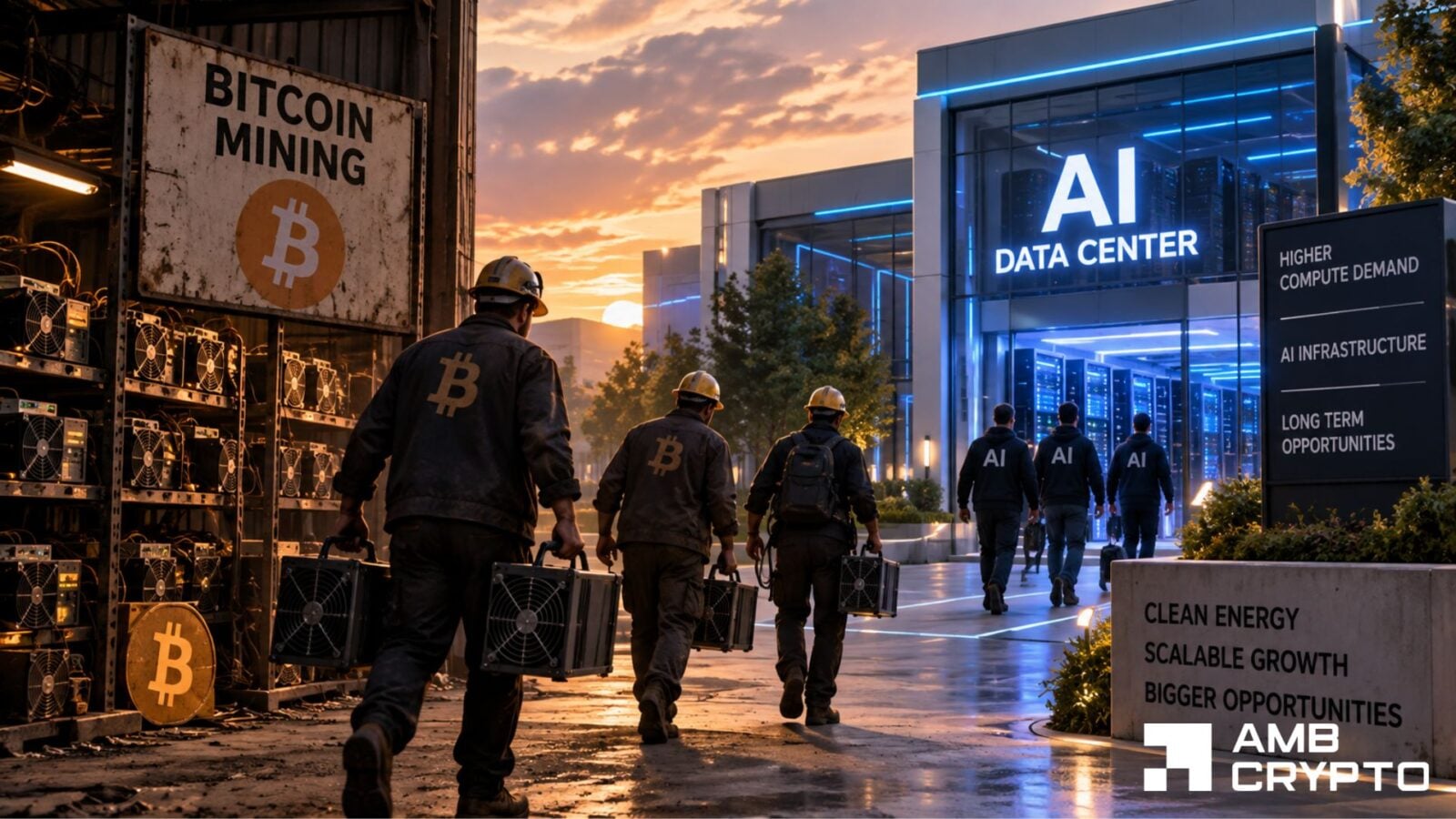
The shift towards AI among Bitcoin miners is gaining momentum as it proves to be more profitable, with AI compute leases generating three times more profits compared to BTC mining. A recent report by CoinShares revealed that AI compute leases can bring in around $1.5 million per megawatt (MW) annually, while BTC mining only generates $500K per MW.
Despite the potential for higher profits with AI, the decline in BTC mining in the second quarter has raised concerns about the future of the sector. Core Scientific, a publicly listed miner, made headlines by paying $42 million to cancel its next-generation mining hardware. Similarly, other companies like Keel (formerly Bitfarms) and Cipher have divested part of their BTC reserves to fund AI and data center expansions.
In a significant move, Keel stopped BTC mining operations in June, with IREN planning to follow suit by December 2026. Meanwhile, companies like MARA are gradually shifting their focus towards AI. This trend towards AI has resulted in AI dominating revenue streams in the mining sector.
CoinShares estimates that around 35EH/s of hashpower will leave listed miners by the end of the year, even if there is a rebound in BTC prices. The transition to AI is unlikely to be reversed, as evidenced by Core Scientific’s decision to terminate its mining agreement and the commitment of several companies to long-term leases for AI infrastructure.
The strict regulations surrounding AI and data center expansions have made energized sites, including BTC mining locations, scarce assets. With the promise of stable returns, AI compute has become a more attractive option than traditional BTC mining, especially as BTC mining revenue dropped significantly during the crypto winter.
The decline in mining revenue was exacerbated by the sharp drop in BTC prices from over $125K in October 2025 to below $60K in 2026. CoinShares reported that the average cost of mining BTC rose to $75.5K in Q2 2026, making it increasingly expensive to mine BTC. This led to a significant decrease in hashrate as miners exited the space to focus on AI.
While some believe that the hashrate dip may follow typical post-halving patterns and rebound in the future, economist Saifedean Ammous has suggested that BTC mining may have peaked and could trend downwards. As the rewards for mining decrease from 3.125 BTC to 1.56 BTC in 2028, the sector may become less attractive.
Overall, the future of BTC mining remains uncertain, with conflicting views on whether the sector will continue to grow or face a decline. The shift towards AI presents new opportunities for miners to explore more profitable avenues, but the impact on the broader Bitcoin ecosystem is yet to be fully understood.